
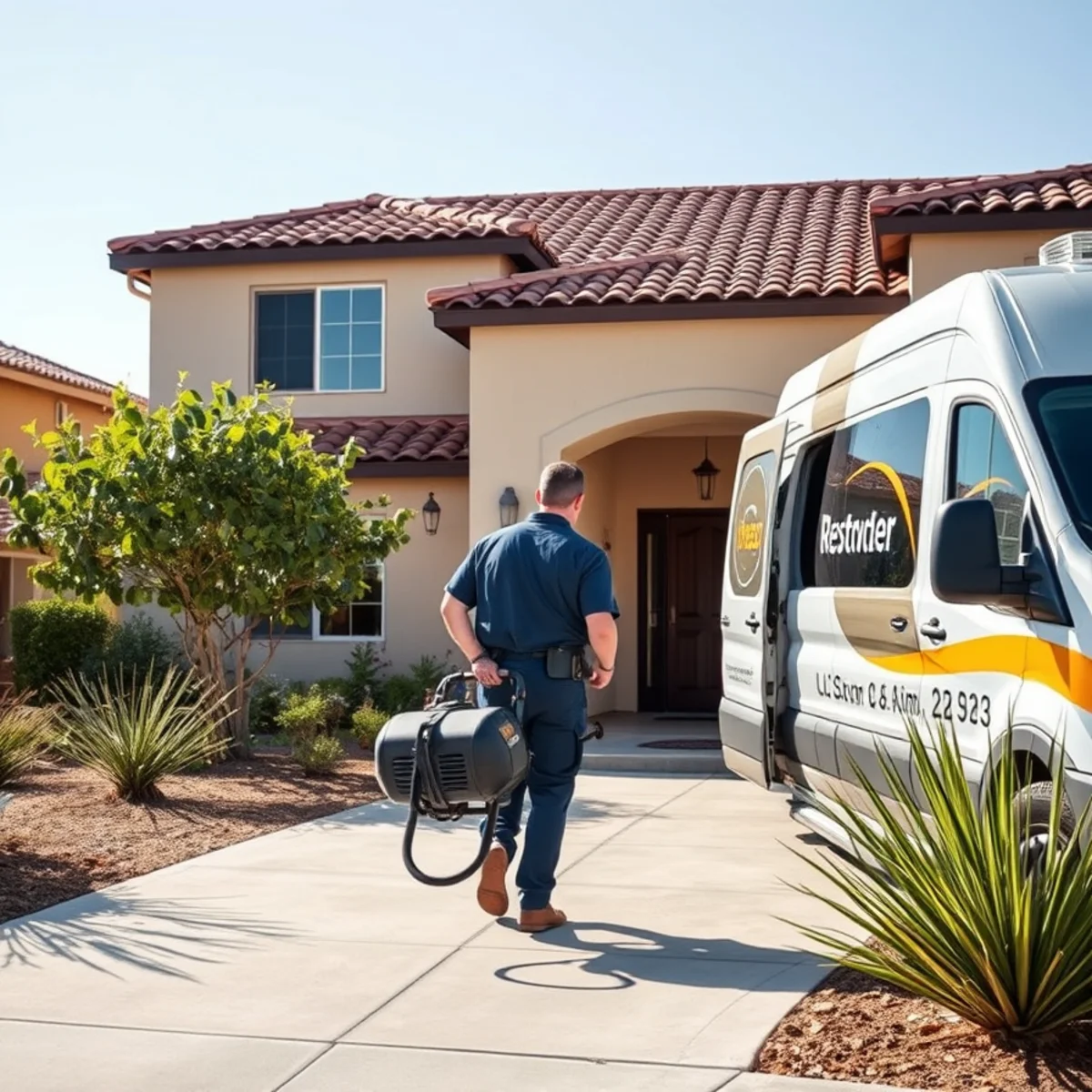
Core service area
Water Damage Restoration in Rio San Gabriel, Downey, CA
Rio San Gabriel is the closest neighborhood in Downey to the river that named it, and the lowest-lying. When this city takes water, these streets take it first.
- Open 24/7
- 60-minute emergency dispatch
- 6 to 9 minutes from our Florence Ave base
- IICRC S500 standard
That is not alarmism — it is elevation and history. Downey exists in the floodplain between the Rio Hondo and the San Gabriel River. The 1868 floods that tore through what was then Los Nietos reshaped the whole area; landowners including Governor Downey himself lost hundreds of acres, and at least one family's house was carried away with everything in it. The concrete channel and the Whittier Narrows Dam upstream are the twentieth century's answer to that.
The system works. But low ground is still low ground, and groundwater here sits closer to the surface than anywhere else in the city. We are six to nine minutes away, and during a storm sequence these are the streets we watch.
Living on the Low Ground
Three distinct water risks converge on this neighborhood, and they need different responses.
The first is surface flooding during intense rain. The storm drain system is sized for a design storm, and an atmospheric river dropping two inches an hour exceeds it. Water backs up at the inlets, sheets along the street, and finds the lowest threshold — which on these streets is a lot of thresholds. It arrives fast, and it arrives contaminated, having crossed roadway and soil.
The second is groundwater. The water table is naturally higher here, and it rises during a wet winter. That produces slab seepage, damp garage floors, efflorescence on stem walls, and water in crawl spaces on the older raised-foundation homes — all without a drop of rain entering the house from above.
The third is the one people forget: high groundwater infiltrates cracked sewer laterals. The extra volume tips a marginal line into a full backup, which is why we see a spike in sewage calls in the two days after a significant storm here specifically.
What we prepare for on these streets:
- Surface flooding at doorways and garage doors during high-intensity rain
- Groundwater seepage through slabs and into crawl spaces in wet winters
- Sewer backups driven by groundwater infiltration after storms
- Category 3 contamination — anything that came off the street is contaminated water
- Yard drains and area drains that silt up and stop working between seasons
- Standing water under raised-foundation homes affecting indoor air quality
Storm Weeks in Rio San Gabriel
During a real storm sequence this neighborhood generates more calls per street than anywhere else we serve, and the pattern is consistent enough to plan around.
It starts with the garage. Garage slabs sit lowest and the door seal is the weakest point in the envelope, so water gets in there first — often while the house itself is still dry. Then the thresholds on the low side of the house. Then, a day or two later, the sewage calls, as groundwater that has infiltrated the laterals overwhelms lines that were already marginal.
One winter we worked three houses on the same block in four days. First a garage that took two inches of street water. Then a neighbor whose crawl space had filled from groundwater with no surface flooding at all — they had no idea until the smell reached their bedrooms. Then a sewage backup two doors down through a shower pan. Same storm, three completely different jobs, three different scopes.
The advice we give people here is unglamorous and it works: clear your area drains before November, keep a couple of sandbags for the garage door if you have taken water before, and know that anything that came off the street is contaminated — do not run a fan on it and do not let kids or pets near it.
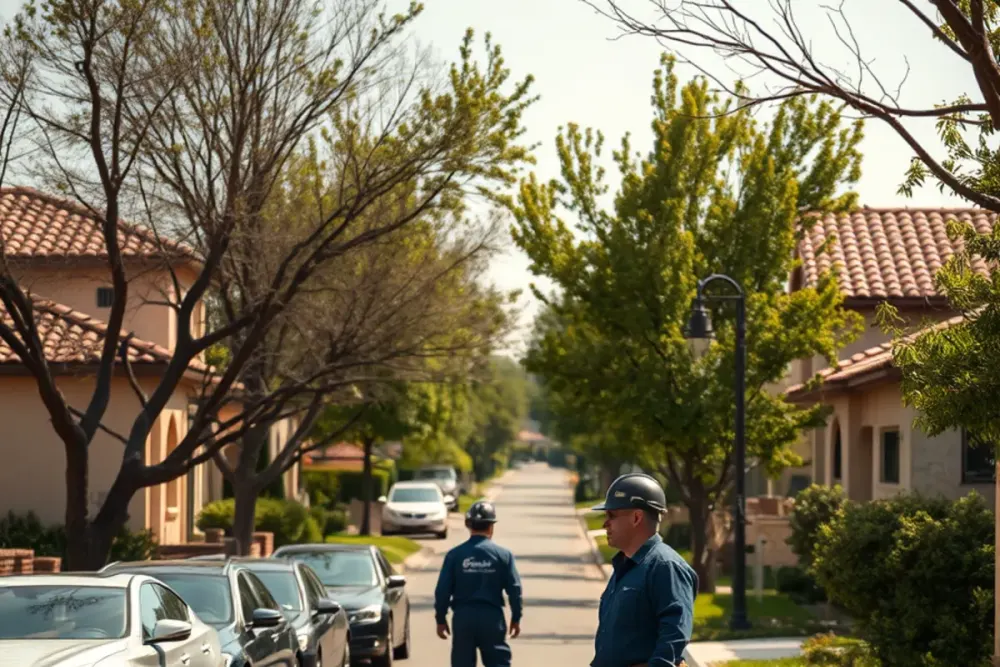
Landmarks and streets we work around
- San Gabriel River channel and bike path
- Rio San Gabriel Park on Ardine Street
- Rio San Gabriel Elementary School
- Firestone Boulevard river crossing
- Gardendale Street
- Rio Hondo confluence area
Response and coverage
- Drive time
- 6 to 9 minutes from our Florence Ave base
- Dispatch
- 60-minute emergency dispatch, 24/7
- ZIP codes
- 90241, 90242
What we handle most in Rio San Gabriel
These are the services this area calls us for. We offer all 16 everywhere we work.
Why Rio San Gabriel Residents Choose Us
Six to nine minutes out, and during a storm sequence these are the streets we watch first.
We know this is the lowest ground in Downey
Closest to the San Gabriel River channel, with the highest groundwater in the city. When Downey takes water, these streets take it first — and we plan for that rather than being surprised by it.
We expect the sewage calls two days after the rain
Rising groundwater infiltrates cracked clay-tile laterals and tips a marginal line into a full backup. Homeowners find the timing baffling; we do not, and we bring Category 3 containment on the first trip.
We handle groundwater and plumbing leaks differently
A damp garage slab in a wet winter with a still water meter is groundwater, not a pipe. Sending you to a plumber for that wastes your money and does not fix your floor.
Rio San Gabriel questions we get asked
The channel and the Whittier Narrows Dam upstream have largely handled riverine flooding since the mid-twentieth century — the 1868-style events that shaped this area are not the modern risk. What does happen is surface flooding when rainfall intensity exceeds what the storm drains can take, and groundwater rising during wet winters. Both put water in houses on these streets without the river doing anything unusual.
Usually not by a standard homeowners policy — water that rises off the ground is flooding, and that requires separate flood coverage, typically through the NFIP. The distinction matters enormously and is worth getting right: if water got in because wind broke a window or damaged the roof, that is often covered as storm damage. We document the point of entry carefully because it frequently decides the claim.
Almost certainly groundwater. The water table is higher in this neighborhood than anywhere else in Downey, and in a wet winter it rises close enough to the surface to push moisture up through a slab. The signs are a persistently damp patch, efflorescence — that white powdery crust — on the concrete or stem wall, and a musty smell. It is a drainage and vapor problem rather than a leak, and it is fixable.
Because groundwater infiltrates cracked sewer laterals. Most of the older laterals in this area are clay tile with joints that have opened over decades. When groundwater rises, it enters through those cracks and adds volume the line was never carrying before — enough to tip a marginal line into a full backup. That is why our sewage calls here often come a day or two after the rain stops rather than during it.
Not in the way it once did. The concrete channel and Whittier Narrows Dam upstream have largely handled riverine flooding since the mid-twentieth century. What still puts water in houses on these streets is surface flooding when rainfall intensity exceeds storm drain capacity, and groundwater rising during a wet winter — both without the river doing anything unusual.
Almost certainly groundwater. The water table is higher in this neighborhood than anywhere else in Downey, and in a wet winter it rises close enough to push moisture up through a slab. The signs are a persistently damp patch, white powdery efflorescence on the concrete, and a musty smell. It is a drainage and vapor problem rather than a leak.
Dispatching to Rio San Gabriel, Downey from our Downey base
8615 Florence Ave, Downey, CA 90240 — 6 to 9 minutes from our Florence Ave base.
Visit or call us
Downey, CA 90240
Nearby areas we also serve
Water damage in Rio San Gabriel? Call now.
6 to 9 minutes from our Florence Ave base. We answer 24/7 and dispatch within 60 minutes across Downey, CA and the surrounding Gateway Cities.
- Open 24/7
- 60-minute emergency dispatch
- IICRC S500 standard
- Bonded & insured
8615 Florence Ave, Downey, CA 90240
+1 (201) 277-9344 · Get Directions