

Core service area
Water Damage Restoration in Bellflower, CA
Bellflower takes its name from the Bellflower apple orchards that covered this land before the tract housing arrived. That agricultural history is not just trivia — it is the reason we do so much slab leak work here.
- Open 24/7
- 60-minute emergency dispatch
- about 10 minutes from our Downey base
- IICRC S500 standard
Farmland soil in this part of the basin is clay-loam alluvium, and it was farmed precisely because it holds water well. Clay that holds water also swells when it takes it on and shrinks when it dries, and the tract homes built across it in the 1950s and 60s are slab-on-grade with copper supply lines run underneath.
Sixty-plus years of seasonal soil movement working on rigid buried pipe produces exactly what you would expect. We are about ten minutes out.
Orchard Soil Under Slab-on-Grade Houses
Expansive clay is the defining condition here. It takes on water through the winter rains and swells, then dries through the long Southern California summer and shrinks. That annual cycle applies real mechanical stress to anything rigid buried in it — copper supply lines, cast-iron drains, and the slab itself.
Combine that with two other factors and slab leaks become close to inevitable. The plumbing is sixty-plus years old, inside the failure window for buried copper. And thermal expansion makes hot-water lines grow and contract slightly with every use, abrading them against the concrete they pass through.
The soil movement causes a second, less obvious problem: it cracks slabs. Differential movement under a foundation produces hairline cracks that show up in tile and grout long before anyone thinks about the soil. Those cracks are worth noticing, because a new crack combined with a warm floor spot or an unexplained water bill points fairly directly at a leak underneath.
What we handle in Bellflower:
- Slab leaks in original copper under 1950s–60s tract foundations
- Cast-iron drain fractures caused by seasonal soil movement
- New cracking in slabs, tile and grout from differential settlement
- Water heater failures in attached garages
- Apartment and multi-family losses in the denser corridors
- Storm water intrusion during high-intensity winter rain
Reading the Signs Before the Damage
The useful thing about slab leaks is that they give you a long warning window — weeks or months — if you know what you are looking at.
A Bellflower homeowner called us about cracks appearing in their kitchen tile. Their concern was foundation settlement, which is a reasonable worry in this soil. We metered the slab before anyone called a structural engineer, and found elevated moisture running in a line from under the kitchen toward the hall. Acoustic listening put a hot-water line leak under the cabinet run.
The leak had been saturating soil under that section of slab for long enough to cause localized swelling — which is what cracked the tile. It was not a foundation problem. It was a plumbing problem presenting as one, and the fix was a reroute plus drying rather than anything structural.
The general point for anyone in this city: in expansive clay soil, new cracks are worth investigating for a leak before you investigate them as settlement. It is a cheaper question to answer and it is the answer more often than people expect.
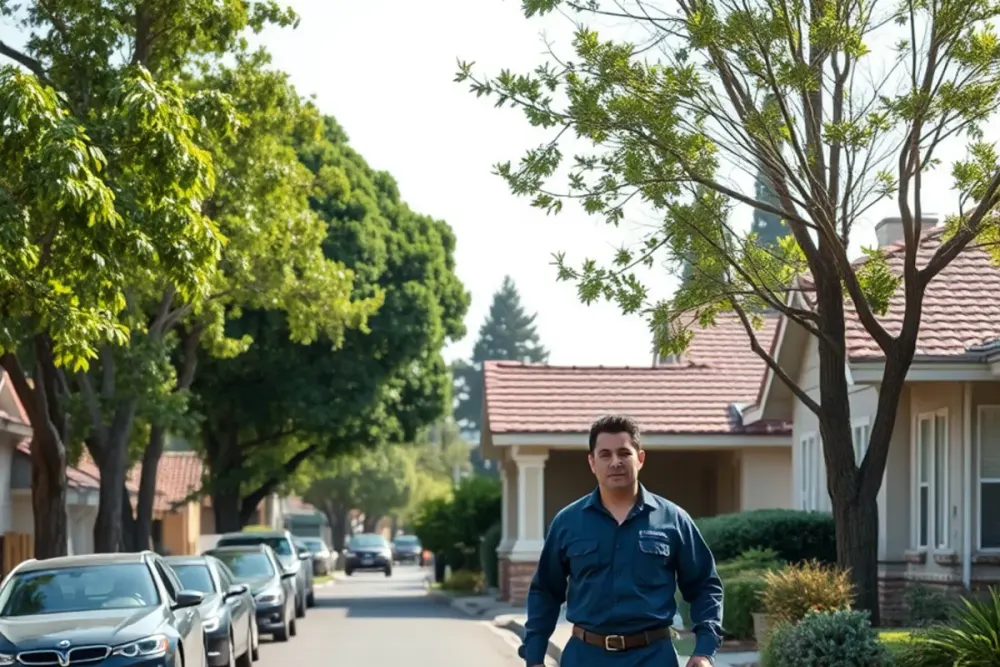
Landmarks and streets we work around
- Bellflower Boulevard
- Simms Park
- Thompson Park
- Artesia Boulevard
- Rosecrans Avenue
- San Gabriel River corridor
Response and coverage
- Drive time
- about 10 minutes from our Downey base
- Dispatch
- 60-minute emergency dispatch, 24/7
- ZIP codes
- 90706, 90707
What we handle most in Bellflower
These are the services this area calls us for. We offer all 16 everywhere we work.
Why Bellflower Residents Choose Us
About ten minutes out, on former orchard ground that produces slab leaks reliably.
We check for a leak before you call an engineer
One homeowner here was worried about foundation settlement after tile cracked. We metered the slab first and found a hot-water line leaking under the cabinet run. The fix was a reroute and drying, not anything structural.
We know why the soil does this
Clay-loam alluvium was farmed because it holds water. That same property means it swells in winter and shrinks in summer, flexing everything rigid buried in it, every year for sixty years.
We locate before we open concrete
Acoustic listening and thermal imaging put the mark within inches, so the repair opens one small area rather than exploring your floor.
Bellflower questions we get asked
Possibly, but check for a leak first — it is cheaper to rule out and it is the cause more often than people expect. A slab leak saturates soil locally, and expansive clay swells where it gets wet, causing differential movement that cracks tile and grout. If the cracks came with a warm floor spot, an unexplained water bill, or the sound of running water, a moisture survey should come before a structural engineer.
Three conditions stack up here. The soil is clay-loam alluvium — this was orchard land, farmed because it holds water — and expansive clay swells and shrinks seasonally, flexing buried pipe. The housing is 1950s–60s slab-on-grade with copper underneath, now sixty-plus years old. And thermal cycling abrades hot-water lines against the concrete. Any one is manageable; all three together is why we work so many of these here.
Most California policies cover the resulting water damage and the access cost to reach the pipe, but not the pipe repair itself. That access provision is often the most valuable part, because opening the slab and restoring flooring usually costs more than the plumbing fix. Coverage applies to sudden and accidental damage — a leak known about and left is typically excluded as gradual, which is the argument for acting on the first sign.
Possibly, but check for a leak first — it is cheaper to rule out and it is the cause more often than people expect. A slab leak saturates soil locally, and expansive clay swells where it gets wet, causing differential movement that cracks tile and grout. If the cracks came with a warm floor spot, an unexplained bill or the sound of running water, a moisture survey should come before a structural engineer.
Three conditions stack up. The soil is clay-loam alluvium — this was orchard land, farmed because it holds water — and expansive clay swells and shrinks seasonally, flexing buried pipe. The housing is 1950s–60s slab-on-grade with copper underneath, now sixty-plus years old. And thermal cycling abrades hot-water lines against the concrete. Any one is manageable; all three together is why we work so many here.
Dispatching to Bellflower, CA from our Downey base
8615 Florence Ave, Downey, CA 90240 — about 10 minutes from our Downey base.
Visit or call us
Downey, CA 90240
Nearby areas we also serve
Water damage in Bellflower? Call now.
about 10 minutes from our Downey base. We answer 24/7 and dispatch within 60 minutes across Downey, CA and the surrounding Gateway Cities.
- Open 24/7
- 60-minute emergency dispatch
- IICRC S500 standard
- Bonded & insured
8615 Florence Ave, Downey, CA 90240
+1 (201) 277-9344 · Get Directions