
Hidden Leak Symptoms: Warm Floor Spots, High Water Bills, and the Sound of Running Water
Hidden leaks are the expensive ones, and they announce themselves for weeks. Here is what to notice, and the ten-minute test that settles it.
Read article
Core restoration service
Your water bill doubled. Nothing is dripping. Nobody changed their habits.
That is the classic hidden-leak profile, and in Downey it usually means one of three things: a slab leak under the foundation, a supply line inside a wall, or an irrigation line in the yard. All three run continuously, all three cause escalating damage while you look for them, and none of them show you a puddle until quite late in the process.
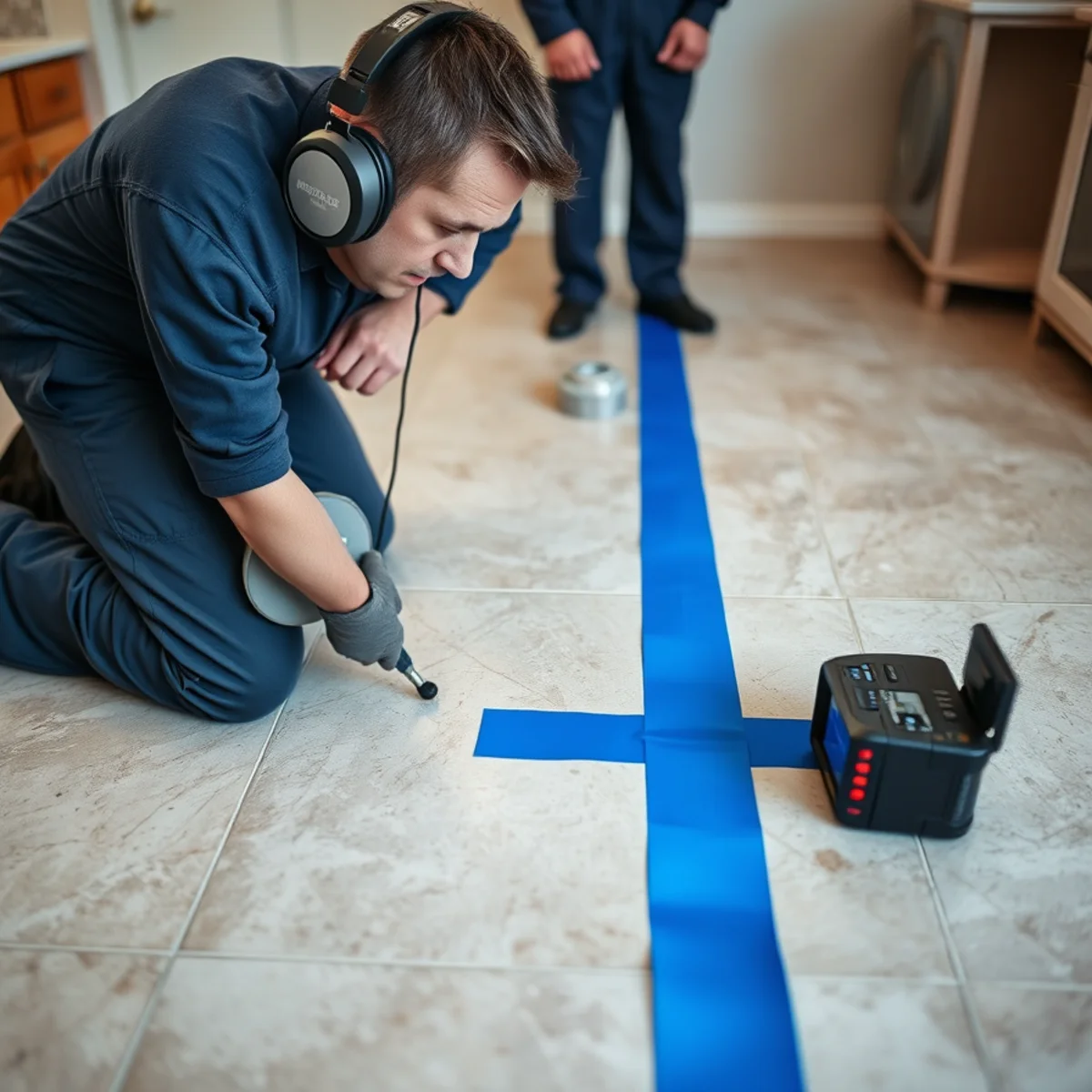
The goal of detection is precision. Anyone can find a leak by opening walls until they hit water. We use acoustic listening equipment, thermal imaging, tracer gas, and pressure isolation to put an X on the exact spot — so the repair opens one square of drywall or one small section of slab instead of a trench across your living room.
Any one of these is worth a call. Two or more together and you almost certainly have an active leak:
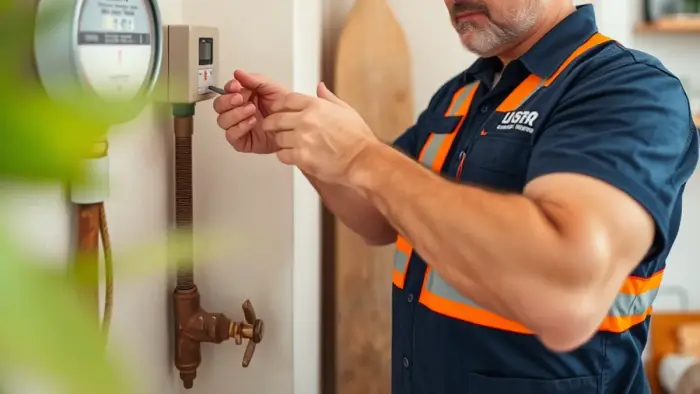
Quick self-test: shut off every fixture, then watch the small triangle or dial on your water meter for ten minutes. If it moves, water is going somewhere.
You are paying for precision. Anyone can find a leak by opening walls until they hit water — the point is opening two square feet instead of twenty.
We confirm the leak is real, then isolate sections to establish whether it lives inside the house, in the yard service line or on irrigation. Pressure testing separates a supply-side leak from a drain-side one, which are completely different searches.
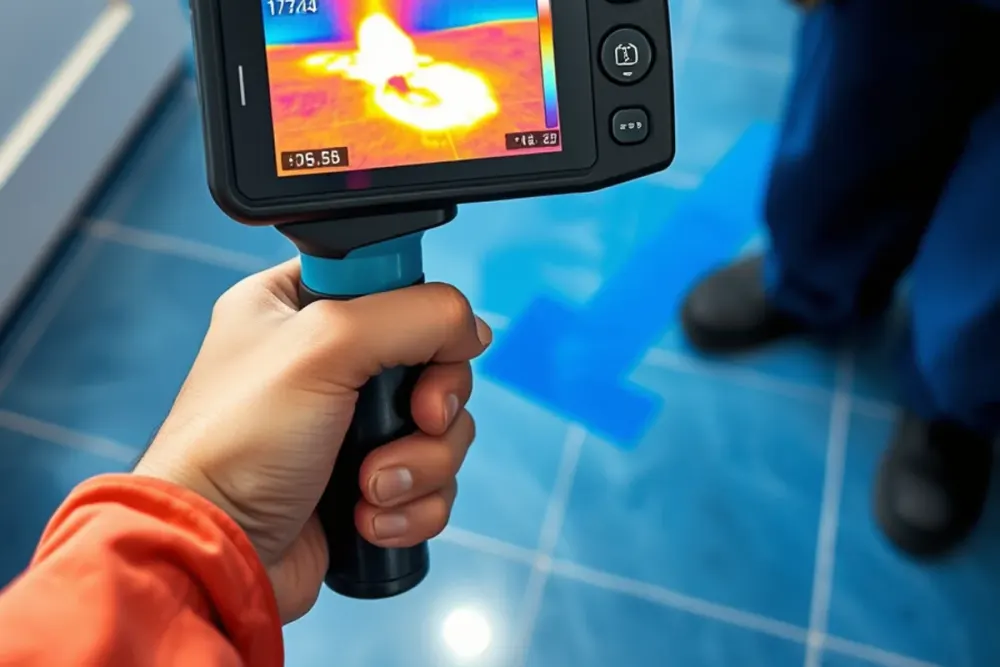
A hot-water slab leak produces a heat signature readable through concrete and flooring. Ground microphones and amplified listening discs then pick up the specific frequency of pressurized water escaping and put the mark within inches.
For a low-pressure or intermittent leak that will not make enough noise, a safe helium-nitrogen mix is introduced into the isolated line and detected where it surfaces. This is the method that finds what acoustics miss.
We mark the exact spot and lay out spot repair, reroute or repipe with the honest trade-offs of each, then coordinate a licensed plumber so you are not project-managing between two companies.
We do not perform the plumbing ourselves. That is deliberate — it means when we tell you a repipe beats another patch, there is nothing in it for us either way.
Detection is elimination, done in a deliberate order. We work from cheapest and least invasive toward most specific, and we stop as soon as we have the location.
We confirm the leak is real and narrow down where it lives — inside the house, in the yard service line, or on the irrigation system — by isolating sections at the main and watching the meter.
Isolating and pressurizing the supply system tells us whether we are chasing a supply-side leak or a drain-side one. Those are entirely different searches, and getting this wrong wastes a day.
A hot-water leak under a slab produces a heat signature readable through concrete and flooring. Cold-water leaks show as evaporative cooling. This narrows a whole-house search down to a few square feet, fast.
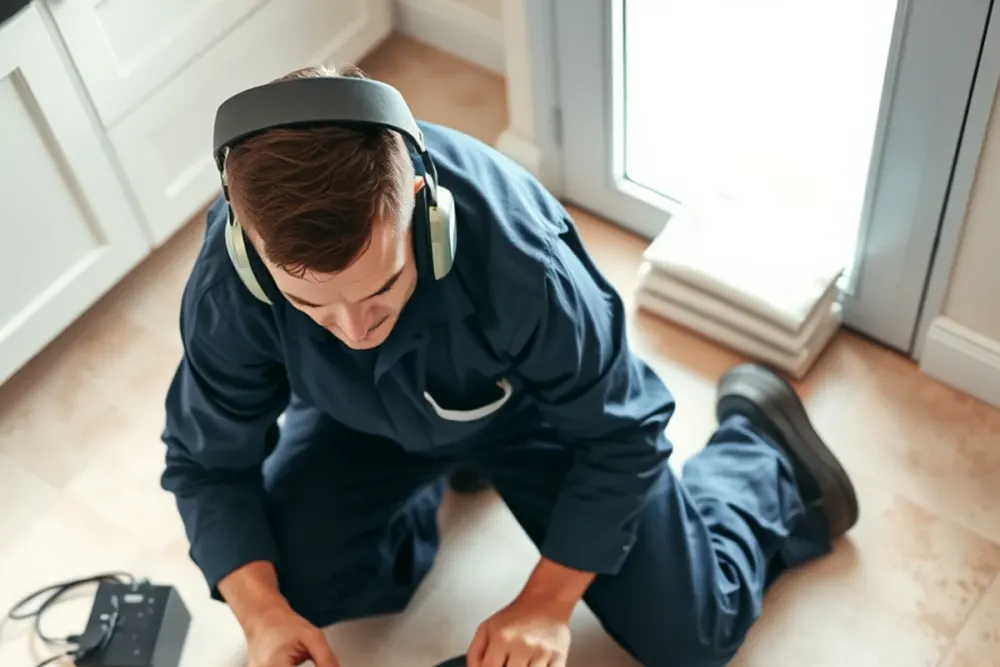
Ground microphones and amplified listening discs pick up the specific frequency of pressurized water escaping a pipe. Through slab, tile, or hardwood, this is what puts the mark within inches.
For a low-pressure or intermittent leak that will not make enough noise, we introduce a safe helium-nitrogen mix into the line and detect where it surfaces. This is the tool that finds the leaks other methods miss.
We mark the exact location and give you the options — spot repair, reroute, or repipe — with the honest trade-offs of each. We coordinate directly with a licensed plumber so you are not project-managing between two companies.
Then we do what we are actually here for: dry the structure the leak has been soaking, and restore whatever had to be opened.

Two-thirds of the hidden leaks we locate in this city are under the slab, and Downey's building history explains why.
The tract expansion of the 1960s and 70s — South Downey below Imperial Highway, the Apollo neighborhood built for Rockwell aerospace workers, the subdivisions feeding Warren High — was built slab-on-grade with copper supply lines run underneath the concrete. That construction is now fifty-five to sixty-five years old, which is squarely inside the failure window for buried copper.
Then there is the soil. The Downey basin sits on clay-rich alluvial deposits from the San Gabriel River system. Expansive clay swells when it takes on water in winter and shrinks as it dries through summer, and that cycle applies constant flexing stress to anything rigid buried in it. Add slightly aggressive water chemistry causing pinhole corrosion from the inside, and abrasion where a pipe rubs against concrete with every thermal cycle, and you have three independent failure mechanisms working on the same pipe.
The practical consequence: in a Downey home built before about 1980 with original copper under the slab, a leak is not bad luck. It is the expected end of that material's service life, and finding the first one is usually the moment to have the repipe conversation.

Once we have located it, you have three real options, and the right one depends on how much life is left in the rest of the system.
A spot repair opens the slab at the leak and fixes that section. It is the cheapest option and the right call when the plumbing is otherwise young or the leak was caused by a specific mechanical injury rather than general deterioration.
A reroute abandons the failed run under the slab and reruns that line overhead through the attic and down inside the walls. No jackhammering, and that particular line never fails under concrete again. It is usually the best value when a single line has failed in an otherwise sound system.
A full repipe replaces all supply lines, typically with PEX. It is the most expensive and the most disruptive, and it is what we would choose for ourselves in a home that has already had two slab leaks. Once a system starts failing, it tends to keep failing — and the third leak plus its water damage usually costs more than getting ahead of it. We do not perform the plumbing ourselves, so we have no financial stake in which one you choose.
Detection is priced separately from repair and from the water damage restoration. Here is what moves the detection number.
A leak in an accessible wall is a shorter visit than one under a slab beneath tile in the middle of a house. Access difficulty is the main driver.
Many leaks are found with meter isolation, thermal imaging, and acoustics. Intermittent or low-pressure leaks may need tracer gas, which adds equipment and time.
If we have to isolate and eliminate irrigation, the pool, the service line, and the interior supply before finding it, that is more testing than a leak that announces itself in one zone.
If the leak has been running long enough to soak framing or grow mold, the restoration scope is separate from detection — and it is usually the larger number, which is the argument for calling at the first high bill.
Two thirds of the hidden leaks we locate in this city are under a slab, and Downey's building history explains why.
The 1960s–70s tracts across South Downey, Apollo and the Warren High subdivisions are slab-on-grade with copper underneath, now fifty-five to sixty-five years old. Clay soil flexes it seasonally, water chemistry drives pinhole corrosion, and thermal cycling abrades hot lines against the concrete.
In a home with tile or hardwood over the slab, the difference between a marked spot and exploratory demolition is frequently larger than the detection cost several times over — and a discontinued tile pattern cannot be matched at any price.
Finding it is half the job. Drying the slab, the wall bases and the flooring the leak has been soaking is the other half, and we carry that through to the restored finish.
The tell-tale signs are a warm spot on the floor (a hot-water line), the sound of running water with everything off, an unexplained bill increase, and new cracks in flooring or grout. Confirm it in ten minutes: shut every fixture off and watch the leak indicator on your water meter. If it is still turning, water is escaping somewhere in the system — and if the interior fixtures are all off, under the slab is the leading candidate.
No. Detection is non-invasive — acoustic listening, thermal imaging, pressure isolation and tracer gas all work through the slab. Concrete only gets opened for the repair itself, and only at the marked spot. That is the entire point of paying for precise detection: the difference between opening two square feet and exploring twenty.
Most California policies cover the resulting water damage and the access cost to reach the pipe, but not the pipe repair itself. Read your policy for the tear-out and access provision — it is often the most valuable part of the coverage, because opening and restoring the slab and flooring usually costs more than the plumbing fix. Gradual damage from a leak that was known and ignored is typically excluded, which is another reason to act on the first symptom.
Very. A slab leak can run for months without any visible water indoors — it drains into the soil under the foundation. Same with a service line leak in the front yard, which often shows only as a suspiciously green patch of grass. Invisible does not mean harmless: it is saturating the soil under your foundation and wicking into the base of your walls the entire time.
Enough to double a bill without a single visible drop indoors. A slab leak drains into the soil under your foundation, and a service line leak in the front yard often shows only as a suspiciously green patch of grass. The ten-minute confirmation is free: shut off every fixture including the irrigation controller and ice maker, then watch the small triangle on your water meter. If it is still turning, water is escaping in the pressurized system.

Hidden leaks are the expensive ones, and they announce themselves for weeks. Here is what to notice, and the ten-minute test that settles it.
Read article
Anyone can find a leak by opening concrete until they hit water. The point of detection is opening two square feet instead of twenty.
Read articleWe cover 43 areas from our base at 8615 Florence Ave. These are the ones we reach fastest:
We answer 24/7 and dispatch a crew within 60 minutes across Downey and the neighboring Gateway Cities. A person answers the phone — not an answering service.