
Water emergency? We answer 24/7 — +1 (201) 277-9344
Water Damage Downey CA logo
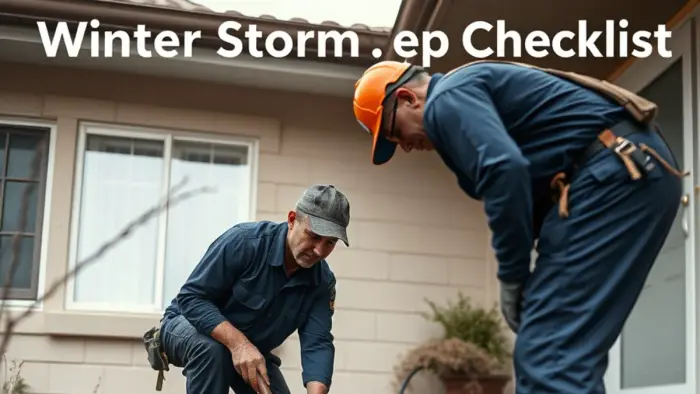
Emergency roof tarping and storm damage cleanup on a Downey, CA home after a winter storm

24/7 emergency service

Storm Damage Cleanup & Restoration in Downey, CA

Storm damage is a race against the next band of rain. Whatever opened up your building envelope is still open, and Southern California storms arrive in sequences, not as single events.

  • Open 24/7
  • 60-minute emergency dispatch
  • IICRC S500 standard
  • Bonded & insured

So the first priority is always the same: stop more water getting in. Emergency tarping and board-up before extraction, before drying, before anything else. A perfectly dried house with a hole in the roof is dry until Thursday.

Downey takes two distinct kinds of storm damage, and they need different responses. Winter atmospheric rivers bring sustained heavy rain that finds every marginal roof penetration and overwhelms drainage — the 2022–2023 season delivered ten atmospheric rivers in three weeks and set statewide records. Santa Ana winds are the opposite: dry, violent gusts that lift shingles, tear flashing, bring down limbs, and leave the roof compromised for whatever rain comes next.

Storm Damage We Respond To

Call us if a storm has left you with any of these. Several need attention before the next front arrives:

  • Water coming through the ceiling or down an interior wall during or after rain
  • Missing, lifted, or displaced shingles or roof tiles
  • Damaged or torn flashing around a chimney, skylight, or vent
  • A tree or large limb down on the roof, patio cover, or fence
  • A broken window or a slider blown in by wind
  • Rain driven in under a door or through a compromised garage door seal
  • Gutters torn loose, or downspouts discharging against the foundation
  • Ponding on a flat or low-slope roof — common on Imperial Highway corridor strip commercial
  • Interior ceiling staining that appeared or grew after a storm

If a ceiling is sagging or bulging with trapped water, stay out from under it and call immediately. That is a collapse risk, and a saturated ceiling can come down all at once.

What a Storm Response Includes

Stabilize the envelope, then handle the water inside it. Doing those in the wrong order wastes the work.

Emergency tarping and board-up first

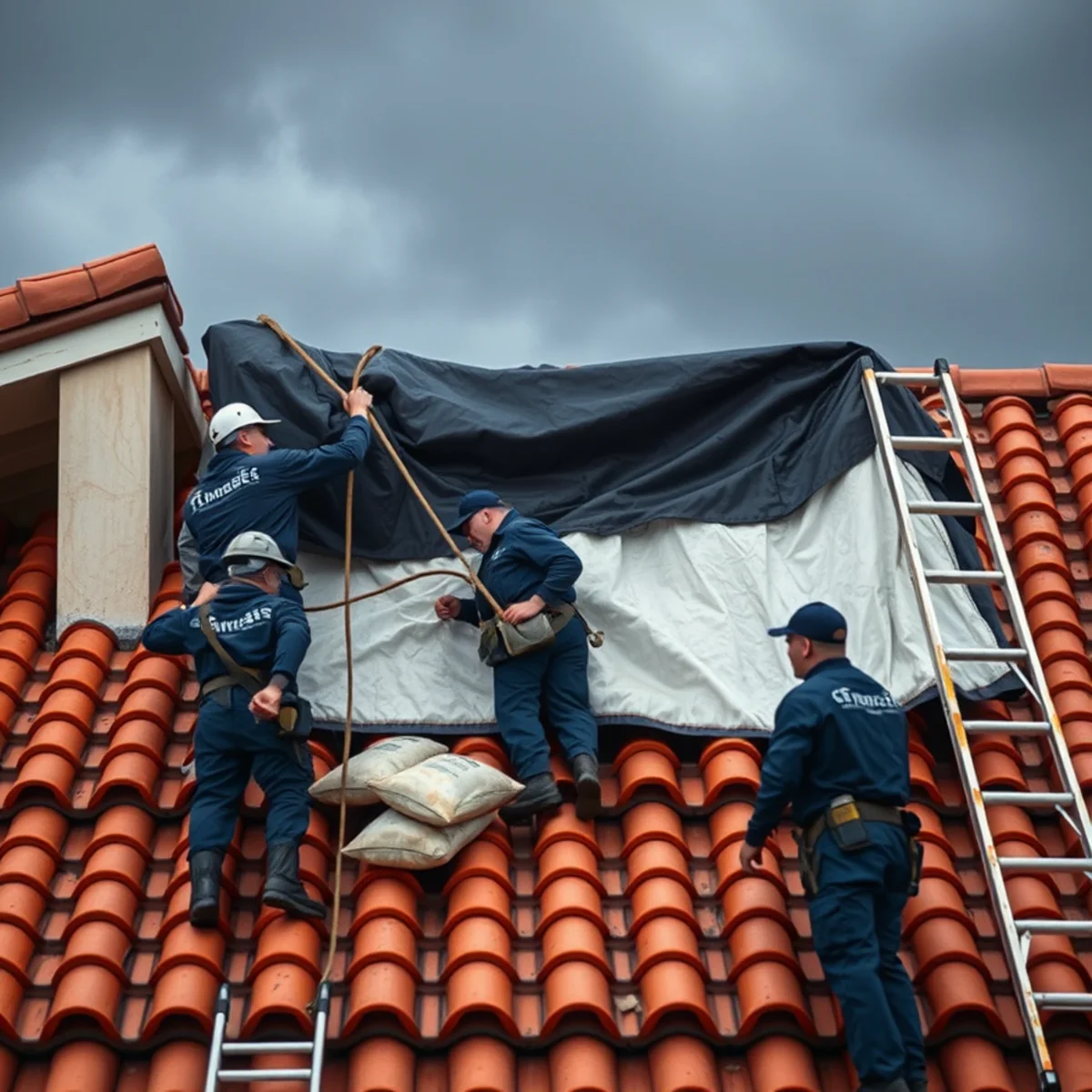
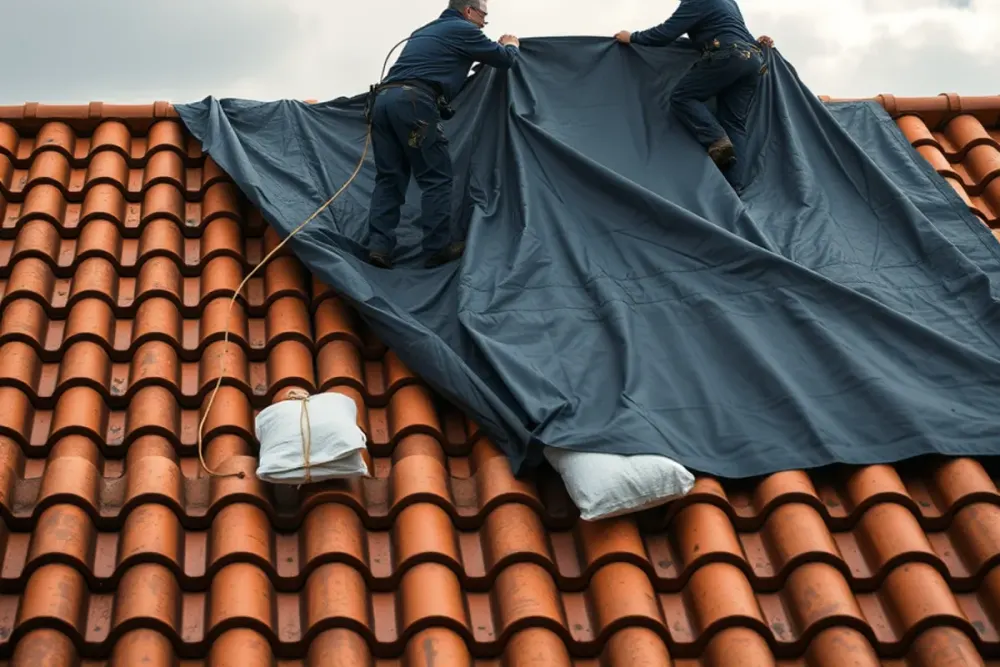
Reinforced tarps over roof breaches and board-up on broken openings, in the dark and in the rain when that is what the situation requires. Southern California storms arrive in sequences, so an open roof will be tested again within days.

Documentation built for a storm claim

Exterior and interior photography, the point of entry, and the date and time of the event. Storm claims turn on proving a covered peril created an opening, and that evidence disappears once repairs begin.

Attic and ceiling assembly drying

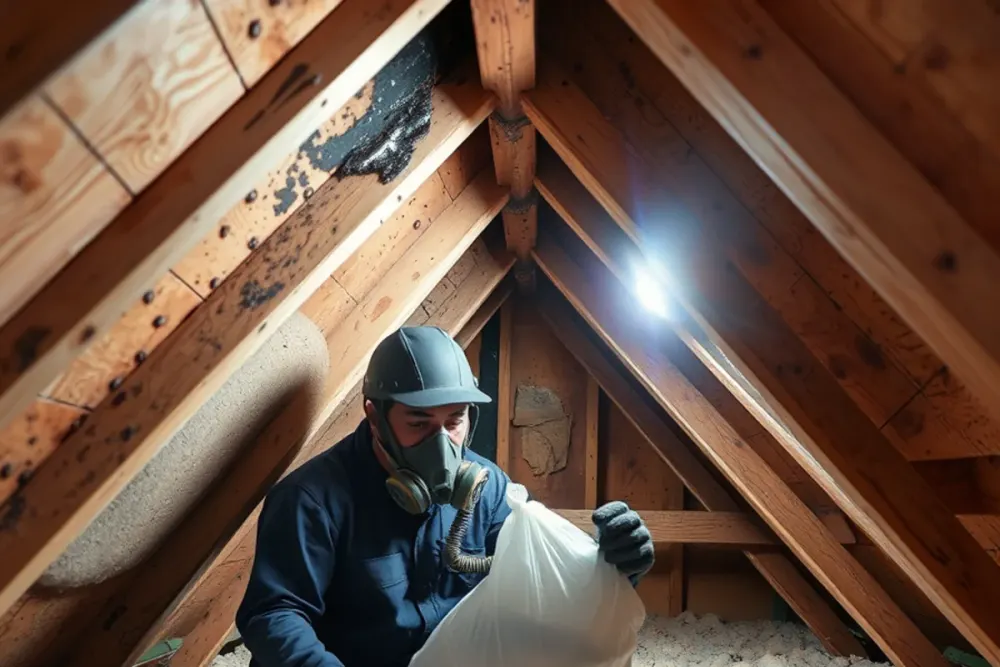
Saturated insulation removed, ceiling cavities opened where needed, and framing metered directly. Attics are the slowest-drying part of a storm loss and the easiest to declare finished too early.

Permanent repair coordinated, interior restored

Licensed roofing and window repair sequenced so the envelope is properly closed, then ceiling drywall, matched texture, insulation to the correct R-value and paint.

Emergency tarping is also what your policy expects. Leaving a breach open through the next storm gives an adjuster a legitimate basis to reduce what they pay — keep the receipt and photograph the work.

Our Storm Response Process

Stabilize the envelope, then handle the water inside it. Doing those in the wrong order wastes the work.

  1. Emergency tarping and board-up

    Reinforced tarps over roof breaches, board-up on broken windows and openings. This happens first, and we do it in the dark and in the rain when that is what the situation requires.

  2. Document the storm damage

    Exterior and interior photography, the point of entry, and the date and time of the event. Storm claims turn on proving that a covered peril created an opening — this documentation is the claim.

  3. Extract the water inside

    Standing water out of the living space, and out of the ceiling cavities and insulation the roof leak fed. Storm water that has crossed soil or roofing debris is treated as contaminated.

  4. Open up wet assemblies

    Saturated insulation and compromised ceiling material come out where needed, so the structural members above can actually dry rather than staying wrapped in wet batting.

  5. Dry and monitor

    Air movers and dehumidifiers metered daily. Attic and ceiling cavity spaces get specific attention — they are the slowest-drying part of a storm loss and the easiest to declare finished too early.

  6. Coordinate permanent repairs

    Tarping is temporary. We coordinate licensed roofing and window repair so the envelope is permanently closed, then complete the interior restoration.

  7. Restore the interior

    Ceiling drywall, texture matched to the existing finish, paint, insulation, and flooring — back to pre-loss condition.

Crew securing an emergency tarp over storm-damaged roofing in Downey, CA

How Downey Storms Actually Cause Damage

Understanding the local pattern helps you know what to check and when.

Atmospheric rivers are the dominant winter risk. These are narrow corridors of concentrated moisture that park over Southern California and deliver sustained, high-intensity rain — and they arrive in trains. The 2022–2023 sequence brought ten to California in about three weeks. What matters for buildings is the intensity: a marginal roof penetration that has handled ordinary rain for years fails under two inches an hour, and storm drains back up when they cannot take the volume, sending water across streets and toward the lowest doorway.

Santa Ana winds do a different kind of harm. Dry offshore gusts lift and peel roofing, tear flashing loose, throw debris, and bring down limbs from mature trees — and Downey has plenty of those, planted in the 1950s and 60s and now very large. The damage is often invisible from the ground: a few lifted tiles, a section of flashing pulled up. Nothing leaks, so nobody calls. Then the first winter storm arrives and the water pours in through a hole the wind made in October.

That is the local lesson worth acting on. If Downey has had a significant wind event, get the roof looked at before the rainy season, not after the ceiling stains.

Saturated attic insulation being removed after storm damage in a Downey, CA home

Storm Claims: Where They Are Won and Lost

Storm claims are more frequently disputed than any other water loss, and the arguments are predictable.

The first is peril. Wind that removes shingles and lets rain in is generally a covered storm loss. Rain that entered because the roof was already worn out is maintenance, and it is excluded. Carriers examine this closely, which is why we photograph the point of entry carefully and note the storm date and time.

The second is the flood line. Water that fell from the sky and got in through a wind-created opening is typically covered by the standard homeowners policy. Water that rose from the ground and came in at the threshold is flooding, and needs separate flood coverage. Same storm, same house, sometimes the same room — two entirely different claims. We document which one it was.

The third is mitigation. Policies require you to take reasonable steps to prevent further damage. Emergency tarping is exactly that, and carriers expect to see it. Leaving a roof breach open through the next storm gives an adjuster a legitimate basis to reduce what they pay. Get it tarped, keep the receipt, and photograph it.

What Storm Damage Restoration Costs Depend On

Storm work has an emergency phase and a restoration phase, and they price differently.

Emergency stabilization

Tarping and board-up are priced by area and access. A steep tile roof in the dark during active rain is a different job from a single ground-floor window.

How much water got in and for how long

A breach found immediately is a contained loss. One discovered days later after several storm bands has usually wet insulation, ceiling assemblies, wall cavities, and flooring.

Ceiling and attic scope

Water entering from above affects insulation, ceiling drywall, and the framing between. Insulation replacement plus ceiling repair and texture matching is often the largest interior line.

The permanent envelope repair

Roofing, window, and flashing repairs are separate licensed scopes we coordinate. Necessary, and worth separating on the claim so nothing is double-counted.

Why Downey Storm Damage Is Often Months Old

Two different kinds of storm hit this city, and the dangerous one does not leak when it happens.

Santa Ana wind damage is a delayed fuse

Dry offshore gusts lift tiles, peel shingle edges and tear flashing in October. Nothing leaks. Then the first atmospheric river arrives and water pours through an opening the wind made months earlier. Get the roof looked at after a wind event, not after the ceiling stains.

Atmospheric rivers arrive in trains

The 2022–23 sequence brought nine consecutive atmospheric rivers in about three weeks — the longest run in seventy years of records. Ground saturates, drainage never clears between bands, and the third storm does more damage than the first from less rain.

We document which claim you actually have

Rain through a wind-created opening is usually a covered storm loss. Water that rose off the ground is flooding and needs separate coverage. We photograph the point of entry precisely because that distinction decides the claim.

Storm Damage questions we get asked

Usually yes when wind or storm created an opening and rain got in — that is the classic covered peril. Two common exclusions catch people: damage from water that rose off the ground is flooding and needs separate flood coverage, and rain entering through a roof that was already worn out is treated as maintenance. Prompt reporting, emergency tarping, and clear photos of the point of entry are what keep a claim clean.

Need storm damage in Downey, CA?

We answer 24/7 and dispatch a crew within 60 minutes across Downey and the neighboring Gateway Cities. A person answers the phone — not an answering service.

  • Open 24/7
  • 60-minute emergency dispatch
  • IICRC S500 standard
  • Bonded & insured
Water Damage Downey CA
8615 Florence Ave, Downey, CA 90240
+1 (201) 277-9344 · Get Directions
Call 24/7Free Estimate