
6 min read
Why Shop-Vaccing a Flooded Carpet Isn't Enough (What Professional Extraction Pulls Out)
The carpet feels dry to your hand and the pad underneath is still holding gallons. That gap is where mold jobs come from.
Read article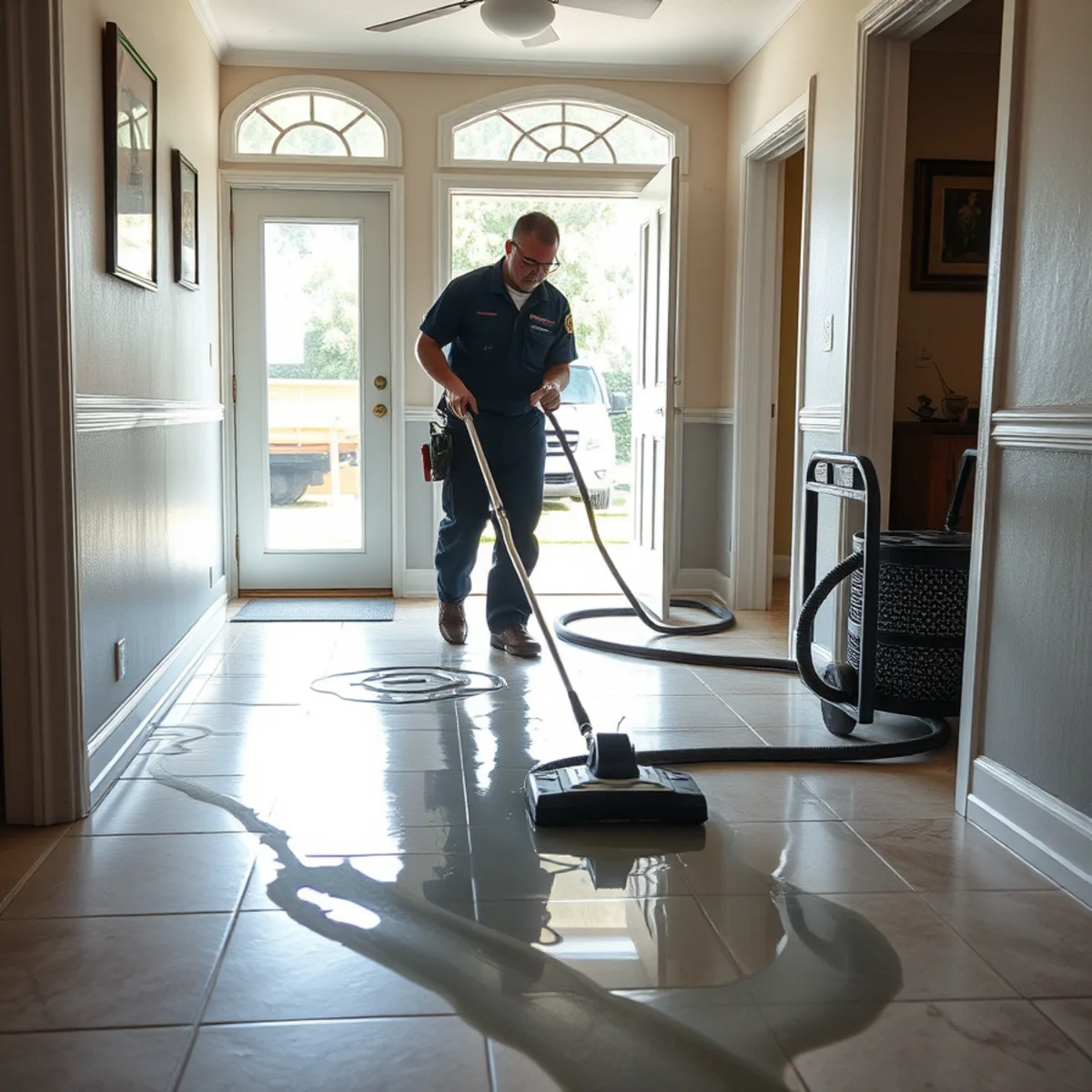
Core restoration service
Standing water does not sit still. Every minute it stays on your floor, it is being pulled sideways under baseboards and downward into the slab, the subfloor, and the wall cavities where you cannot see it. A puddle that looks like a two-towel problem in the hallway has usually already traveled eight to ten feet in every direction inside the building materials.
That is the part homeowners in Downey get wrong, and it is expensive. Water wicks up drywall at roughly an inch an hour. It rides along the underside of engineered flooring and pools on the vapor barrier. By the time a stain appears on the ceiling below, the cavity above it has been wet for hours.
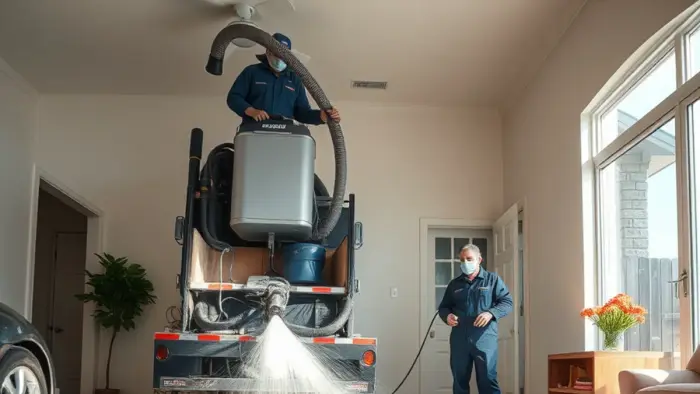
Extraction is the single highest-leverage hour of the entire job. Pull the bulk water out fast and you are drying a damp house. Leave it overnight and you are drying a saturated one — with demolition, disposal, and a mold conversation attached. We answer 24/7 and get a truck-mounted extractor on site within 60 minutes.
Call us before you start moving furniture if you are seeing any of the following. These are the signs that water has already gone past what a shop vac can reach:
If water has reached outlets, appliances, or the electrical panel, do not walk into the room. Kill the breaker to that area first, or wait outside and let our crew handle it.
Extraction is priced as a visit, not a machine rental. Here is exactly what turns up and what you are left holding when we leave.
A truck-mounted unit with the tank outside your house, plus weighted extraction heads that press carpet and pad to force trapped water up and out. Portable units come as backup, not as the primary tool.
Moisture meters and thermal imaging mark the real wet perimeter on your floor before we start. That map is what the scope is built from, and it is nearly always larger than the visible wet edge.
Water pulled out from under cabinet toe-kicks, inside wall cavities and beneath flooring — the places a surface pass cannot reach. Small access points go in behind the baseboard line where the repair is easy to hide.
Air movers and low-grain refrigerant dehumidifiers are running before we leave. There is no gap between extraction and drying, because the 24-hour mold clock started when the water did.
You also get the documentation set: pre-mitigation photographs taken before anything moved, the moisture map, and an itemized scope in the format your carrier expects.
Extraction is not just vacuuming. The order of operations decides how much of your flooring survives, and the documentation we capture during this hour is what your insurance adjuster will rely on later.
We shut off the water supply if it is still running and cut power to affected circuits. Then we trace the loss to its actual origin — a supply line, a slab leak, an appliance, or a roof penetration. Extracting without stopping the source just buys time.
Wide shots of every affected room, close-ups of damaged materials, water-line marks on walls, and appliance serial numbers. This is captured before we touch a thing, because adjusters weight pre-mitigation photography heavily.
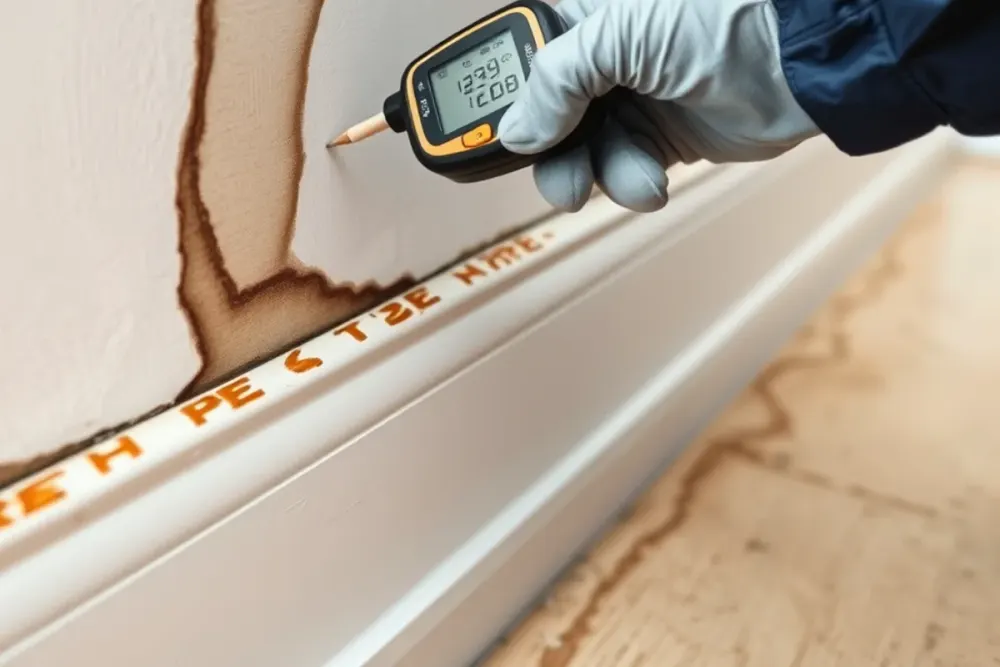
Moisture meters and thermal imaging show us where water actually went, not where it looks like it went. The wet line is almost always well past the visible edge. We mark it on the floor so nothing gets missed.
Truck-mounted extractors pull far more water per pass than portable units, and they pull it into a tank outside your house instead of a bucket in your hallway. Weighted extraction heads press carpet and pad to force trapped water up and out.
Water hiding under cabinet toe-kicks, inside wall cavities, and beneath flooring gets reached directly — small drilled access points behind the baseboard line, and specialty tools that draw water out of hardwood without pulling the floor.
Air movers and dehumidifiers go in before we leave. There is no gap between extraction and drying, because the 24-hour mold clock started when the water did, not when we arrived.
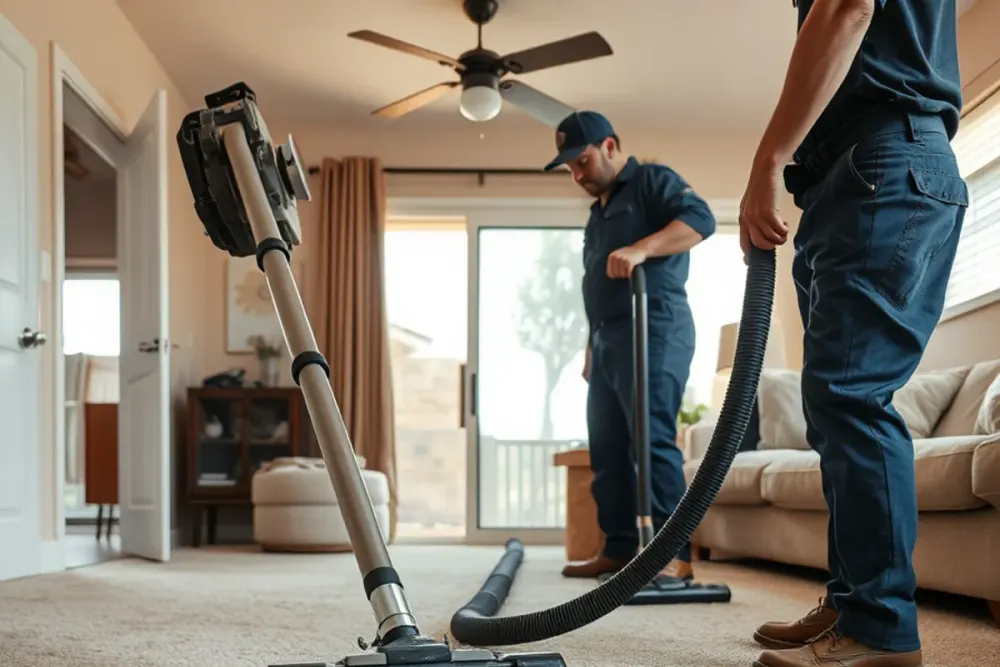
A dehumidifier removes water as vapor, a few gallons a day. An extractor removes it as liquid, a few gallons a minute. That difference is the whole reason the first hour matters so much.
Put concretely: a saturated 12x15 room with carpet and pad can hold well over 40 gallons of water. Extract properly and most of that leaves the building in under an hour. Skip straight to fans and dehumidifiers and you are asking machines to evaporate 40 gallons through your indoor air — which takes days, drives your humidity up, and pushes moisture into materials that were dry when we started.
This is the most common failure we see after someone has tried to handle it themselves or hired a crew that showed up with a van full of fans and nothing else. The house smells musty three weeks later because the water was never actually removed. It was just relocated.
Homeowners want a straight answer on this, so here it is. With clean Category 1 water and fast extraction, carpet is frequently salvageable and the pad underneath usually is not. Pad is cheap, it is a sponge, and replacing it is faster and safer than trying to dry it in place.
Solid hardwood over a Downey slab is the judgment call. Caught within the first day, specialty drying panels pull water up through the boards and we often save the floor. Left over a weekend, the boards cup and crown permanently and the honest answer is replacement.
Drywall depends on how high the water climbed and which category it was. Clean water two inches up a wall is typically dried in place. Contaminated water at any height means the affected drywall comes out — that is not upselling, it is the IICRC S500 standard, and no amount of drying makes contaminated porous material safe again.
We do not quote a price over the phone, because an accurate number needs a moisture map. What we will do is tell you honestly what moves the figure up or down, so nothing on the final invoice is a surprise.
Priced by affected square footage, not by room count. Water that crossed into two more rooms costs more than water that stayed put — which is exactly why calling early saves money.
Clean supply-line water is the cheapest scenario. Gray water adds disinfection and some material removal. Category 3 sewage adds containment, protective equipment, and regulated disposal, and is by a wide margin the most expensive.
Tile over slab extracts quickly. Carpet with pad takes longer. Hardwood, multi-layer flooring, and saturated wall cavities need specialty equipment and more labor hours.
Delay is the single biggest cost multiplier in this trade. Water sitting overnight moves a job from extraction-and-dry into demolition-and-rebuild, and can add mold remediation on top.
Extraction is the one hour of the job you cannot get back. These are the three things that decide how much of your flooring survives it.
A person picks up, not an answering service. From our base on Florence Ave most of Downey is a five to twelve minute drive, and every hour water sits raises the cost of the job by roughly 10 to 15 percent.
An extractor removes water as a liquid at gallons per minute. A dehumidifier removes it as vapor at gallons per day. Companies that skip straight to fans are asking machines to evaporate forty gallons through your indoor air.
Water gets classified properly, porous material that absorbed contaminated water is removed rather than dried, and drying is verified against a measured dry standard. Bonded and insured throughout.
For a small clean-water spill you caught immediately, yes. For anything that soaked carpet or crossed a room, no. A shop vac pulls surface water but leaves the pad, subfloor, and wall cavities wet, and those are exactly the places mold starts. It also has no way to tell you whether the assemblies underneath are dry — that takes a moisture meter, not a guess.
We dispatch within 60 minutes across Downey and the neighboring Gateway Cities, 24 hours a day. From our base on Florence Ave, most of Downey is a 5 to 12 minute drive, so crews are typically working well inside that window. Call the line and a person answers — not an answering service.
Sudden, accidental events — a burst supply line, a failed water heater, an overflowing appliance — are usually covered minus your deductible. Gradual leaks that were left unaddressed, and natural flooding without separate flood insurance, are typically excluded. We document the loss thoroughly from the first hour and work directly with your adjuster, which is where most claim disputes are won or lost.
Rarely for clean water. Extraction itself takes a few hours and you can usually stay, though the affected rooms will be noisy and off-limits while equipment runs. Category 3 sewage losses are different — those we handle with containment, and we will tell you plainly if the safe call is to stay somewhere else for a couple of nights.
No. On-site estimates are free and itemized in writing before any work is authorized. If we arrive and the honest answer is that you caught it early enough to handle yourself, we will tell you that and there is no charge for the visit. What we will not do is quote a figure over the phone, because an accurate number needs a moisture map.
The carpet feels dry to your hand and the pad underneath is still holding gallons. That gap is where mold jobs come from.
Read article
Three variables decide it: what kind of water, how high it climbed, and how long it sat. Everything else is judgment around those.
Read articleWe cover 43 areas from our base at 8615 Florence Ave. These are the ones we reach fastest:
We answer 24/7 and dispatch a crew within 60 minutes across Downey and the neighboring Gateway Cities. A person answers the phone — not an answering service.