
6 min read
Ceiling Leaking During a Storm? What to Do in the Next 30 Minutes
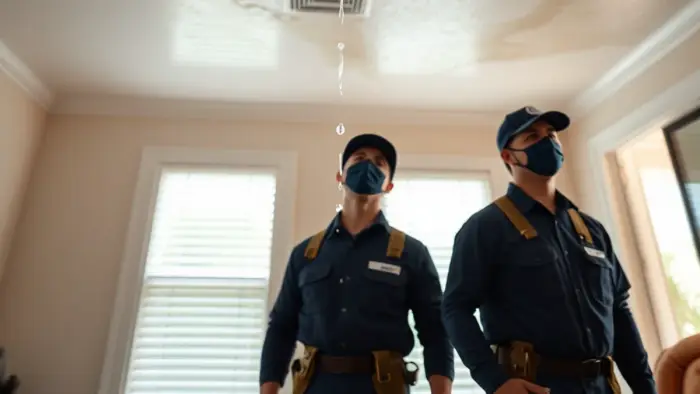
A sagging ceiling is a collapse risk, not a cosmetic problem. Here is the order to do things in while the rain is still falling.
Read article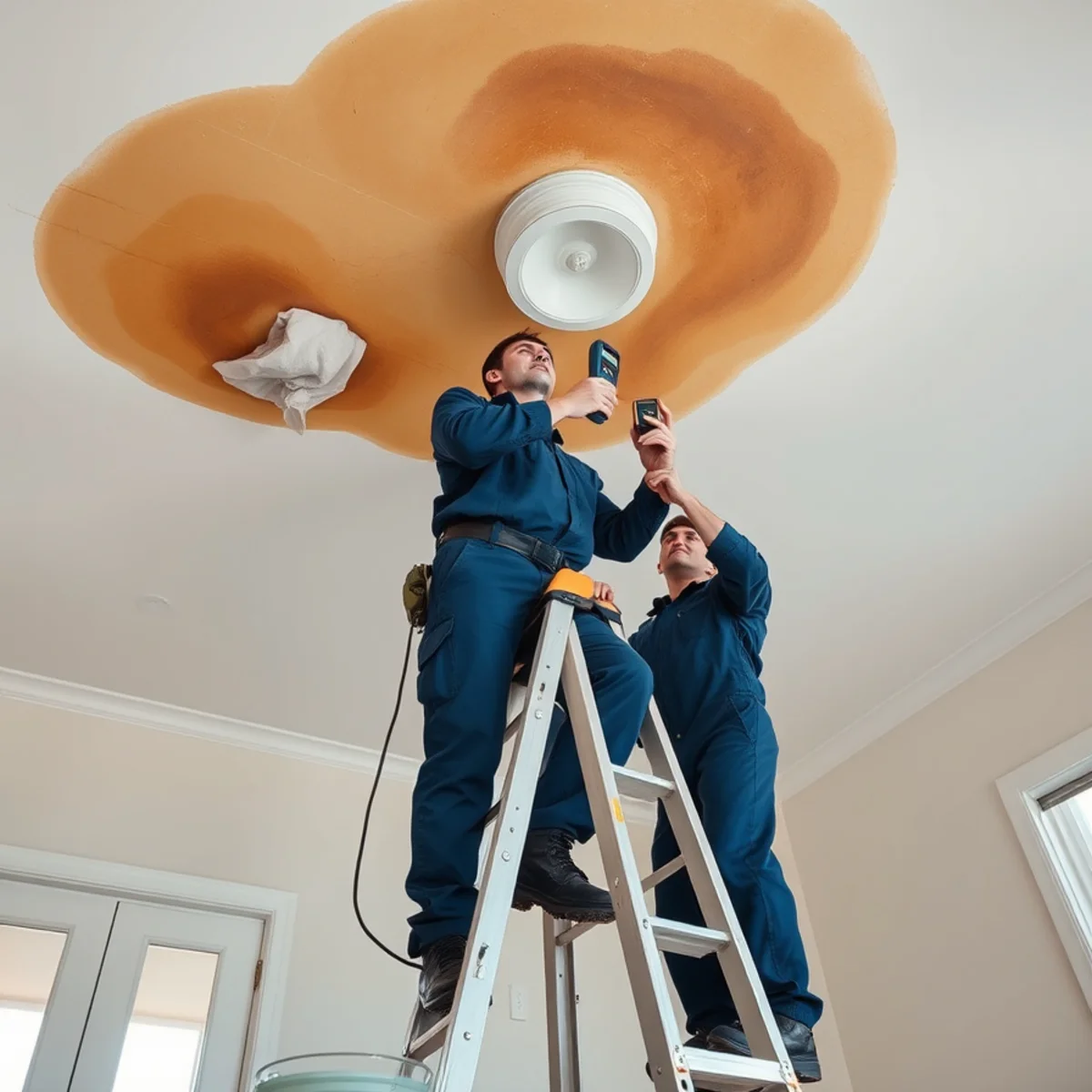
24/7 emergency service
A brown ring on the ceiling is the end of the story, not the beginning. Water has been traveling through the structure above for a while to produce it.
That is why simply painting over a ceiling stain never works. The stain is tannin and mineral residue pushed through the drywall by water that came from somewhere else — and water rarely drips straight down. It runs along the top of a truss, follows a pipe, tracks across the back of the ceiling drywall, and finally appears at the lowest point. That point can easily be fifteen feet from where the water actually got in.
So we do three things in order. Find the true source. Dry the cavity above the ceiling, which is the part everyone skips. Then repair and texture-match the ceiling so the patch is not the first thing you see when you walk in.
Different symptoms point to different problems, and the urgency varies a lot:
Sagging is the one that needs an immediate call. Saturated drywall gets heavy fast and can release the whole pocket in one go.
The repair is the last step. Everything before it is what makes the repair permanent.
If the ceiling is sagging we relieve the pooled water in a controlled way and catch it, rather than letting it come down on your floor. Power to affected fixtures goes off first.
Thermal imaging and moisture mapping from below, plus inspection from the attic or the floor above. Water runs along framing before it drips, so fifteen feet between the source and the stain is completely ordinary.
Insulation, joists and the top face of the ceiling drywall. Wet insulation comes out. This is the step that separates a real repair from a cosmetic one.
Compromised drywall removed past the damage to solid substrate, then new board, tape, matched texture — knockdown, orange peel or the acoustic finishes common in Downey's mid-century homes — and paint.
If your ceiling has pre-1980 acoustic popcorn texture, tell us. That may contain asbestos and it is not something to scrape or sand before testing.
The repair is the last step, not the first. Everything before it is what makes the repair permanent.
If the ceiling is sagging we relieve the trapped water in a controlled way and catch it, rather than letting it come down on the floor. Power to affected fixtures goes off first.
Thermal imaging and moisture mapping from below, plus inspection from the attic or the floor above. We follow the moisture trail upstream — the origin is regularly nowhere near the stain.
Roof or flashing failure, a supply line, a drain from a bathroom above, an HVAC condensate backup, or a failed shower pan. The repair path is completely different for each, and misdiagnosis is why so many ceilings get repaired twice.
Emergency tarping for a roof breach, or coordination with a licensed plumber for a supply or drain failure. The ceiling does not get closed until the water is genuinely stopped.
The space above the ceiling — insulation, joists, the top of the drywall — is metered and dried. Wet insulation comes out. This is the step that separates a real repair from a cosmetic one.
Compromised drywall is removed past the damage to solid substrate. Water-stained drywall that has lost integrity does not get skim-coated back into service.
New drywall, taped and finished, then texture matched to the existing ceiling — knockdown, orange peel, or the acoustic finishes common in Downey's mid-century homes — and painted. Done right the repair is not findable.
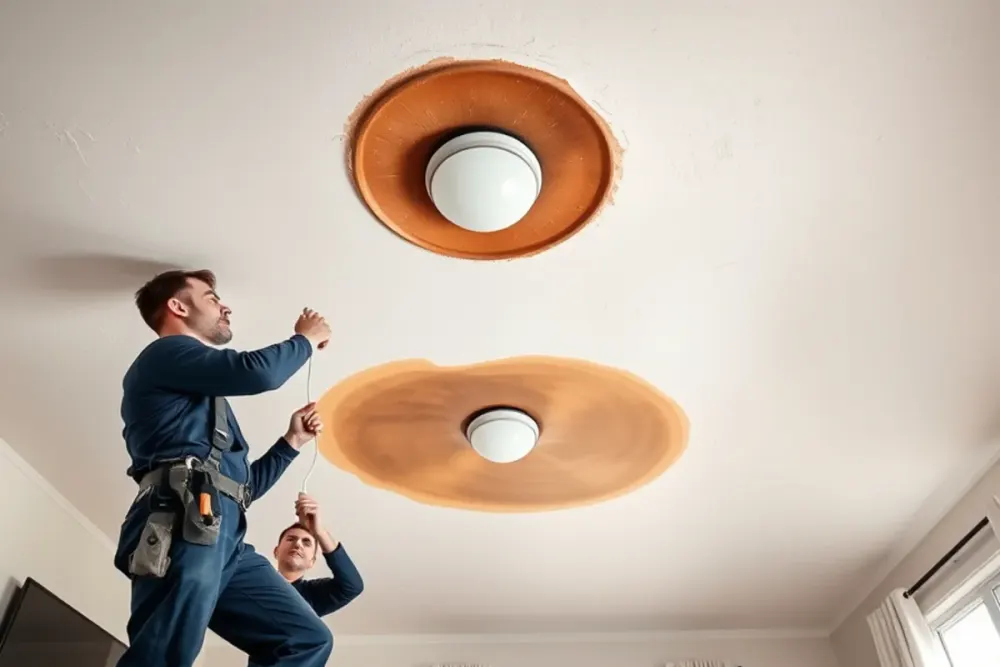
After enough of these, the sources sort into a short list — and which one you have usually correlates with when your house was built.
In single-story homes, which is most of Downey's post-war stock, a ceiling stain almost always means the roof or something in the attic. Failed flashing at a chimney or vent, lifted tiles from a Santa Ana wind event, a cracked plumbing vent boot, or an HVAC condensate line that has backed up and is overflowing into the ceiling. That last one is badly under-diagnosed: it produces a stain that appears in warm weather when the air conditioning is running hard, and homeowners naturally assume a leak has nothing to do with the AC.
In two-story homes and the shared-wall townhomes around Downey Landing, the source is usually the bathroom above. A failed shower pan, a leaking toilet flange seal, or a supply connection under a vanity. The signature is a stain that grows after someone showers rather than after it rains.
There is one more that catches people out, and it is not a leak at all. In an under-insulated attic, warm humid indoor air hits a cold ceiling surface in winter and condenses. It produces damp patches and eventually mold with no leak anywhere. The fix is insulation and ventilation, not a roofer — and telling the difference is exactly what the moisture mapping is for.
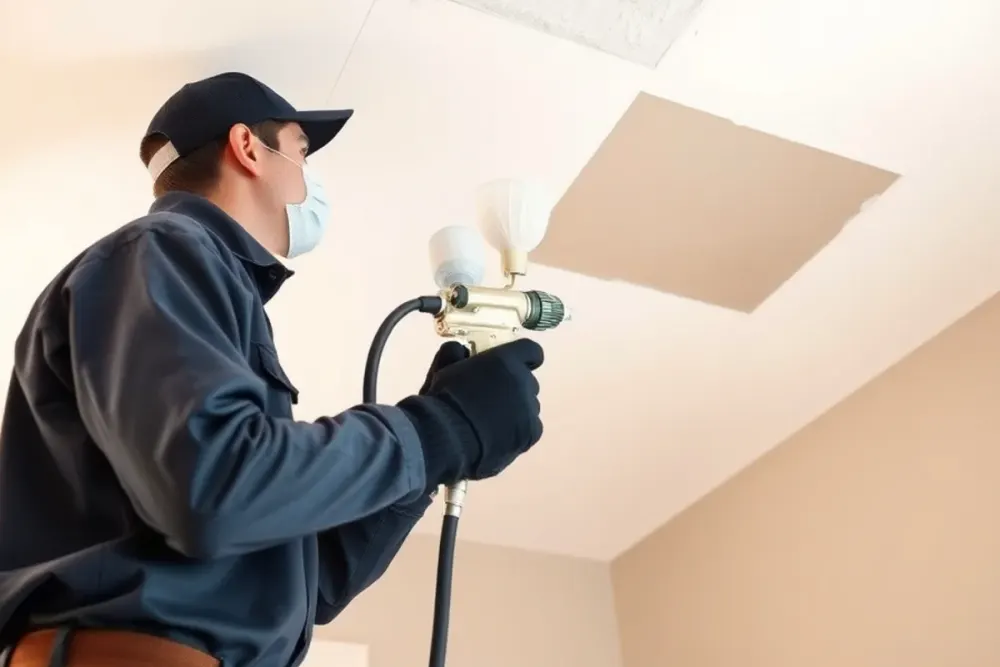
Plenty of Downey homes still have their original acoustic popcorn ceilings, and this is worth knowing before anyone starts scraping.
Acoustic ceiling texture applied before roughly 1980 may contain asbestos. Given how much of Downey's housing stock dates from the 1940s through the 1970s, we treat pre-1980 popcorn ceilings as presumed asbestos-containing until testing says otherwise.
In practice that means we do not scrape or sand a suspect ceiling. Damaged sections are cut out intact, wetted to suppress dust, and handled per the applicable rules — and where the scope calls for it, a licensed abatement contractor does the removal before we rebuild. Testing is inexpensive and fast, and it is the right first step.
This matters most on DIY repairs. A homeowner sanding a water-damaged popcorn ceiling in a 1955 Downey bungalow can release fibres through the whole house. If your ceiling is textured and your home predates 1980, get it tested before anyone touches it with a scraper.
Ceiling work is priced on the damaged area plus what has to happen above it. Both matter.
A two-foot stain around a vent is a small patch. A saturated section spanning several joist bays means removal back to sound framing and a much larger rebuild.
Wet insulation removal and cavity drying add scope. So does an attic that is difficult to access — low-clearance attics in the older single-story stock take longer to work in.
Matching an existing knockdown or acoustic finish so the repair disappears is skilled work. Pre-1980 popcorn may need testing and, if positive, licensed abatement.
Roofing, plumbing, or HVAC work to stop the leak is a separate scope from the ceiling itself. We identify and coordinate it, and we will not close a ceiling over an unresolved source.
Because the first repair usually treated the stain rather than the source.
Roof or flashing failure, a supply line, a drain from a bathroom above, or an HVAC condensate line backing up. That last one is badly under-diagnosed — it produces a stain that appears in warm weather when the air conditioning is running hard.
In an under-insulated attic, warm humid indoor air meets a cold ceiling surface in winter and condenses, producing damp patches and eventually mold with no leak anywhere. The fix is insulation and ventilation, not a roofer — and moisture mapping is what tells the two apart.
Emergency tarping for a roof breach, or coordination with a licensed plumber for a supply or drain failure, happens before the ceiling goes back.
Only after the leak is fixed and the ceiling above is verified dry — and even then a stain-blocking primer is required, because water stains bleed straight through ordinary paint. Painting first is a mistake we see constantly. It hides the evidence, does nothing about the water still in the cavity, and the stain returns within weeks, usually larger.
Possibly, and quickly. A bulge means water is pooled above and drywall is holding weight it was never designed for. Keep everyone out of the room, move furniture if you can do it from the edges, and call us. We relieve the water in a controlled way and catch it. Do not stand underneath to puncture it — a saturated pocket can release far more water and weight than people expect.
Water travels along the path of least resistance before it drips. It runs along the top of a truss, follows a pipe or a wire, and spreads across the back of the drywall until it finds a seam or a fixture penetration to come through. Fifteen feet between the source and the stain is completely ordinary. That is why we trace it with thermal imaging and moisture mapping instead of opening the ceiling where the stain is.
It follows the cause. A sudden burst pipe above the ceiling or a storm-created roof opening is normally covered. A slow roof leak that has been staining the ceiling for a year is gradual damage and is typically excluded. This is why acting on the first small stain matters — the same damage is far more likely to be covered at week one than at month twelve.
That is exactly what moisture metering answers, and it is worth knowing before you spend anything. An old dried stain from a leak that was already repaired reads at normal moisture content and needs only stain-blocking primer and paint. An active leak reads wet in the drywall and in the framing above. We check rather than guess, because the two situations have completely different costs — and painting over an active one hides the evidence while the water keeps coming.
A sagging ceiling is a collapse risk, not a cosmetic problem. Here is the order to do things in while the rain is still falling.
Read article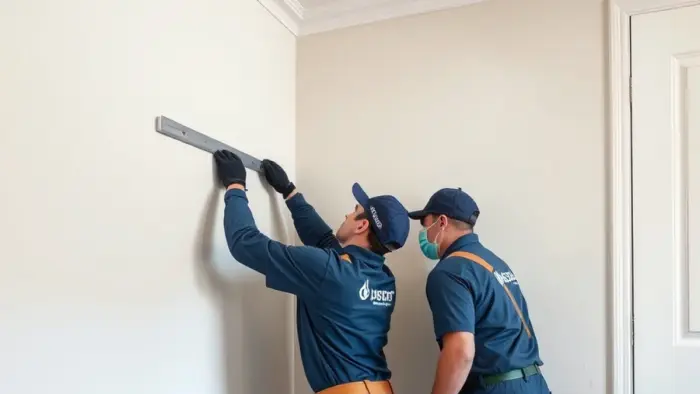
Three variables decide it: what kind of water, how high it climbed, and how long it sat. Everything else is judgment around those.
Read articleWe cover 43 areas from our base at 8615 Florence Ave. These are the ones we reach fastest:
We answer 24/7 and dispatch a crew within 60 minutes across Downey and the neighboring Gateway Cities. A person answers the phone — not an answering service.