
6 min read
Gutters, Downspouts, and Yard Drainage: A Pre-Rainy-Season Checklist for Downey Homes
An average roof sheds hundreds of gallons in a modest storm. Where that water goes when it leaves the gutter is the whole question.
Read article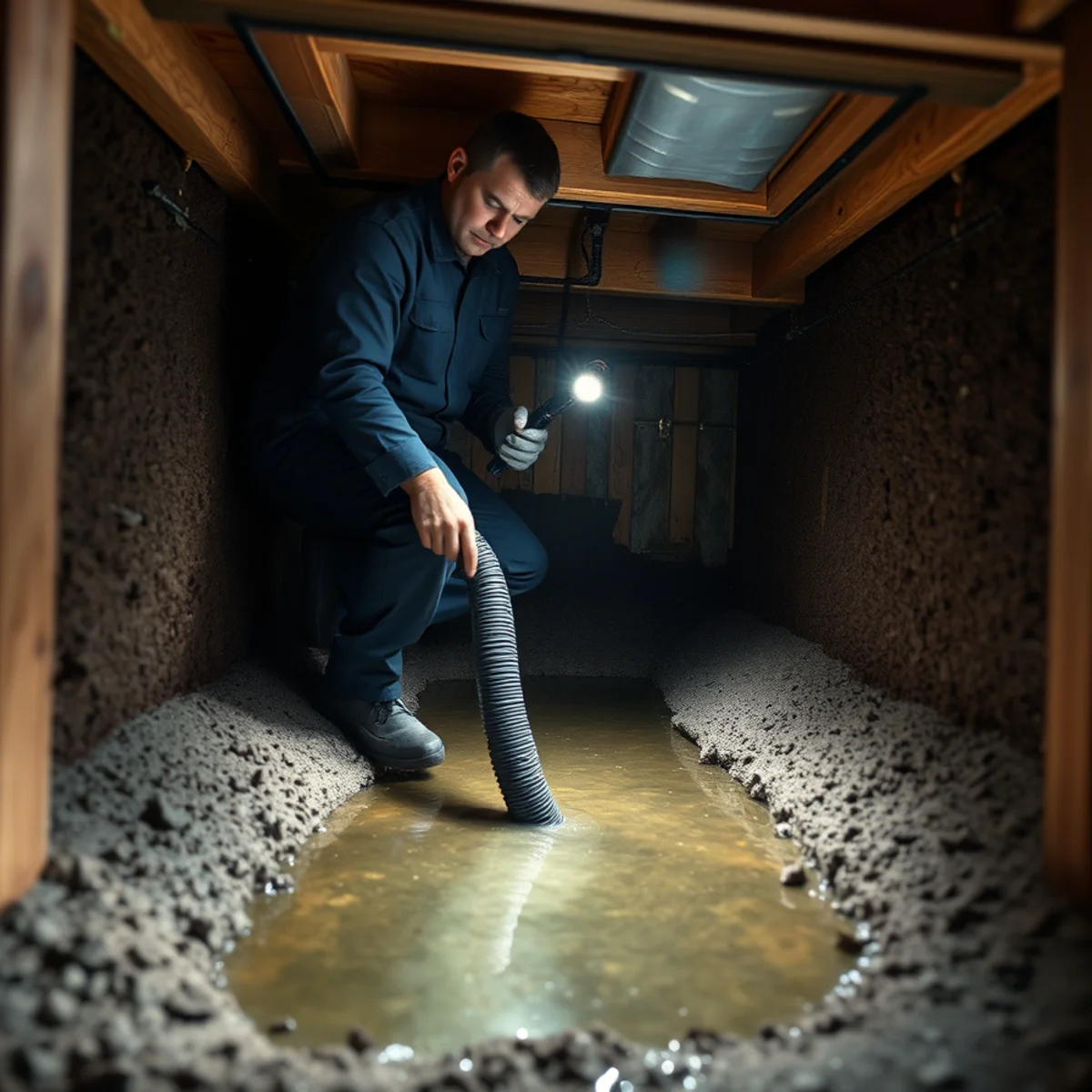
24/7 emergency service
Worth saying plainly: most Downey homes do not have basements. Southern California building practice never favored them, and the ones that exist here are mostly commercial, or below-grade parking under apartment buildings along the Imperial Highway corridor.
What Downey does have, in quantity, is crawl spaces. The pre-1960 housing stock across North Downey, Downtown Downey, and the Woodruff/Florence corridor was built on raised foundations with a crawl space underneath. Those spaces flood — from a slab or supply leak above, from groundwater rising during a winter storm sequence, from a failed sump, or from a sewer lateral break.
And a flooded crawl space is worse than it sounds, because it is directly connected to the air you breathe. Air in a crawl space rises into the living space through the floor — a real effect, usually called the stack effect. Standing water under your house means humidity, mold spores, and odor moving up into your bedrooms whether you ever go down there or not.
Most people never look in the crawl space. These are the symptoms that show up upstairs instead:
If you have a sump pump, test it before every rainy season. Pour a bucket of water into the pit and confirm it kicks on and discharges. Most failures are discovered during the storm, which is the worst possible time.
Confined-space work with its own safety requirements. Pumping the water out is the easy part; keeping it out is the job.
Crawl spaces and basements are confined spaces. We check for electrical hazards, gas and air quality before anyone goes under, and ventilate as needed. This is not a step to skip.
Submersible pumps clear the volume and extraction handles what pumps cannot reach. The soil underneath is addressed rather than left holding moisture against your joists.
Fiberglass between the floor joists never dries usefully in place — it comes out. Deteriorated or floated vapor barrier is replaced and properly overlapped.
Grading and downspout discharge reviewed, foundation vents checked, sump function tested. A crawl space that floods twice usually has a drainage cause nobody addressed.
You get photographs of the finished space and final moisture readings — useful for the claim and for the next buyer's inspection.
Confined-space work with its own safety requirements. Pumping the water out is the easy part — keeping it out is the job.
Crawl spaces and basements are confined spaces. We check for electrical hazards, gas, and air quality before anyone goes under, and we ventilate as needed. This is not a step to skip.
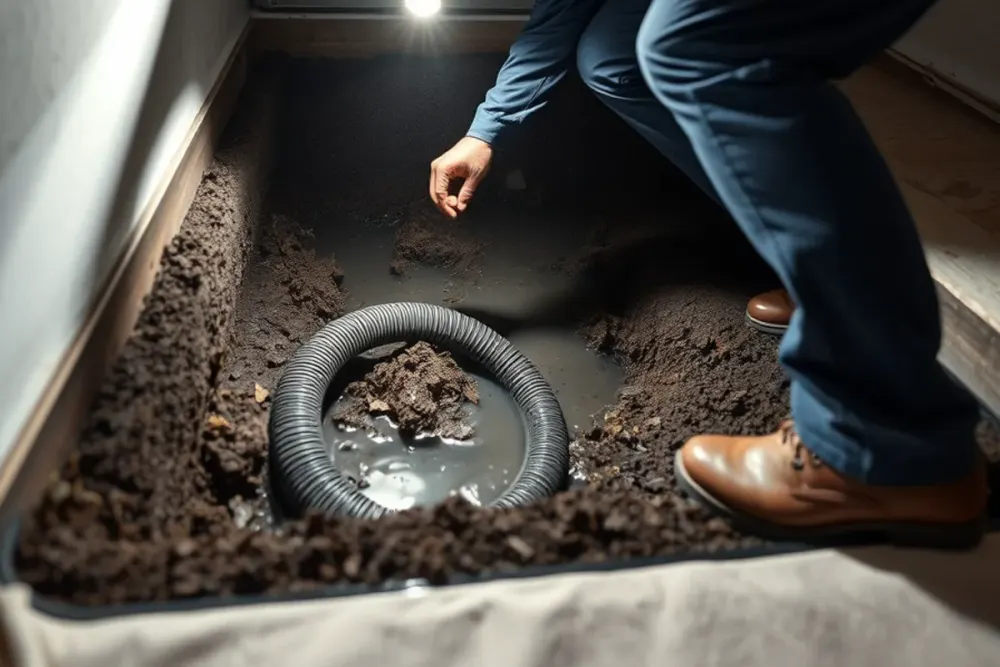
Submersible pumps clear the volume, then extraction handles what the pumps cannot reach. Saturated soil is addressed, not just the free-standing water on top of it.
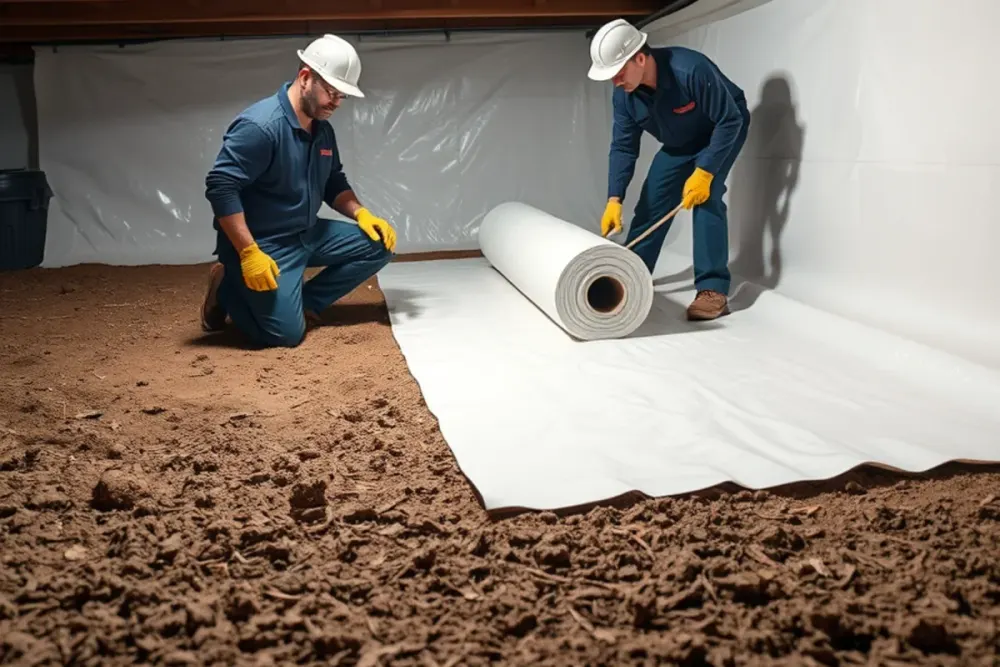
Wet insulation between the floor joists, deteriorated vapor barrier, and any debris that absorbed water. Wet fiberglass under a floor never dries usefully in place — it comes out.
Framing, joists, subfloor underside, and foundation walls get cleaned and treated with an antimicrobial. Where a sewer break was involved, the full Category 3 protocol applies.
Air movers and dedicated low-grain dehumidifiers work the confined volume, metered against the dry standard for the joists and subfloor — not judged by eye through the access hatch.
Vapor barrier replaced and sealed, grading and downspout discharge reviewed, foundation vents checked, and sump function tested. A crawl space that floods twice usually has a drainage cause nobody addressed.
Photos of the finished space, final moisture readings, and a written summary of what was corrected — useful for the claim and for the next buyer's inspection.
Homeowners are often skeptical that a wet crawl space affects their indoor air. The mechanism is straightforward.
Warm air rises and leaves a house through the upper levels, and that outflow pulls replacement air in from below — through floor penetrations, plumbing chases, and gaps around ductwork. A meaningful share of the air you breathe in a raised-foundation home has come up from the crawl space. If that space holds standing water, the air arriving upstairs carries its humidity, its mold spores, and its smell.
Downey's climate makes this worse in a specific way. Our dry summers mean crawl space soil gives up moisture readily into a ventilated space, and our winter storm sequences saturate it again. That wet-dry cycling is ideal for mold on the wood framing overhead, and joists and subfloor are exactly the structural members you least want colonized.
It is also why a wet crawl space is an active structural problem, not a cosmetic one. Sustained moisture against joists and beams leads to rot and, in this region, to termite conditions. Dry the space and you protect the floor system holding your house up.
The genuine basement flooding calls we take are commercial and multi-family — subterranean parking under apartment buildings along Imperial Highway, service levels beneath retail on the Firestone corridor, and storage basements under older Downtown Downey commercial buildings.
These share a failure mode. They rely on a mechanical system — a sump pump, a drainage pit, sometimes a lift station — to stay dry, and that system has a single point of failure. When a storm knocks out power, the pump stops exactly when it is needed most. We see it every significant rain event.
For those properties the fix is boring and effective: a battery or generator backup on the sump, a high-water alarm that reports remotely, and a tested annual service interval. If you manage a building with below-grade space in Downey and there is no backup power on that pump, that is the thing to solve before November.
Confined-space work carries costs that above-grade work does not. Here is where they come from.
How much water, and how hard the space is to work in. A 30-inch crawl space with one small access hatch takes far more labor hours than an open basement.
Groundwater and clean supply leaks are the simpler cases. A sewer lateral break under the house is Category 3 and brings containment, protective equipment, and regulated disposal.
Wet insulation and failed vapor barrier come out and get replaced. On a full crawl space that is a meaningful materials and labor line.
If the space floods because of grading, downspout discharge, or a failed sump, fixing the cause is separate from the cleanup — and it is what stops you paying for this twice.
Air in a crawl space rises into the living space through floor penetrations and plumbing chases. A wet crawl space delivers its humidity, spores and odor straight into your bedrooms.
Southern California building practice favored raised foundations, so true residential basements are rare here. The pre-1960 stock across North Downey, Downtown Downey and the Woodruff/Florence corridor is where we do most of this work.
Sustained moisture against joists and beams leads to rot and, in this region, to termite conditions. Drying the space protects the floor system holding your house up.
Subterranean parking under apartment buildings on the Imperial Highway corridor and service levels beneath older Downtown Downey retail. Those fail when a storm knocks out power to a sump with no backup.
Very few. Southern California building practice favored slab-on-grade and raised foundations, so true residential basements are rare here. What is common is crawl spaces under the pre-1960 raised-foundation homes, plus below-grade parking and service levels in commercial and multi-family buildings. We handle all of them — most of our residential calls on this page are crawl spaces.
No. A ventilated crawl space in Downey does not have enough air exchange to evaporate standing water before mold establishes on the joists overhead — and that air rises into your living space. Sustained moisture also brings rot and termite conditions to the framing that supports your floor. Pump it, dry it, and fix the vapor barrier.
Usually only with a specific sump pump failure or water backup endorsement — it is commonly excluded from standard California policies by default. It is typically inexpensive to add. Worth checking your declarations page now rather than after the next storm, and worth putting a battery backup on the pump either way.
The upstairs symptoms usually tell you first: a musty smell strongest at floor level, floors that feel cold or spongy in one area, boards cupping over a section, and rising humidity indoors. If you can safely open the access hatch, shine a light across the soil — you are looking for standing water, sagging or fallen insulation, and a vapor barrier that has floated or torn. If any of that is present, call us.
Most run three to five days once the standing water is out, longer when the soil itself is saturated or the joists overhead have taken on moisture. Low-clearance crawls under Downey's older raised-foundation homes take longer again, simply because air movers cannot be placed freely. We meter the wood rather than the air, and equipment stays until the framing reaches its dry standard.
An average roof sheds hundreds of gallons in a modest storm. Where that water goes when it leaves the gutter is the whole question.
Read article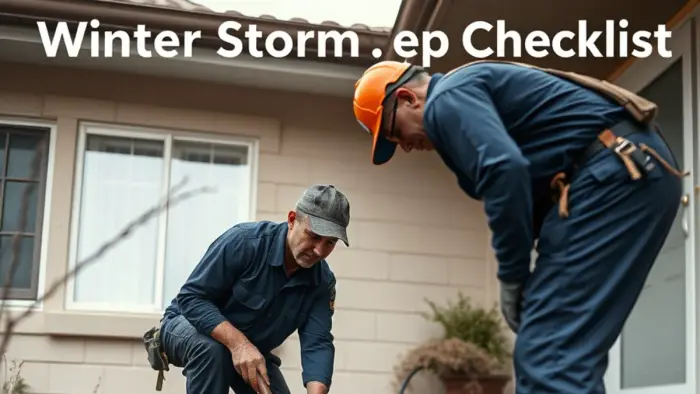
Most of what we attend in January was preventable in October. Here is the list, in order of how much damage each item actually prevents.
Read articleWe cover 43 areas from our base at 8615 Florence Ave. These are the ones we reach fastest:
We answer 24/7 and dispatch a crew within 60 minutes across Downey and the neighboring Gateway Cities. A person answers the phone — not an answering service.