
6 min read
Water Heater Flooded the Garage: Emergency Steps Before Help Arrives
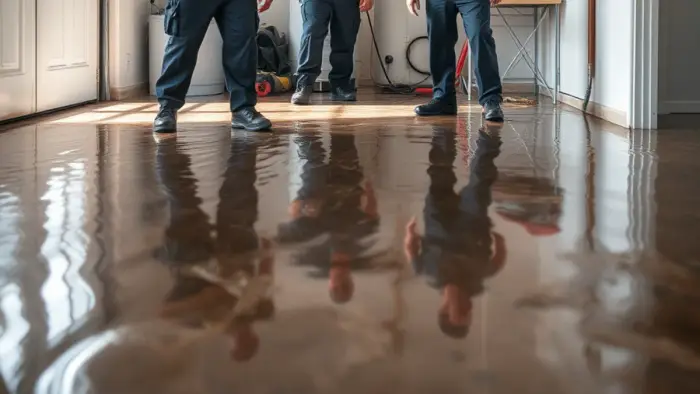
A failed 50-gallon tank does not release 50 gallons. It releases 50 and keeps going, because the supply line is still feeding it.
Read article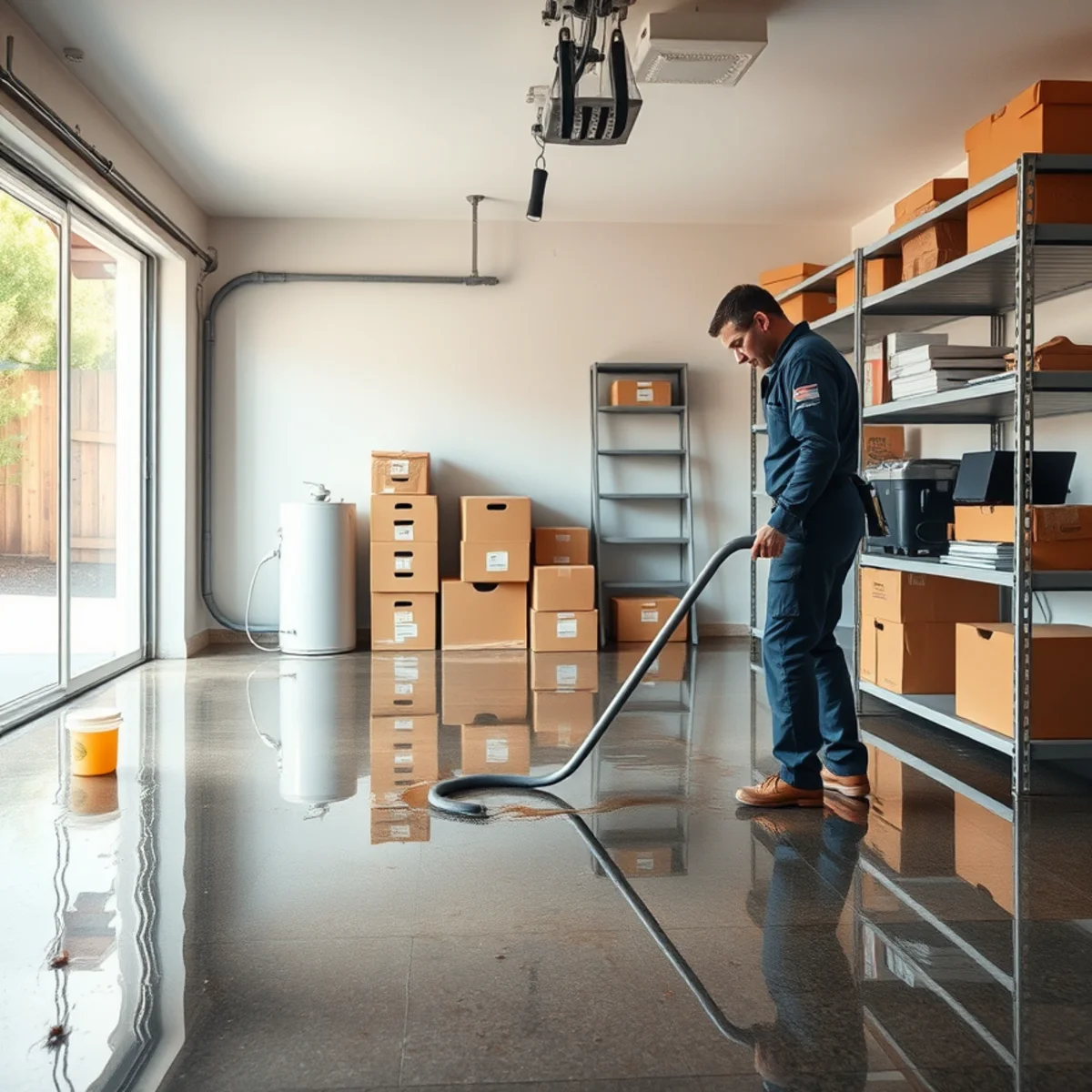
Specialist restoration
A failed 50-gallon water heater does not release 50 gallons. It releases 50 gallons and then keeps going, because the supply line is still feeding it.
That is why a tank failure floods a garage so fast. Unless someone shuts the cold-water supply at the valve on top of the heater or closes the main, water keeps arriving at full pressure through a tank that no longer holds it. If it fails while nobody is home, the volume is limited only by how long it runs.
In Downey this is an extremely common call, for a specific local reason: nearly all of the city's post-war and aerospace-era tract homes put the water heater in the garage. Garage slabs are typically graded toward the door, which helps — but they share a wall with the house, and that shared wall is exactly where the damage hides.
Tanks usually warn you before they let go. Catching these is the difference between a plumbing appointment and a flooded garage:
Water at the base of a tank is not a slow leak to keep an eye on. It usually means the inner tank has corroded through, and full failure follows quickly.
Garage floods look simple and routinely are not, because of where the water goes after it leaves the garage floor.
The cold-water valve on top of the tank, or the main if that valve will not turn. Gas heaters get the gas shut off; electric units get the breaker pulled before anyone works in standing water.
This is the step nearly everyone skips. The wall between an attached garage and the living space sits on the same slab, and water wicks up into the drywall on both faces. We meter the bedroom or hallway side, and it is wet more often than not.
Code-required fire-rated board on the garage side is thicker, holds more water and dries more slowly than standard drywall. It gets its own drying time rather than being assumed dry with the room.
Garage storage is mostly cardboard, and cardboard on a wet slab wicks water and starts growing mold within days. We get what is salvageable up off the floor immediately.
We also flag what caused it: strapping, a missing drain pan, or a pan with no drain line. None of that is our work to sell — it is what stops you paying for this twice.
Garage floods look simple and routinely are not, because of where the water goes after it leaves the garage floor.
Close the cold-water shut-off on top of the heater, or the main if that valve will not turn. On the phone we walk you through exactly which valve to look for.
Gas heaters get the gas shut off; electric units get the breaker pulled. Garages hold outlets, tools, and stored chemicals, so we check electrical hazards and any contamination risk before working.
Pre-mitigation photos including the tank and its serial plate, then extraction of standing water from the slab and anything stored on it.
This is the step that matters. Moisture mapping of the shared wall between garage and house, the bottom plate, any interior room on the other side, and the slab itself.
Garage storage is usually cardboard, and cardboard on a wet slab wicks water and grows mold within days. We triage what is salvageable and get it off the floor.
Concrete and the shared wall assembly are dried and metered to the dry standard. Drywall that wicked water gets addressed rather than left to dry behind the paint.
Drywall, baseboard, and paint restored — and we tell you plainly if the strapping, the pan, or the drain line needs correcting before the replacement tank goes in.
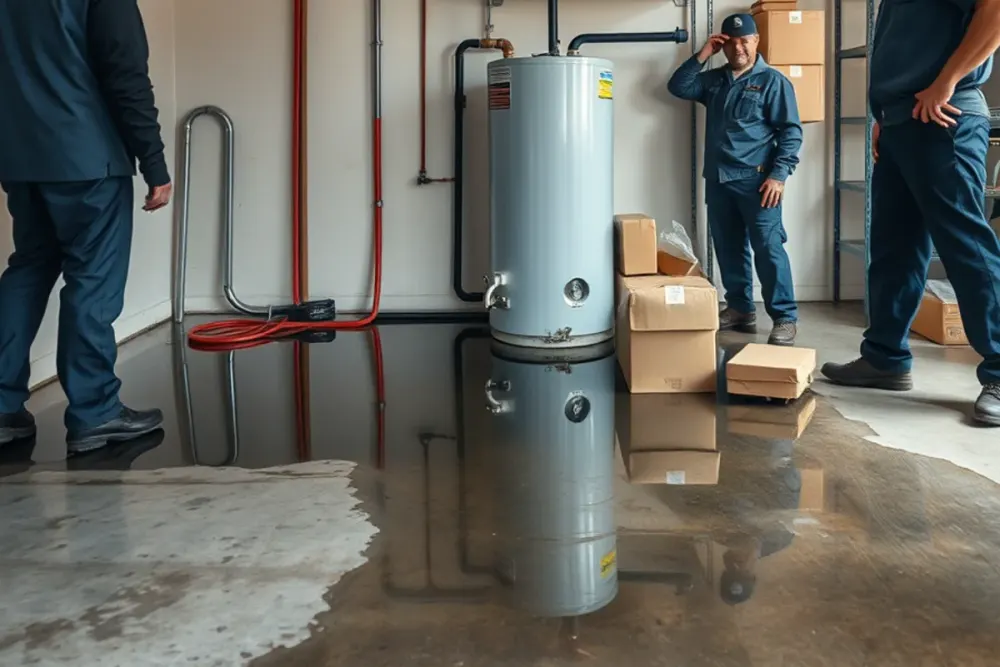
Homeowners are usually relieved when a water heater fails in the garage. The floor is concrete, it drains toward the door, and the mess seems contained.
It is not, and here is why. The wall between an attached garage and the living space is a framed wall sitting on the same slab. When water spreads across that slab it reaches the bottom plate of that wall and wicks upward into the drywall on both sides. The garage side you might notice. The house side — behind the drywall in a bedroom, a hallway, or a closet — you will not, until the baseboard swells or a smell develops weeks later.
Fire-rated drywall on the garage side, required by code, makes it worse rather than better. It is thicker, it holds more water, and it dries more slowly than standard board.
So on every water heater call we meter the interior side of that shared wall, and it is wet more often than not. Finding it on day one means drying an assembly. Finding it in week six means removing drywall and remediating mold.
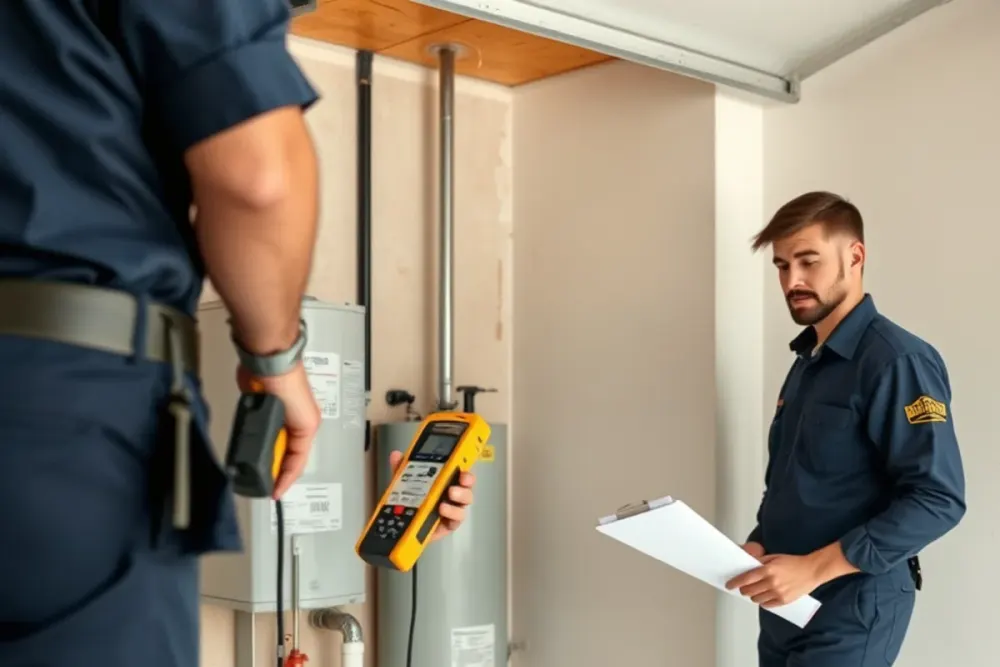
California Health and Safety Code section 19211 requires water heaters to be braced, anchored, or strapped to resist falling or horizontal displacement in an earthquake. Two straps, upper third and lower third, is the standard approach.
The point is not just that the tank stays upright. An unstrapped heater that topples in a quake tears its water and gas connections, which means a flood and a gas leak simultaneously, in a household that is already dealing with an earthquake. The strapping requirement is fundamentally about that.
It matters in Downey specifically because so much of the housing stock predates the rule, and heaters get replaced without anyone checking. We look at the installation on every call, because it costs nothing to look and we are already standing there. What we regularly find: straps missing, straps installed only at one level, straps anchored into drywall rather than framing, or straps so loose they do nothing.
The other two items worth checking at the same time — a drain pan under the tank, and a pan drain line routed to somewhere that is not your garage floor. Neither is required in every situation, and both would have contained a large share of the failures we clean up.
Usually a moderate loss, provided it is caught quickly. The variables that move it:
Caught within the hour, it is a garage extraction and a few days of drying. Running all day while the house was empty, it reaches interior rooms and multiplies the scope.
Water that crossed into carpeted living space is a substantially larger job than water confined to a slab.
Drying a wall assembly with fire-rated board on one side takes longer than an open surface, and drywall removal and replacement is a real line item when it is saturated.
Garage storage that absorbed water — boxes, paper goods, soft materials — often cannot be saved, and cleaning and disposal add to the scope.
Nearly every home in this city puts the water heater in the garage, against the wall shared with the living space.
Health and Safety Code section 19211 requires all residential water heaters — not just new installations — to be braced, anchored or strapped. We check the installation on every call because we are standing there anyway, and we routinely find one strap instead of two, or anchors into drywall rather than framing.
Past ten, treat replacement as a planned expense. Water pooling at the base usually means the inner tank has already corroded through, and that failure mode does not stay small.
Homeowners are relieved when a tank fails on a concrete floor that drains toward the door. Then a baseboard swells in the bedroom six weeks later. Metering the shared wall on day one is the difference between drying an assembly and remediating mold.
We would not wait. Water pooling at the base usually means the inner tank has corroded through, and that failure mode does not stay small — it goes from a puddle to a full-flow release, often without much more warning. At minimum, close the cold-water supply valve on top of the tank now. That stops the refill and limits what happens if it lets go overnight.
The resulting water damage from a sudden tank failure is generally covered, minus the deductible. The heater itself usually is not — that is treated as an appliance at the end of its life. So the flood cleanup and the drying are typically claimable, while the replacement tank comes out of pocket. Document the tank, its serial plate, and the water line before anything is removed.
There is a valve on the cold-water inlet at the top of the tank — usually a lever or a round handle on the pipe entering the heater. Close it: a quarter turn for a lever, clockwise for a round handle. If it is seized or you cannot reach it, close the main instead, which in most Downey homes is on the street-facing side of the house near the hose bib or in the meter box at the sidewalk.
Ten to twelve years is typical, and regional water conditions can shorten that. Once a tank passes ten, treat replacement as a planned expense rather than an emergency. Flushing it annually and replacing the anode rod extends life meaningfully — and both cost far less than a garage flood and the drywall repair on the wall behind it.
It is a warning, not an all-clear. A pan collecting water means the tank or a fitting is already failing, and pans are shallow — they overflow quickly once the leak grows. Check that the pan's drain line is clear and actually discharging somewhere useful, then have the heater looked at now rather than after the tank splits. Tanks rarely fail gradually at the end of their life.
A failed 50-gallon tank does not release 50 gallons. It releases 50 and keeps going, because the supply line is still feeding it.
Read article
The law covers existing heaters, not just new ones — and in Downey, where nearly every tank sits in a garage, we find it ignored constantly.
Read articleWe cover 43 areas from our base at 8615 Florence Ave. These are the ones we reach fastest:
We answer 24/7 and dispatch a crew within 60 minutes across Downey and the neighboring Gateway Cities. A person answers the phone — not an answering service.