Emergency Guides
Water Heater Flooded the Garage: Emergency Steps Before Help Arrives
A failed 50-gallon tank does not release 50 gallons. It releases 50 and keeps going, because the supply line is still feeding it.
The short answer
Close the cold-water valve on top of the tank immediately — a failed heater keeps releasing at mains pressure until you do. Then shut off the gas or pull the breaker, photograph the tank and its serial plate, and get stored boxes up off the wet slab. A 50-gallon tank does not release 50 gallons; it releases 50 and keeps going.
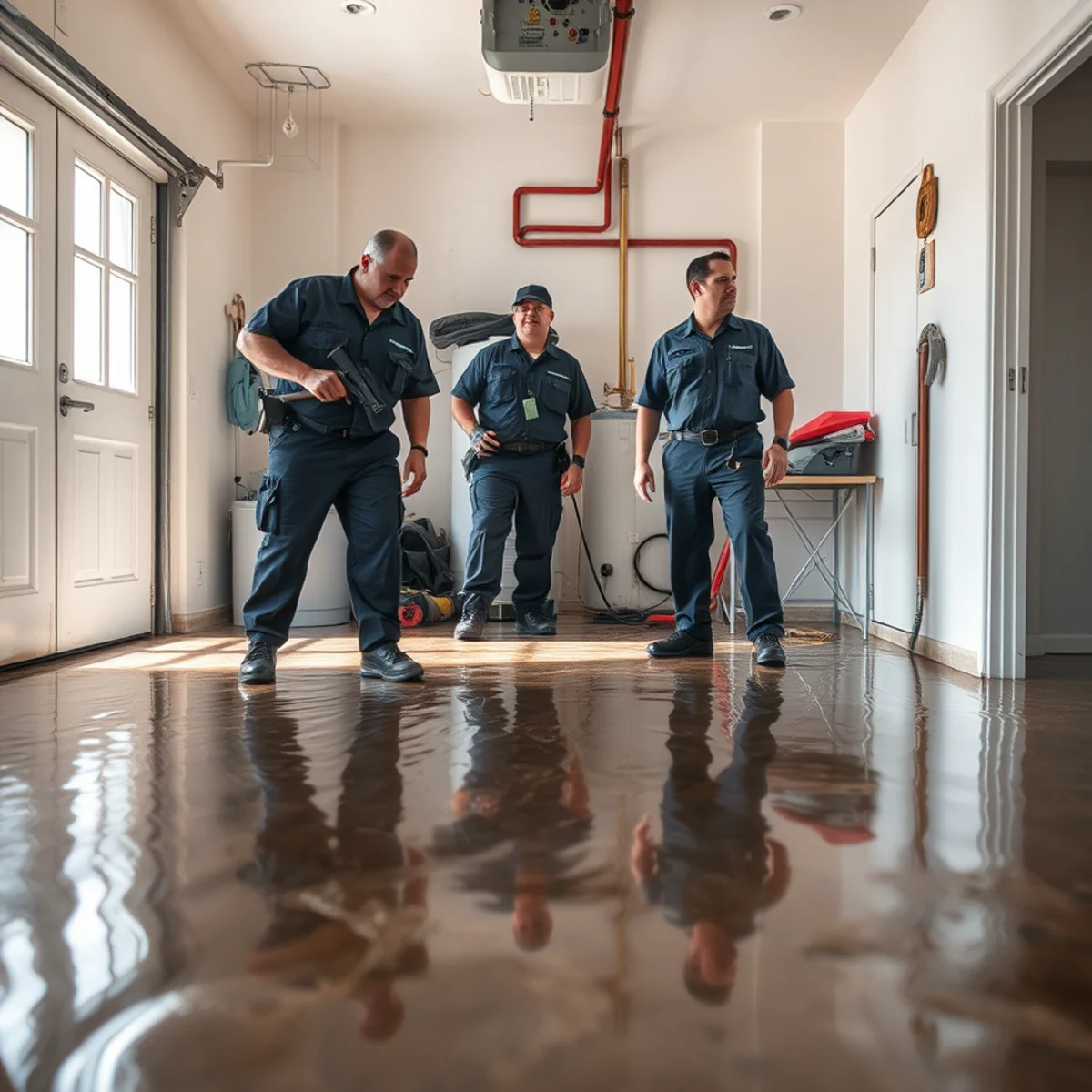
The number people get wrong about water heaters is the volume. A 50-gallon tank that fails does not put 50 gallons on your floor. It puts 50 gallons on your floor and then keeps going at mains pressure, because the cold water supply is still filling a tank that no longer holds anything.
So the first job is not mopping. It is closing a valve.
Step 1: Close the cold water supply to the heater
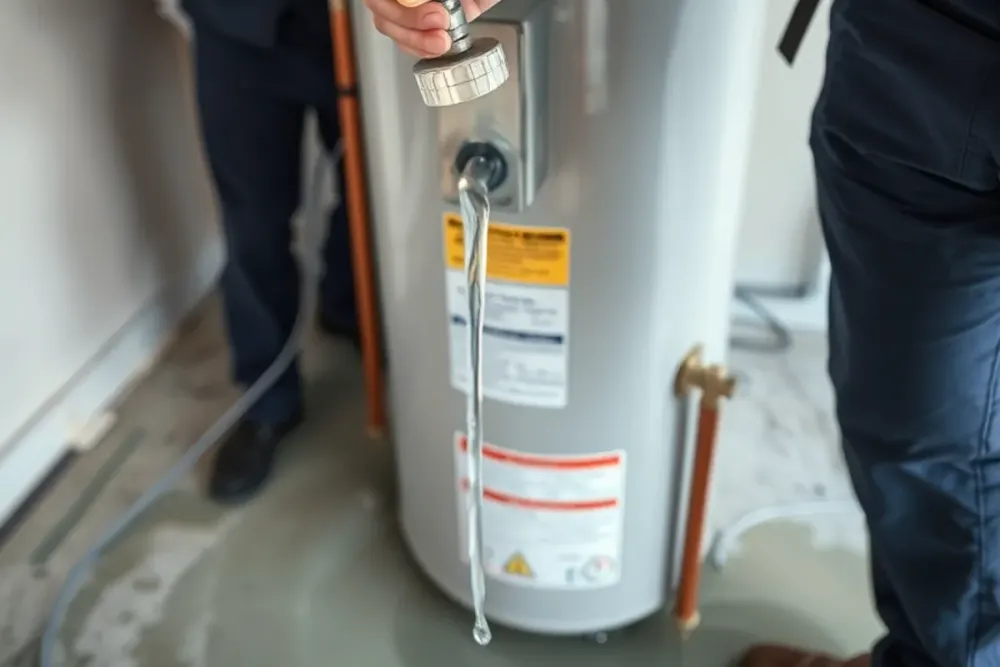
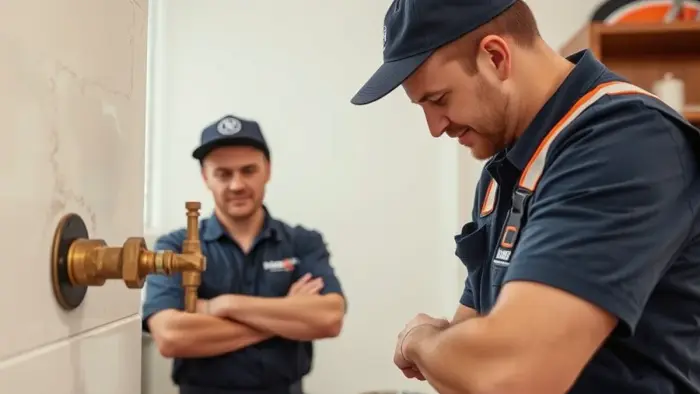
There is a valve on the cold water inlet at the top of the tank — usually a lever or a round handle on the pipe entering the heater, on the right-hand side as you face it. Close it. A quarter turn for a lever, clockwise for a round handle.
If it is seized or you cannot safely reach it, close the main instead. In most Downey homes that is on the street-facing side of the house near the hose bib, or in the meter box at the sidewalk.
Step 2: Kill the energy source
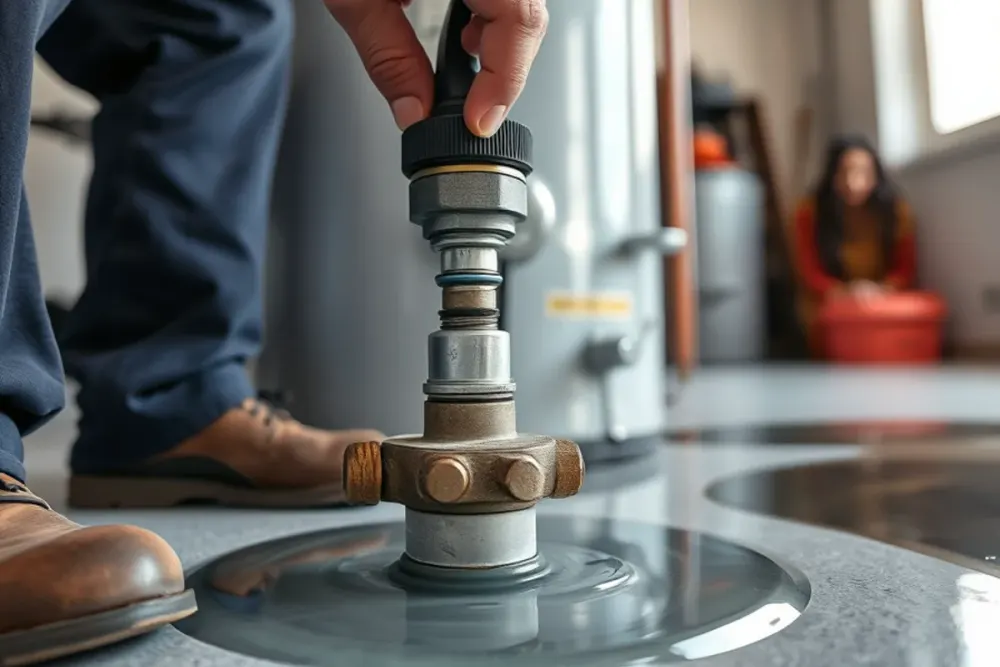
- Gas heater: turn the gas control valve on the tank to OFF. There is also a shut-off on the gas line running to the unit.
- Electric heater: switch off the dedicated breaker in your panel — do not try to disconnect anything at the unit.
- Either way, if water has reached the electrical panel or you would have to stand in water to reach it, stop. Leave it and wait for the crew.
An electric element firing in a tank that has drained will burn out, and a gas burner running under a failed tank is a hazard nobody needs. Both take ten seconds to prevent.
Step 3: Photograph it before anything moves
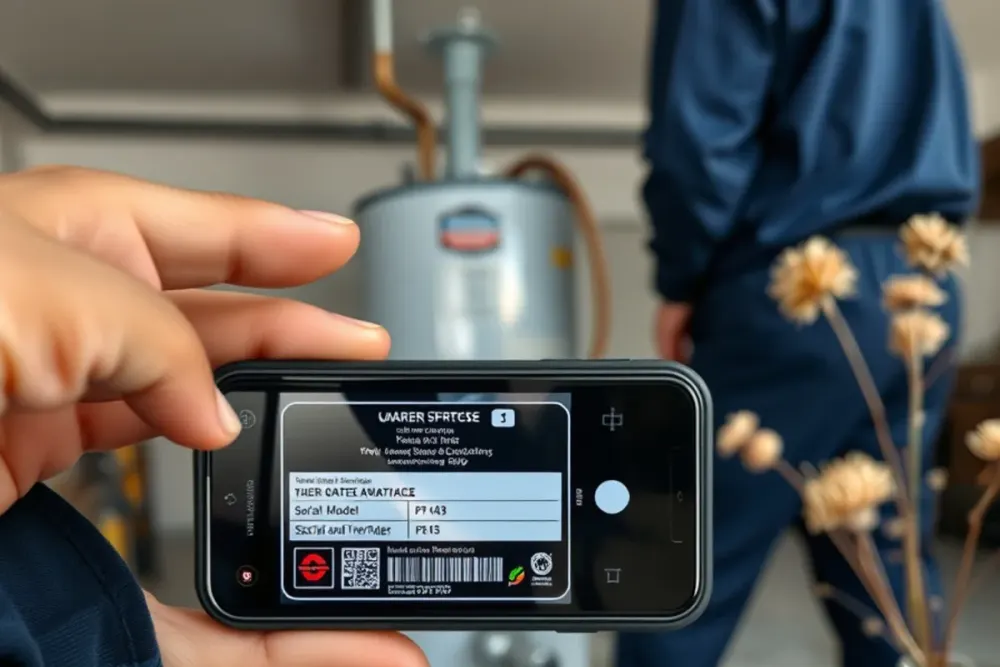
Get the tank itself, the serial and model plate on the side, the water on the floor, the water line on the wall behind and beside the unit, and anything stored on the garage floor that has got wet. Insurance typically covers the resulting water damage but not the tank itself, so documenting both separately is useful.
Step 4: Get contents off the floor
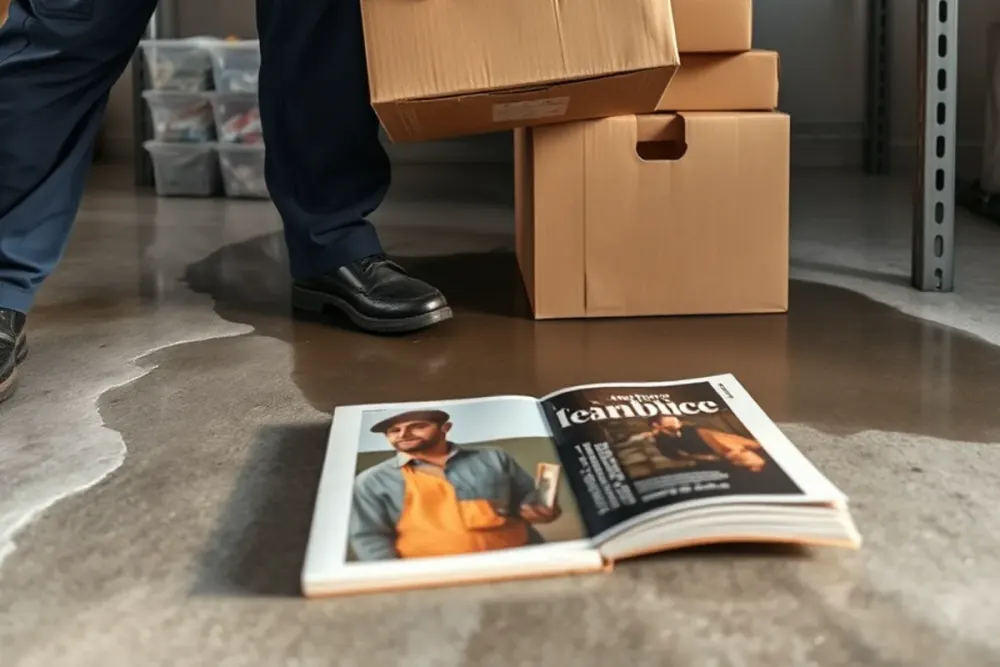
Garage storage is mostly cardboard, and cardboard sitting on a wet slab wicks water upward and starts growing mold within days. If you can safely move boxes up onto shelving or out of the garage, that is the most useful physical work you can do before the crew arrives.
The damage almost everyone misses
Homeowners are usually relieved when a heater fails in the garage. Concrete floor, drains toward the door, seems contained. It very often is not.
The wall between an attached garage and the living space is a framed wall sitting on the same slab. Water spreading across that slab reaches the bottom plate of that wall and wicks upward into the drywall on both sides. You might notice the garage side. The house side — behind drywall in a bedroom, hallway, or closet — you will not, until a baseboard swells or a smell develops weeks later.
Fire-rated drywall on the garage side, which code requires, makes this worse rather than better. It is thicker, holds more water, and dries more slowly than standard board.
On every water heater call we meter the interior side of that shared wall. It is wet more often than not.
Why this happens so often in Downey
Downey's post-war and aerospace-era tract housing puts the water heater in the garage almost universally. That is a sensible place for it in a mild climate with no basements — and it means a tank failure has direct access to the wall shared with your bedrooms.
Typical service life is ten to twelve years in this region's water conditions. Past ten, treat replacement as a planned expense rather than waiting for the failure.
The warning signs you get first
- Any water pooling at the base of the tank — this usually means the inner tank has corroded through
- Rust or corrosion on the tank body, particularly along the bottom seam
- Rusty or discolored hot water at the taps
- Popping, rumbling, or knocking sounds as the tank heats
- Hot water running out faster than it used to
- Moisture, staining, or white efflorescence on the wall behind the heater
- Water discharging from the temperature and pressure relief valve
Water at the base is the one to act on today. It is not a slow leak to monitor — it usually means the tank has already failed internally, and the full release follows without much more notice.
Frequently asked
The resulting water damage from a sudden tank failure is generally covered, minus your deductible. The heater itself usually is not — that is treated as an appliance reaching the end of its life. So the flood cleanup and drying are typically claimable while the replacement tank comes out of pocket. Photograph the tank and its serial plate before anything is removed.
Ten to twelve years is typical in this region's water conditions, and tanks rarely fail gracefully. Flushing annually and replacing the anode rod extends service life meaningfully, and both cost far less than a flooded garage plus drywall repair on the wall shared with your bedroom.
It is worth having regardless of whether your situation strictly requires one, and it needs a drain line routed somewhere other than your garage floor to actually help. A pan with no drain just holds a few gallons before overflowing. Combined with correctly anchored seismic straps, it is the cheapest risk reduction available on a garage installation.
What to take away from this
The valve on top of the tank is the whole emergency. Everything else is damage limitation, and most of it can wait ten minutes.
The part homeowners consistently underestimate is the wall shared between the garage and the living space. It sits on the same slab, water wicks up into the drywall on both faces, and the bedroom side is wet long before anyone notices. That is why we meter the interior face on every water heater call.
If your tank is past ten years, treat replacement as a scheduled expense. A planned swap costs a fraction of a flooded garage plus drywall repair on the wall behind your bedroom — and it is the moment to get the strapping, drain pan and pan line right.
Services mentioned in this article
Water Heater Leak Cleanup
Garage floods dried properly — including the shared wall that quietly wicks water into the living space next door.
Learn more24/7 Emergency Water Removal
A person answers, 24/7. Crews dispatched within 60 minutes — nights, weekends, and holidays included.
Learn moreMold Remediation
Contained removal that fixes the moisture source first — because mold that is only cleaned off comes straight back.
Learn moreAreas covered in this article
Dense 1940s–50s post-war housing along the Florence Ave corridor — the highest concentration of original galvanized…
3 to 5 minutes from our Florence Ave base — our home blockApolloNamed for Downey's NASA and Apollo program heritage (North American Aviation, Rockwell, Boeing) — 1960s–70s aerospa…
about 10 minutes from our Florence Ave base