Emergency Guides
Standing Water in the House: Is It Safe to Stay?
Two questions decide it: is anything electrical in contact with the water, and what kind of water is it. Everything else is secondary.
The short answer
Two questions decide it. First, is anything electrical in contact with the water — if you cannot cut power safely, do not enter the room. Second, what category is the water: clean Category 1 usually allows you to stay, while sewage or floodwater from outside frequently does not, especially for vulnerable households.
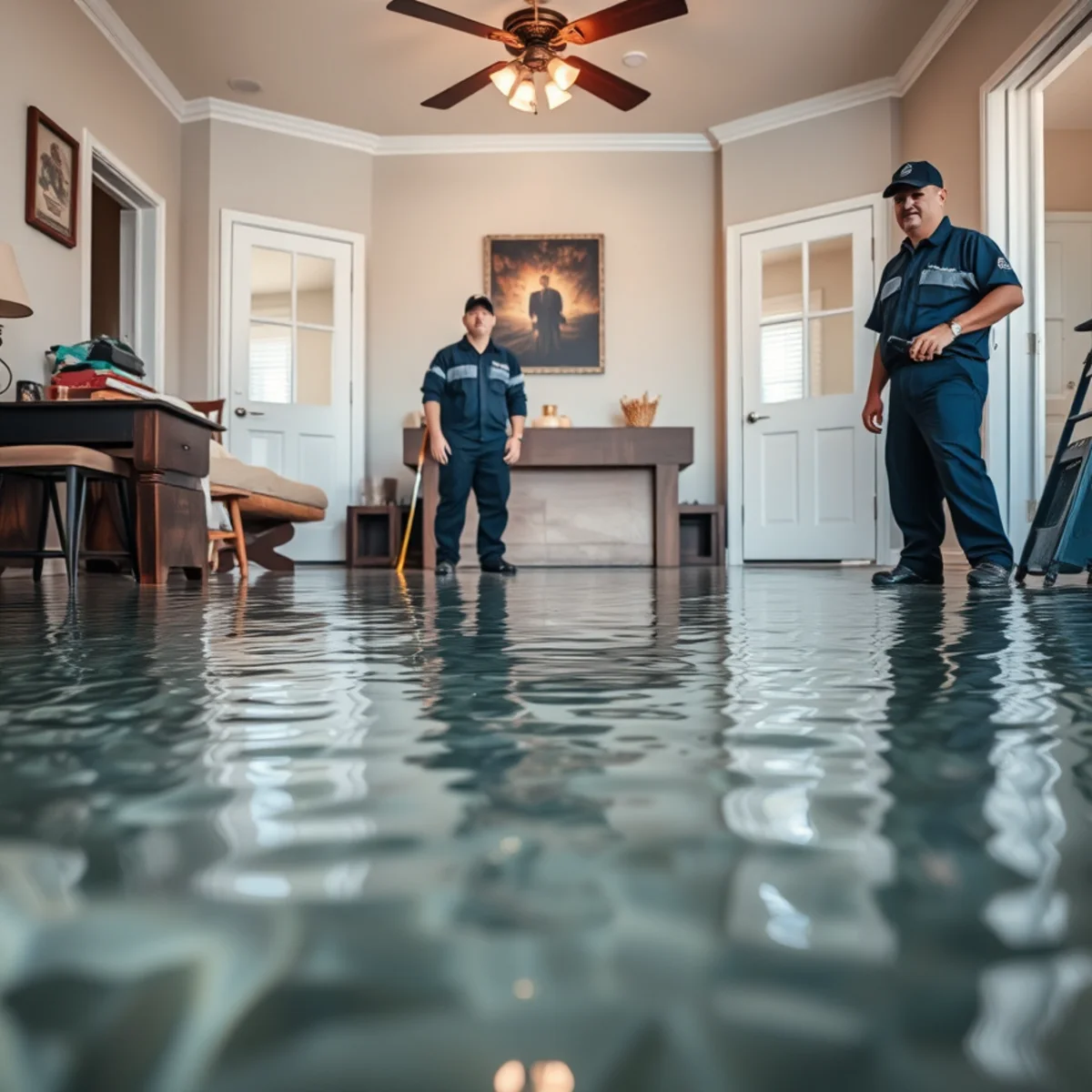
There is water across your floor and you are trying to work out whether to stay in your own house. Two questions settle most of it.
Question 1: Is anything electrical in the water?
This is the one with a fatality risk, and it takes priority over everything else on this page.
- Do not enter a room with standing water if the power to that area is still on
- If water has reached outlets, appliances, extension leads, or is running down inside walls where wiring lives, treat the whole area as energized
- Kill the breaker to that area only if the panel is dry and you can reach it without standing in water
- If the panel is in a flooded garage or basement, do not go near it — call the utility or wait for the crew
- Never touch a switch, outlet, or plugged-in appliance with wet hands or while standing in water
Question 2: What kind of water is it?
This determines whether staying is a comfort question or a health question. The IICRC S500 standard sorts water into three categories, and they are genuinely different situations.
| Category | Where it came from | Can you stay? |
|---|---|---|
| Category 1 — clean | Broken supply line, tub or sink overflow with no contaminants, appliance supply line | Usually yes, if the affected area is isolated and power is safe |
| Category 2 — gray | Washing machine or dishwasher discharge, toilet overflow with urine only, sump failure | Often yes, with the area closed off — depends on extent |
| Category 3 — black | Sewage backup, floodwater from outside, toilet overflow with feces, any water standing long enough to grow microbes | Frequently no, and definitely not for vulnerable households |
One point that surprises people: storm water that came in from outside is Category 3, regardless of how clear it looks. It has crossed soil, roadway, and storm drain, and it carries what those carry.
Category 1 does not stay Category 1
Clean water degrades. Left standing in a warm house, in contact with flooring, dust, and building materials, Category 1 water becomes Category 2 within roughly 48 hours as microbial activity establishes.
So a burst supply line you leave until Monday is not a clean water loss any more. That degradation is a large part of why we push so hard on same-day extraction, quite apart from the structural damage.
Who should not stay, regardless of category
The threshold moves for some households, and we say this plainly on site rather than leaving people to guess.
- Infants and young children, who spend time at floor level
- Elderly residents
- Anyone pregnant
- Anyone immunocompromised, on chemotherapy, or recently post-surgery
- Anyone with asthma or significant respiratory conditions
- Pets, who will walk through it and then groom themselves
For these households we lean toward relocation even on losses where a healthy adult could reasonably stay.
The practical questions people actually ask
Can you sleep upstairs if downstairs is wet? Usually yes for Category 1, provided the power situation is safe and the stairs are not slippery. Not for Category 3 — contamination and airborne concerns are not confined by a floor.
Can you use the kitchen? If it is unaffected and reachable without crossing standing water, yes. If water reached it, no — food preparation surfaces that have been in contact with any category of loss water need cleaning and disinfection first.
Can you shower? If the plumbing is intact and the bathroom is unaffected, yes. In a sewer backup, no — every gallon you send down a drain comes back up at the lowest fixture in the house.
Who to call, in order
- Emergency services, if there is any electrical hazard you cannot safely resolve, or if anyone is hurt
- A restoration company with a 24/7 line — we dispatch within 60 minutes across Downey and the neighboring Gateway Cities
- Your insurance carrier, to open the claim and get a claim number
- A plumber, if the source is a plumbing failure — though the restoration company usually coordinates this
Ask about additional living expenses when you speak to your carrier. If you do need to stay elsewhere, that is frequently covered, and people routinely spend nights in an unsafe house because they assumed they would be paying for a hotel themselves.
Frequently asked
Only if the power to that area is confirmed off. Water reaching outlets, appliances, or wiring inside walls makes the whole area a shock risk, and that is the one hazard here that kills people. Beyond electrical, it depends on the water category — anything from a sewer backup or from outside is contaminated and should not be walked through at all.
Roughly 48 hours. Category 1 clean water degrades to Category 2 as microbial activity establishes in contact with flooring, dust, and building materials in a warm house. That degradation is one of the main reasons same-day extraction matters, separately from the structural damage the water is doing.
Frequently yes — most policies include additional living expenses coverage when a covered loss makes the home uninhabitable. Ask your adjuster specifically, and keep receipts. People routinely stay in houses they should not be in because they assumed they would be paying for the alternative themselves.
When to leave, and who to call first
The electrical question always comes first because it is the only one with a fatality risk attached. Everything else is a health and comfort judgment.
The category question is where people misjudge. Storm water that came in from outside is Category 3 regardless of how clear it looks, and clean water does not stay clean — it degrades to Category 2 within roughly 48 hours in a warm house.
Ask your carrier about additional living expenses before you decide to tough it out. That cover frequently exists, and people routinely spend nights in houses they should not be in because they assumed a hotel would come out of their own pocket.
Services mentioned in this article
Flood Cleanup
Storm and overflow flooding handled end to end — pump-out, contaminated material removal, disinfection, and documented drying.
Learn more24/7 Emergency Water Removal
A person answers, 24/7. Crews dispatched within 60 minutes — nights, weekends, and holidays included.
Learn moreSewage Cleanup & Backup Removal
Category 3 backups handled under containment — full protective equipment, regulated disposal, and verified disinfection.
Learn moreAreas covered in this article
Adjacent to the historic San Gabriel River channel — the lowest-elevation homes in Downey, with the city's highest…
6 to 9 minutes from our Florence Ave baseSouth Downey1960s–70s tract expansion south of Imperial Highway — newer slab construction, but in the direct San Gabriel River…
about 10 minutes from our Florence Ave base