
6 min read
Sewage Backing Up Into the Shower: Causes, Health Risks, and Safe Cleanup
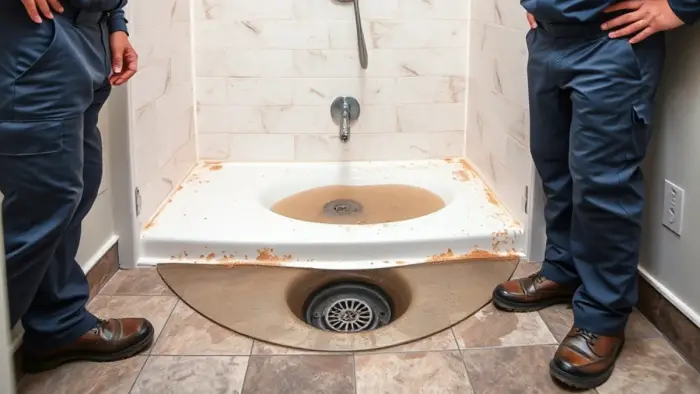
It surfaces in the shower because that is the lowest opening in your drain system. Which means the blockage is downstream of everything.
Read article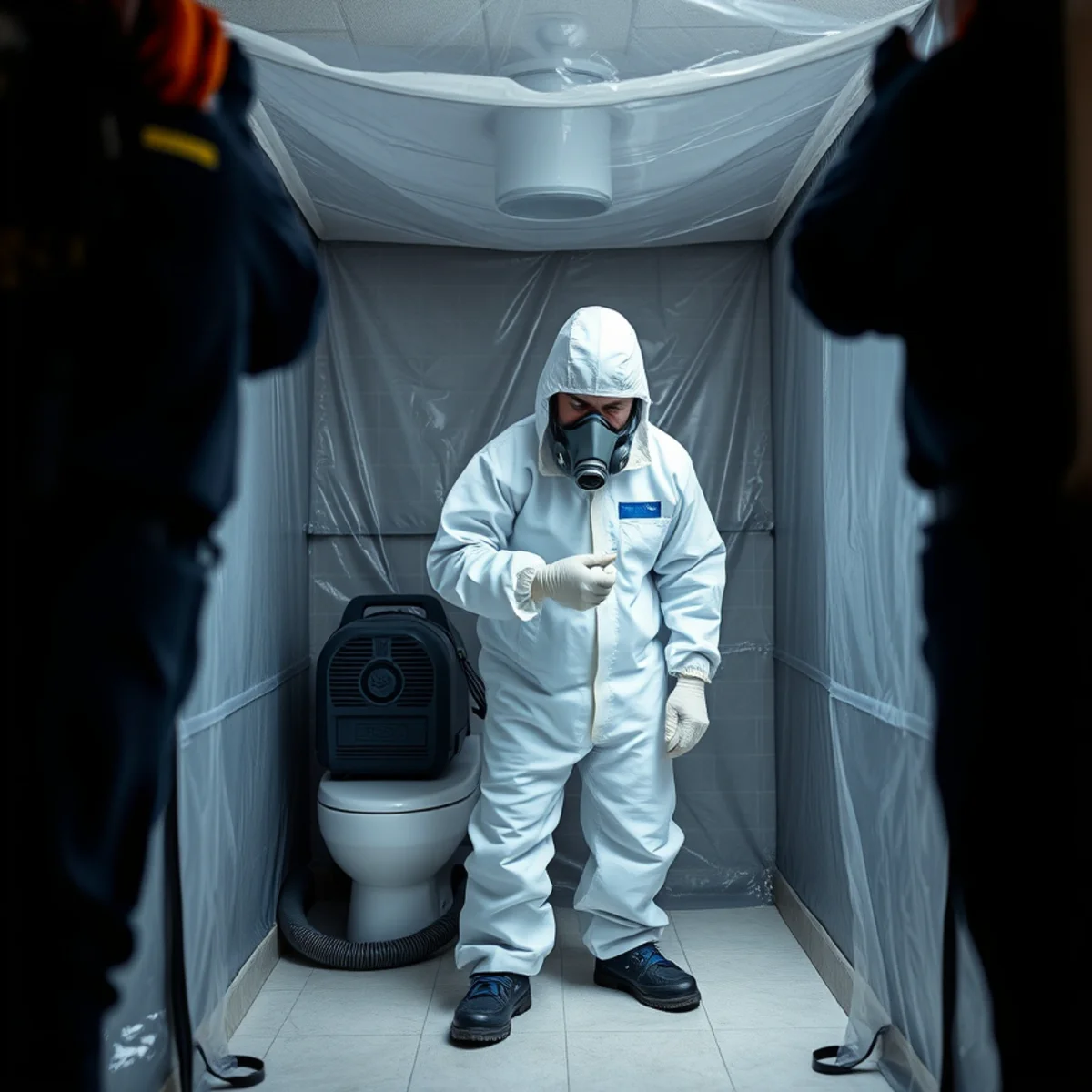
Core restoration service
A sewage backup is a health hazard first and a property problem second. Treat it in that order and everything else goes better.
What is on your floor contains E. coli, salmonella, hepatitis A, rotavirus, and parasites. It does not have to be touched to make someone sick — walking through it tracks it through the house, and disturbing it puts pathogens into the air your family breathes. Under IICRC S500 this is Category 3 water, the most hazardous classification there is, and the cleanup requirements exist because people genuinely get seriously ill from this.
Get everyone, including pets, out of the affected area and keep them out. Do not run fans. Do not try to mop it up. Call our 24/7 line and we will have a crew there within 60 minutes with containment, protective equipment, and HEPA filtration.
All of these are Category 3 events, even the small ones. The volume does not change the contamination level:
If sewage has reached your HVAC returns or ductwork, say so when you call. That changes our containment plan immediately, because the system will otherwise distribute contamination to every room in the house.
Every line below exists because of a public-health requirement, not a pricing preference.
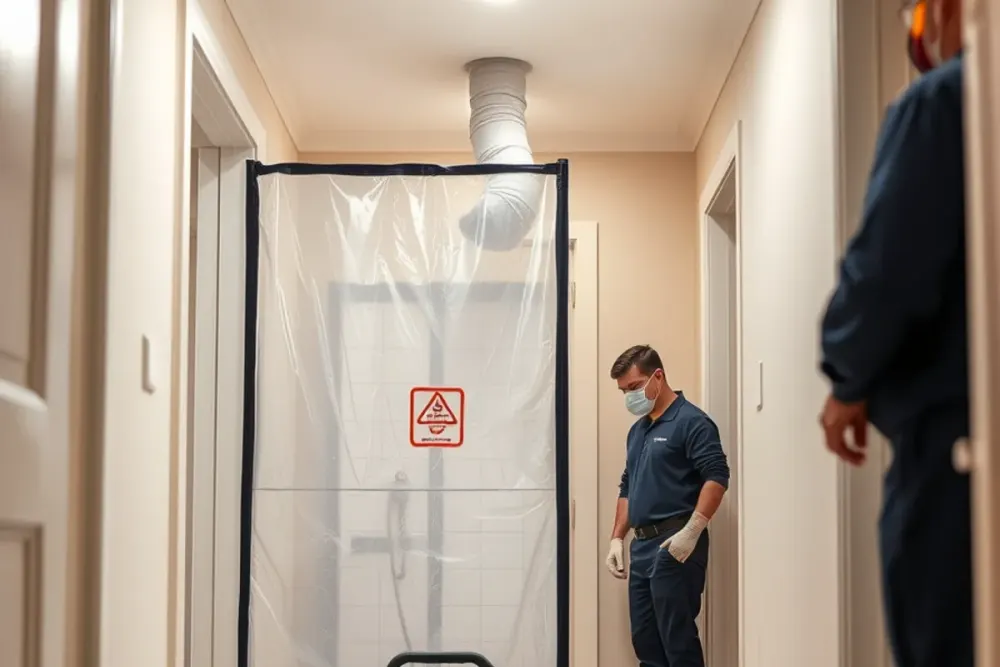
Sealed plastic barriers isolate the affected area, and negative pressure inside means contaminated air flows into HEPA filtration rather than out into your living space. HVAC serving the zone is shut down and returns are sealed.
Extraction gear used on Category 3 work never goes near a clean-water job. Technicians work in protective suits, respirators and gloves on every entry, and that is a genuine consumable cost on every visit.
Carpet, pad, affected drywall, insulation, particle board and porous contents. The removal line is set above the contamination height, not at it. Contaminated material is bagged and disposed of under the applicable rules — it cannot go in your bin.
Surfaces are physically cleaned before a hospital-grade antimicrobial is applied and given the contact time it actually needs. Odor is treated by removing the material holding it, not by masking it.
If sewage reached your HVAC returns or ductwork, say so when you call. That changes the containment plan immediately, because the system would otherwise distribute contamination to every room.
This work is governed by the S500 standard and by basic public-health sense. Every step below exists to keep contamination inside the affected zone and out of your family's air.
Plastic containment barriers seal the affected area from the rest of the house, and we set negative air pressure inside it so contaminated air flows into HEPA filtration rather than out into your living space. HVAC serving the zone gets shut down.
If the backup is ongoing we coordinate the line clearing — a blockage, root intrusion, or a collapsed lateral — before cleanup starts. Cleaning up around an active backup accomplishes nothing.
Solids and contaminated water are extracted with dedicated equipment that never gets used on clean-water jobs, and disposed of under regulated waste handling. Crews work in full protective equipment throughout.
Carpet, pad, affected drywall, insulation, particle board, and porous contents come out. Nothing porous that absorbed sewage is dried and reused. The removal line is set above the contamination height, not at it.
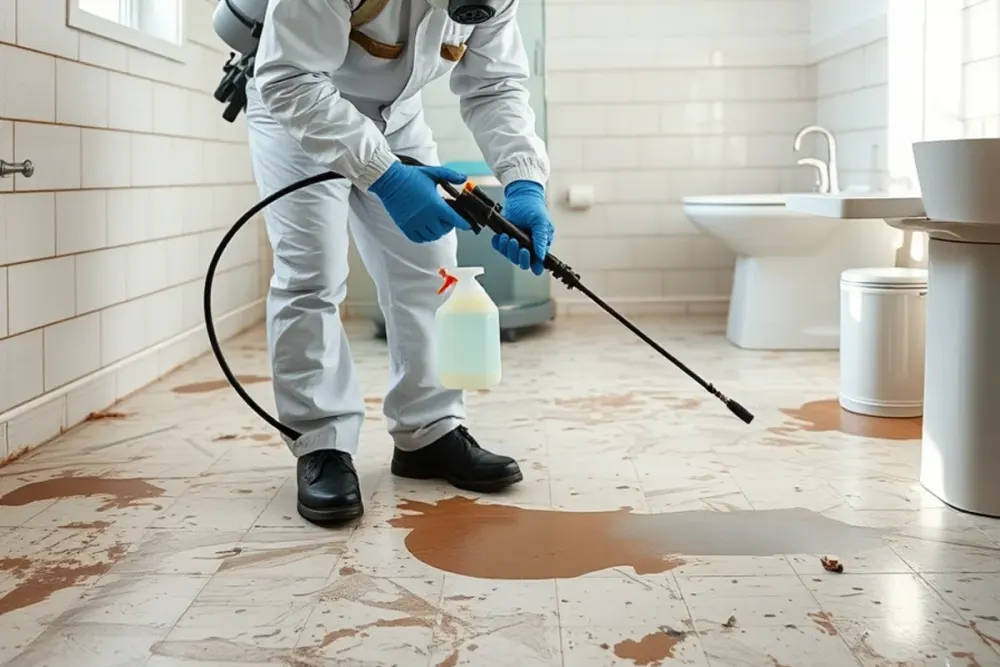
Surfaces get physically cleaned first, because disinfectant applied over organic soil does not work. Then a hospital-grade antimicrobial appropriate to each material is applied and given its full dwell time.
Sewage odor lives in the material it soaked into. We remove that material, treat what remains, and where needed follow with hydroxyl or ozone treatment. Deodorizing a surface that is still contaminated only masks it for a week.
Structural drying runs with HEPA scrubbers still going. We meter to the dry standard and confirm the area is clean before containment comes down.
Two local factors drive most of the backups we respond to, and both are functions of the city's age.
The first is tree roots. Downey's established neighborhoods — Independence Park, Furman Park, the tracts around Columbia Way — were planted with shade trees in the 1950s and 60s that are now sixty-plus years mature. Their roots seek the moisture and nutrients inside sewer laterals, entering through the joints of the original clay-tile pipe. Once inside they form a mat that catches everything that passes. Most homeowners get warning signs for months: a slow drain, a gurgle, a backup that clears itself. Then one day it does not clear.
The second is pipe age. Homes built before about 1960 across Downtown Downey, North Downey, and the Studebaker/Firestone area were plumbed with clay-tile sewer laterals and cast-iron drains. Clay tile cracks as the ground shifts, and Downey's clay soil expands and contracts with the seasons enough to keep working those joints loose. Cast iron corrodes from the inside until the bottom of the pipe scales over and finally gives out.
Heavy rain compounds both. When groundwater rises during a winter storm sequence, it infiltrates cracked laterals and the extra volume tips a marginal line into a full backup — which is why we see a spike in sewage calls in the two days after a significant storm.
Our honest answer depends on where the sewage went and who lives there.
If the backup is confined to a single bathroom on a slab, we can contain it and most households stay put — you lose the use of that room for a few days. If sewage crossed into living space, a bedroom, or the kitchen, or if it reached the HVAC system, we generally recommend staying elsewhere until the contaminated material is out and the area has been cleaned and cleared.
The threshold moves for households with infants, elderly residents, anyone pregnant, anyone immunocompromised, or anyone on chemotherapy. For those households we lean toward relocation even on a contained job. Additional living expenses during mitigation are frequently covered by the policy, so ask your adjuster — do not skip a night away because you assume you would be paying for it.
Sewage work costs more than clean-water work at every stage, for reasons that are all defensible on an invoice.
A contained bathroom backup is a fundamentally different job from sewage that crossed into carpeted living space. Square footage of contamination is the primary driver.
Barriers, negative air machines, HEPA scrubbers, and full protective equipment for every technician on every entry. These are real consumable and equipment costs specific to Category 3 work.
Contaminated materials cannot go in your bin. Bagging, manifesting, and disposing of sewage-affected waste under the applicable rules carries a per-volume cost.
Cleanup and the plumbing repair are separate scopes. A rooted lateral needs clearing, and sometimes lining or replacement. We coordinate it so nothing gets rebuilt over a pipe that is going to fail again.
Sewage is a health hazard first and a property problem second. Treat it in that order and everything else goes better.
E. coli, salmonella, hepatitis A, rotavirus and parasites. It does not need to be touched to make someone ill — walking through it tracks it through the house, and disturbing it puts pathogens into the air. Household bleach does not reliably kill all of it, and a mop simply spreads it.
Many Downey and Bell Gardens homes have a single bathroom and several generations living in them. Tight containment, negative air and same-day removal can give you a usable bathroom back in about 48 hours rather than five days. It takes more crew hours and it is the right call.
Contained to one bathroom on a slab, most households stay. If it crossed into living space or reached the HVAC, we will say so. For homes with infants, elderly residents or anyone immunocompromised we lean toward relocation — and additional living expenses are frequently covered.
We strongly advise against it. Household bleach does not reliably kill everything in sewage, a standard mop spreads it, and a shop vac aerosolizes pathogens into the air. Beyond the surface, sewage wicks under flooring and into wall bases where you cannot reach it — that hidden contamination is what causes lingering odor and mold. If it is a few square feet of hard floor you caught instantly, gloves and a disinfectant may be reasonable. Anything on carpet or crossing rooms needs a crew.
Often only with a specific sewer or water backup endorsement, which many standard California policies exclude by default. It is usually inexpensive to add and worth checking before you need it. If the backup was caused by a sudden covered event rather than gradual blockage, coverage may apply differently. We document thoroughly and work with your adjuster either way.
If the job is done properly, the smell should be gone when we finish — not fading over weeks. Sewage odor comes from contaminated material, so the fix is removing that material rather than covering the smell. If porous material was left in place, the odor will keep coming back on humid days. Lingering smell after a completed cleanup means something was missed, and we will come back and find it.
No, and it is worth being precise. Clean water from the tank, with no waste involved, is Category 1 and is handled as a normal water loss. Overflow from the bowl containing urine is Category 2. Anything containing feces, or any backup coming up from the sewer line, is Category 3 and gets the full protocol on this page. Tell us which one you have when you call and we will bring the right setup.
If the job is done properly the smell should be gone when we finish, not fading over weeks. Sewage odor lives in the material it soaked into, so the fix is removing that material rather than covering it. Lingering odor after a completed cleanup means porous material was left in place — and if that happens on our job we come back and find it.
It surfaces in the shower because that is the lowest opening in your drain system. Which means the blockage is downstream of everything.
Read article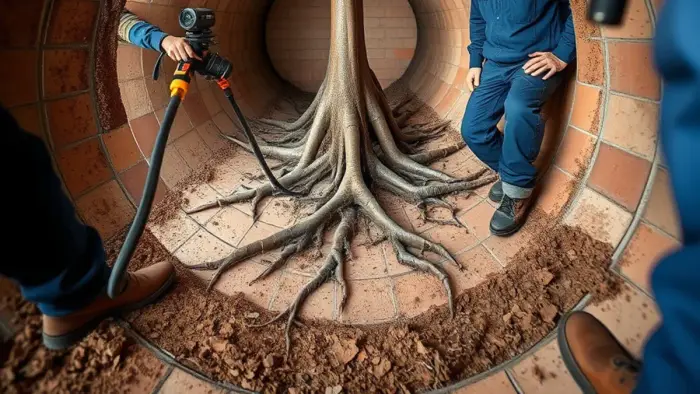
The best sewage cleanup is the one that never happens — and root blockages give you months of warning, if you know what you are listening to.
Read articleWe cover 43 areas from our base at 8615 Florence Ave. These are the ones we reach fastest:
We answer 24/7 and dispatch a crew within 60 minutes across Downey and the neighboring Gateway Cities. A person answers the phone — not an answering service.