
7 min read
Clay Soil Expansion Under Downey: How It Cracks Slabs and Breaks Pipes
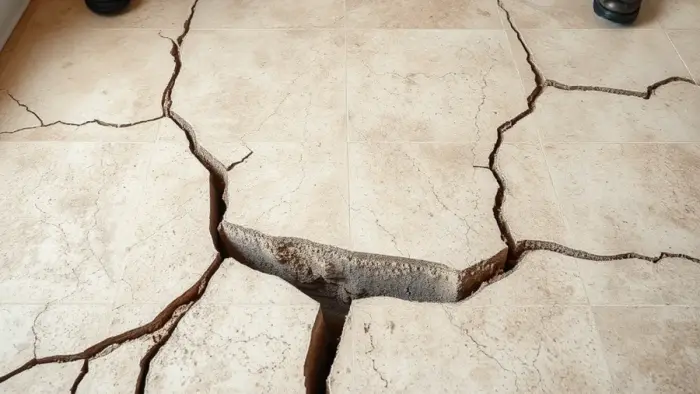
Downey sits on river-deposited clay that changes volume with the seasons. Everything rigid buried in it gets flexed, every year, for sixty years.
Read article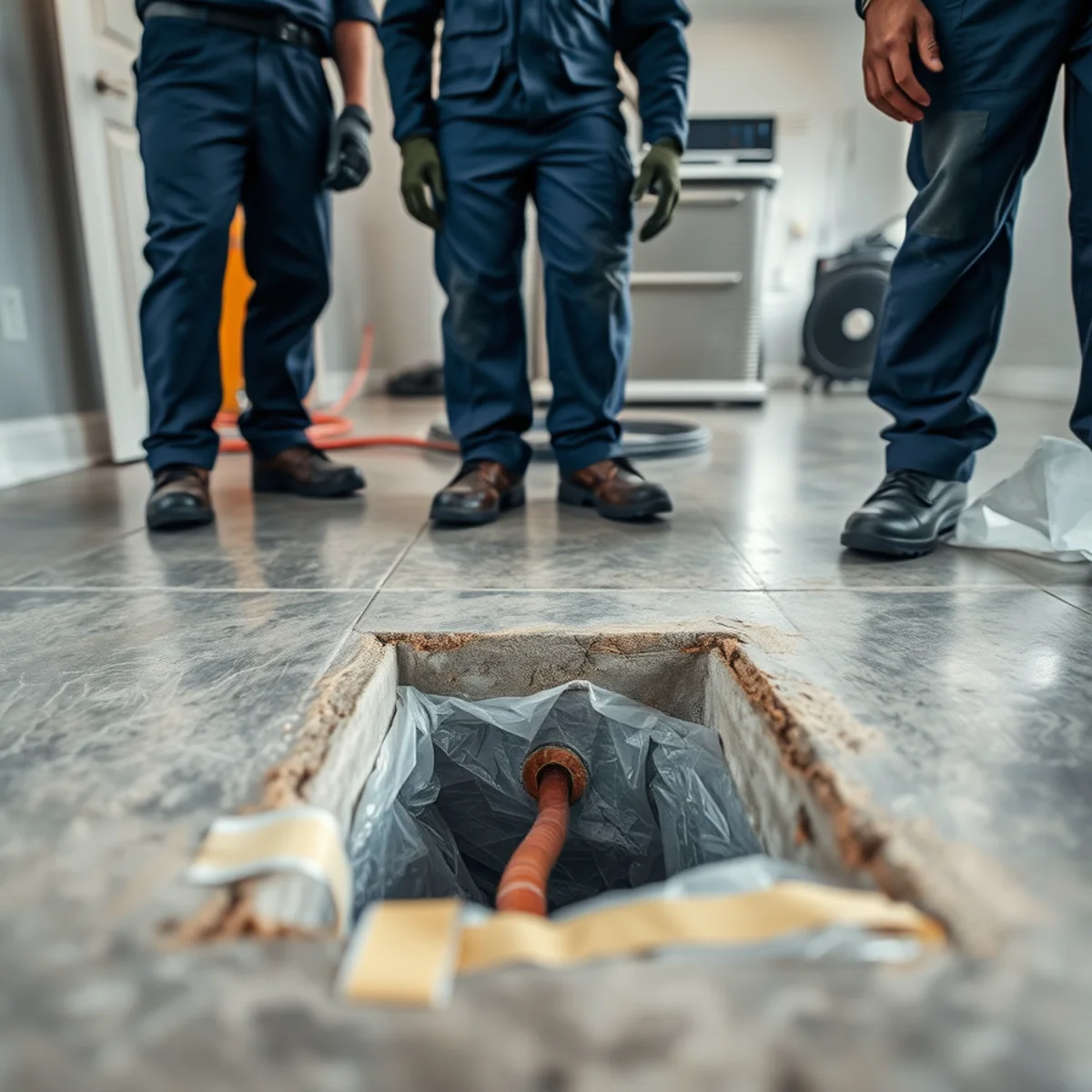
Specialist restoration
A slab leak is the most expensive water loss in Southern California, and it is expensive precisely because it is so quiet.
A pinhole in a copper line under your foundation does not make a puddle. It releases water into the soil and the concrete, day after day, for weeks or months. It wicks up into the bottom plate of your walls and under your flooring. The first thing most homeowners in Downey notice is a water bill that jumped, or a patch of floor that feels warm underfoot, or a musty smell they cannot locate.
By the time it is found, the damage is rarely limited to the pipe. Flooring has been sitting on wet concrete. Wall bases have wicked moisture up behind the baseboard. There is frequently mold in places nobody has looked. We handle the whole downstream problem — the drying, the affected materials, and the restoration — and coordinate the plumbing repair with a licensed plumber.
Slab leaks announce themselves subtly. Any of these is worth investigating in a Downey home built before about 1985:
Ten-minute confirmation: shut every fixture off, then watch the small triangle or dial on your water meter. If it is still turning, water is escaping somewhere in the pressurized system.
Two separate problems: the pipe, and everything it has been quietly soaking. We own the second and coordinate the first.
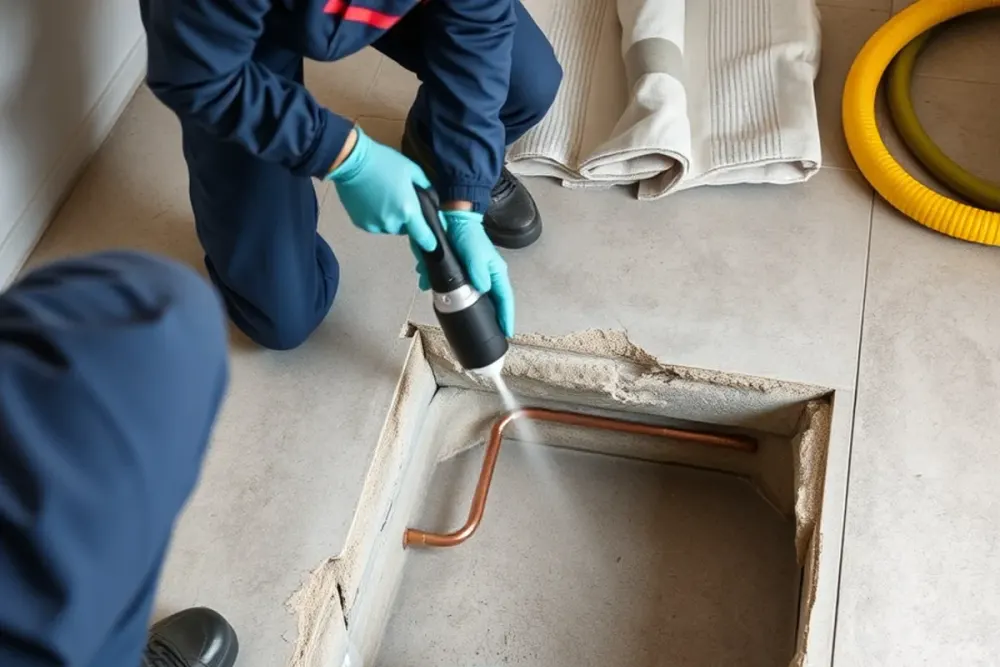
Meter isolation, pressure testing, thermal imaging and acoustic listening. Precision here directly controls how much of your floor has to be opened — and in a tiled home that difference is usually larger than the detection cost.
Distinct from finding the pipe: how far water has spread through the slab, the flooring and up into the wall bases. That perimeter is almost always much larger than the leak location suggests.
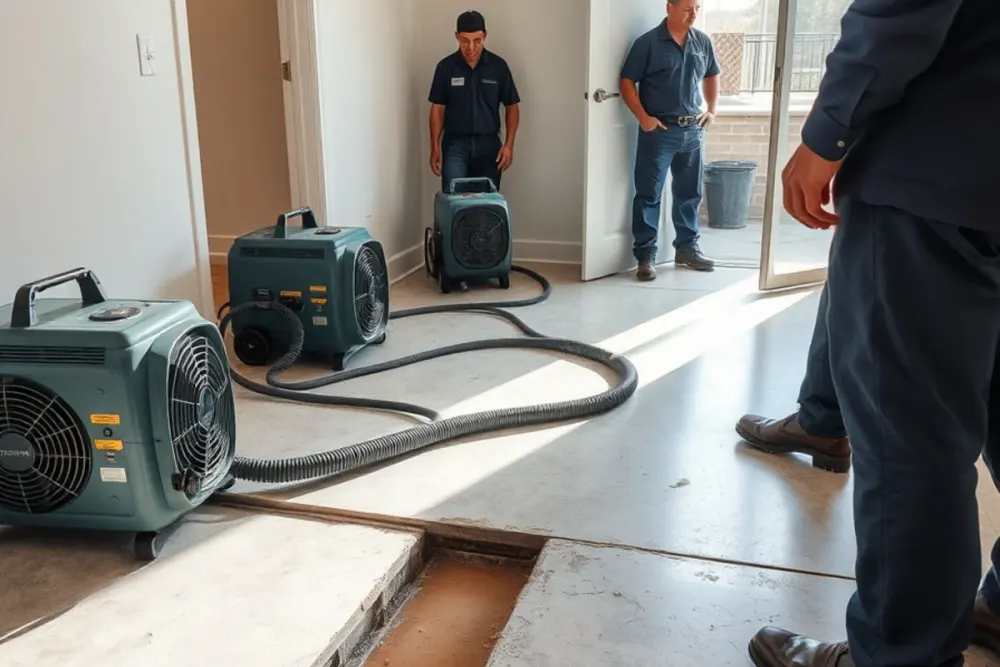
Concrete releases moisture slowly and needs days of dehumidification, not a couple of days of fans. Containment controls concrete dust while the slab, wall bases, bottom plates and flooring assemblies are dried and metered together.
Long-running slab leaks frequently produce hidden growth in wall bases. If we find it, it gets contained and remediated properly rather than closed back up.
We do not perform the plumbing. That means when we lay out spot repair, reroute or full repipe, we have no financial stake in which one you choose.
Two separate problems: the pipe, and everything the water has been soaking. We own the second and coordinate the first.
Meter isolation, pressure testing, thermal imaging, and acoustic listening put the leak within inches. Precision here directly controls how much of your floor has to be opened.
Separately from finding the pipe, we map how far the water has spread through the slab, the flooring, and up into the wall bases. That perimeter is almost always much larger than the leak location suggests.
Spot repair, reroute, or repipe. We bring in a licensed plumber and lay out the honest trade-offs — we do not perform the plumbing, so we have no stake in which you choose.
Flooring is protected or carefully removed for salvage where possible, containment goes up to control concrete dust, and the slab is opened only at the marked location.
Concrete gives up moisture slowly and needs sustained dehumidification, not a couple of days of fans. Wall bases, bottom plates, and flooring assemblies are dried and metered alongside it.
Long-running slab leaks frequently produce hidden growth in wall bases. If we find it, it gets contained and remediated properly rather than closed back up.
Slab patched, flooring reinstalled or replaced, drywall and baseboards repaired, texture matched and painted.
This is not a marketing line. Downey has three independent conditions that attack under-slab copper, and most of the city's housing sits on top of all three.
The first is age. The tract expansion of the 1960s and 70s — South Downey below Imperial Highway, the Apollo neighborhood built for Rockwell aerospace workers, the subdivisions feeding Warren High, and the surrounding Gateway Cities tracts — was built slab-on-grade with copper supply lines under the concrete. That plumbing is now fifty-five to sixty-five years old, squarely inside the failure window for buried copper.
The second is soil. The Downey basin sits on clay-rich alluvial deposits laid down by the San Gabriel River system. Expansive clay swells as it takes on water in winter and shrinks as it dries through summer. That annual cycle flexes everything rigid buried in it — and a copper line clamped between concrete and moving clay takes that stress at its weakest points.
The third is chemistry and abrasion. Water conditions in the region can drive pinhole corrosion from the inside out, while thermal expansion makes hot lines grow and contract slightly with every use, rubbing against the concrete they pass through. Give that sixty years and you get a hole.
Put together: in a Downey home of that era with original copper under the slab, a leak is the expected end of the material's service life. Which is also why the first leak is the right moment to think about the whole system, not just that one spot.
Slab leak claims hinge on a provision most people have never read, and it is often the most valuable coverage in the policy.
Most California homeowners policies do not pay to repair the failed pipe itself — that is treated as wear and tear. What they frequently do cover is the resulting water damage, and, critically, the cost of tearing out and replacing the material needed to access the pipe. That is the access or tear-out provision.
Why it matters: the plumbing repair might be the smallest number on the job. Cutting the slab, removing and replacing flooring, repairing drywall, and restoring the finishes routinely costs several times the pipe fix. If your policy has the access provision, that larger figure is the part likely to be paid.
The other half is timing. Coverage generally applies to sudden and accidental damage. A leak you noticed a year ago and left is gradual damage and is commonly excluded. So the practical guidance is simple: the moment you see a warm floor spot or an unexplained bill increase, document it and act. Waiting to see if it gets worse is the single most reliable way to lose the claim.
Three separate cost centers here: detection, the plumbing repair, and the restoration. We price the third and help you see all of them clearly.
A leak under a garage slab is straightforward. One under tile in the center of the house, or under a kitchen island, means far more removal and rebuild to reach it.
The biggest multiplier. A leak found in week one is a contained repair. One that ran for months has soaked flooring across several rooms and wicked into wall bases, often with mold behind them.
Tile and stone frequently cannot be lifted intact, and discontinued patterns cannot be matched — which sometimes turns a partial repair into a full-room replacement.
Slabs release moisture slowly. Sustained dehumidification over more days than a typical dry-out is normal and is a real equipment and monitoring cost.
This is not a marketing line. Three independent conditions attack under-slab copper here, and most of the city's housing sits on all three.
The 1960s–70s tract expansion — South Downey, the Apollo neighborhood built for Rockwell aerospace workers, the Warren High subdivisions — is slab-on-grade with copper underneath, now fifty-five to sixty-five years old.
The Downey basin sits on clay-rich alluvium from the San Gabriel River system. Expansive clay swells with winter rain and shrinks through summer, flexing anything rigid buried in it, every year.
Water conditions drive pinhole corrosion from the inside while thermal cycling makes hot lines expand against the concrete they pass through. Sixty years of that produces a hole — which is why the first leak is the moment to think about the whole system.
The strongest single indicator is a warm spot on the floor, which points to a hot-water line. Combine that with the sound of running water when everything is off, an unexplained bill increase, and declining pressure, and it is very likely. Confirm it yourself in ten minutes: shut off every fixture and watch the leak indicator on your water meter. If it keeps turning, water is escaping in the pressurized system — and with interior fixtures off, under the slab is the leading suspect.
Typically the policy covers the resulting water damage and the access cost to reach the pipe, but not the pipe repair itself. That access or tear-out provision is often the most valuable part of the coverage, because opening the slab and restoring flooring usually costs several times the plumbing fix. Coverage applies to sudden and accidental damage — a leak known about and ignored is generally excluded as gradual.
It depends on the system's condition and history. A first leak in otherwise sound plumbing usually justifies a spot repair or a reroute of that one line. A second leak is the system telling you it has reached the end — at that point a full repipe, typically in PEX, is usually the better economics, because the next leak plus its water damage tends to cost more than getting ahead of it. We do not do plumbing, so we have no financial interest in the answer.
Longer than most losses. Concrete holds moisture and releases it slowly, so expect sustained dehumidification for several days beyond a typical dry-out, and sometimes considerably more if the leak ran a long time. We meter the slab and the surrounding materials daily and only pull equipment when the readings hit the dry standard — putting flooring back over a slab that is still wet is how you end up doing this twice.
Not to find it. Location is done without demolition — acoustic listening, thermal imaging and pressure isolation narrow it to a small area before anything is opened. Access is a separate decision, and it is not always through the floor: rerouting the line overhead or through a wall avoids the slab entirely on many single-story homes. We show you the options and what each costs to put right before anyone picks up a saw.
Downey sits on river-deposited clay that changes volume with the seasons. Everything rigid buried in it gets flexed, every year, for sixty years.
Read article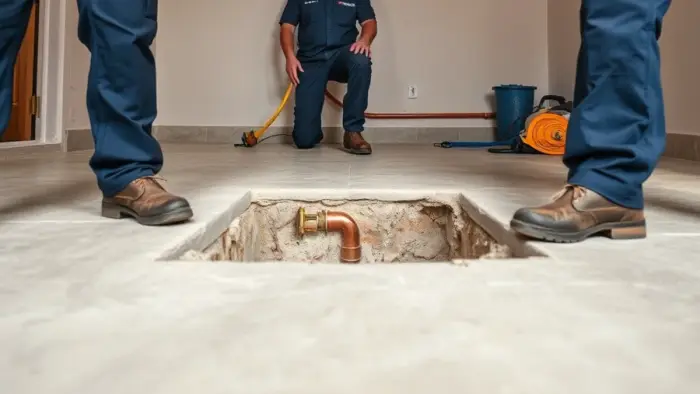
One leak is a repair. Two leaks is information. Here is how the arithmetic actually works in a sixty-year-old Downey slab home.
Read articleWe cover 43 areas from our base at 8615 Florence Ave. These are the ones we reach fastest:
We answer 24/7 and dispatch a crew within 60 minutes across Downey and the neighboring Gateway Cities. A person answers the phone — not an answering service.