
6 min read
Ceiling Leaking During a Storm? What to Do in the Next 30 Minutes
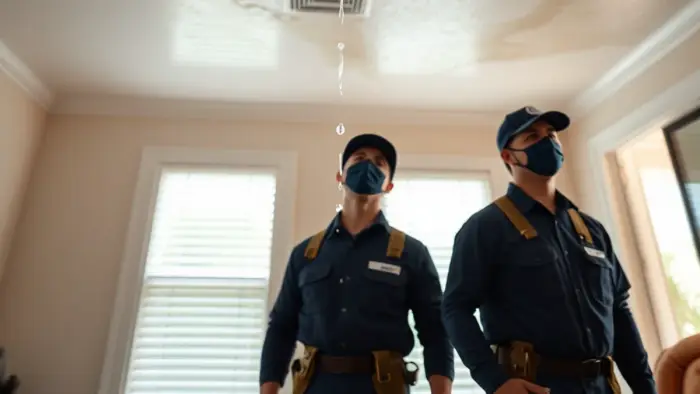
A sagging ceiling is a collapse risk, not a cosmetic problem. Here is the order to do things in while the rain is still falling.
Read article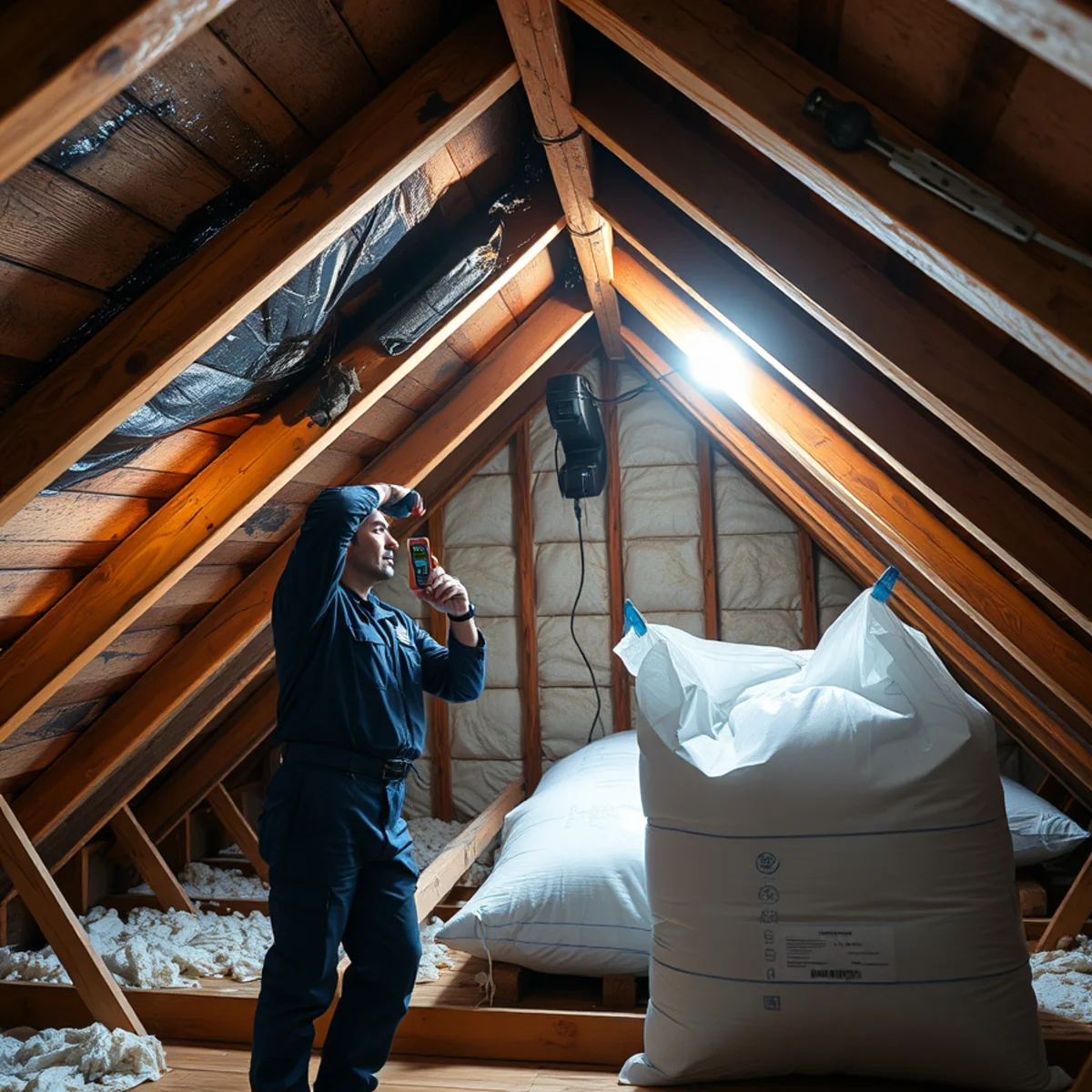
Specialist restoration
Roof leaks are seasonal here, and the season is short and intense. Downey goes months with essentially no rain, then takes a series of atmospheric rivers in a matter of weeks.
That pattern hides problems. A roof that has been quietly compromised since a Santa Ana wind event in October leaks nothing at all through a dry November. Then the first real storm arrives and water pours into the attic through an opening the wind made four months earlier.
The interior damage is also disproportionate to the opening. Water entering at a small flashing failure runs along the truss, soaks insulation across a wide area, saturates the ceiling drywall, and can reach wall cavities and flooring below. A hole the size of your hand routinely produces a ceiling repair spanning several joist bays.
Some show up inside, some only from the roof. Both are worth acting on before the next storm:
After any significant Santa Ana wind event, get the roof looked at before the rainy season. Wind damage is usually invisible from the ground and does not leak until the first real storm.
Stop the water, dry the attic and ceiling assembly, then restore. The attic step is the one that gets skipped, and it is the one that causes mold.
A reinforced tarp over the breach, properly secured, before anything else. Southern California storms arrive in sequences, so an open roof will be tested again within days.
Water travels along framing before it drips, so the interior stain is a poor guide. We inspect from the attic and the roof and follow the moisture trail upstream to its origin.
Wet fiberglass loses its R-value permanently; blown cellulose mats down and never recovers its loft. Both hold water against the ceiling drywall and framing. It comes out, and goes back at the correct R-value.
Air movers and dehumidifiers in the attic space with monitoring of the framing and the top of the ceiling drywall. Attics are slow-drying and routinely called done too early.
Then the interior: ceiling drywall, texture matched to the existing finish, paint, and any wall or flooring repairs the water caused below.
Stop the water, dry the attic and ceiling assembly, then restore. The attic step is the one that gets skipped, and it is the one that causes mold.
A reinforced tarp over the breach, secured properly, before anything else. Southern California storms arrive in sequences, so an open roof will be tested again within days.
Water travels along framing before it drips, so the interior stain is a poor guide. We inspect from the attic and the roof and follow the moisture trail upstream to its origin.
Photographs of the exterior damage, the point of entry, and the interior damage, tied to the date of the storm event. Storm claims turn on demonstrating a covered peril created the opening.
Saturated insulation loses its R-value permanently and holds water against the ceiling drywall and framing. It comes out — drying it in place does not work.
Air movers and dehumidifiers in the attic space with metered monitoring of the framing and the top of the ceiling drywall. Attics are slow-drying and are routinely called done too early.
Tarping is temporary. We coordinate licensed roofing so the envelope is properly closed, then complete the interior work in the right order.
New insulation to the correct R-value, ceiling drywall, texture matched to the existing finish, and paint — plus any wall or flooring repairs the water caused below.
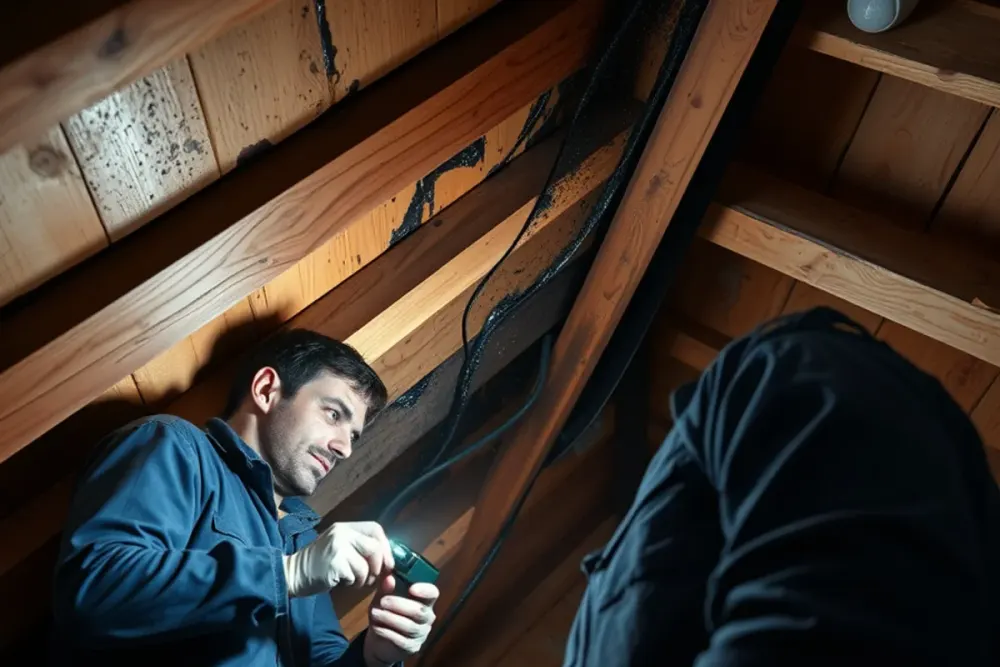
The failure points are consistent, and they are rarely in the middle of a healthy roof field.
Penetrations lead by a wide margin. Plumbing vent boots — the rubber collars where a pipe passes through the roof — dry out and crack under years of Southern California sun, and they are probably the single most common residential leak source in this city. Flashing at chimneys, skylights, and wall intersections is next. All of these are relatively cheap to fix and cause expensive damage when they are not.
Wind damage is the second category, and it is under-reported because it is invisible from the street. Santa Ana events lift and displace tiles, peel back shingle edges, and pull up flashing. Nothing leaks immediately. The opening simply waits.
Third is the flat and low-slope roof problem, which affects the 1960s–70s strip commercial along the Imperial Highway corridor and around Stonewood Center, plus a share of mid-century residential additions. These roofs rely on drainage rather than slope, and when a drain or scupper blocks, water ponds. Ponding is heavy — about five pounds per square foot per inch — and it finds every seam. Ponding water present more than 48 hours after a storm is a problem to solve now, not in spring.
And a fourth that is not a leak at all: attic condensation. In an under-insulated, under-ventilated attic, warm humid indoor air meets a cold roof deck in winter and condenses, producing damp insulation and eventually mold with no roof failure anywhere. Telling that apart from a leak is exactly what the moisture mapping is for, and it saves people from paying for roof work they do not need.
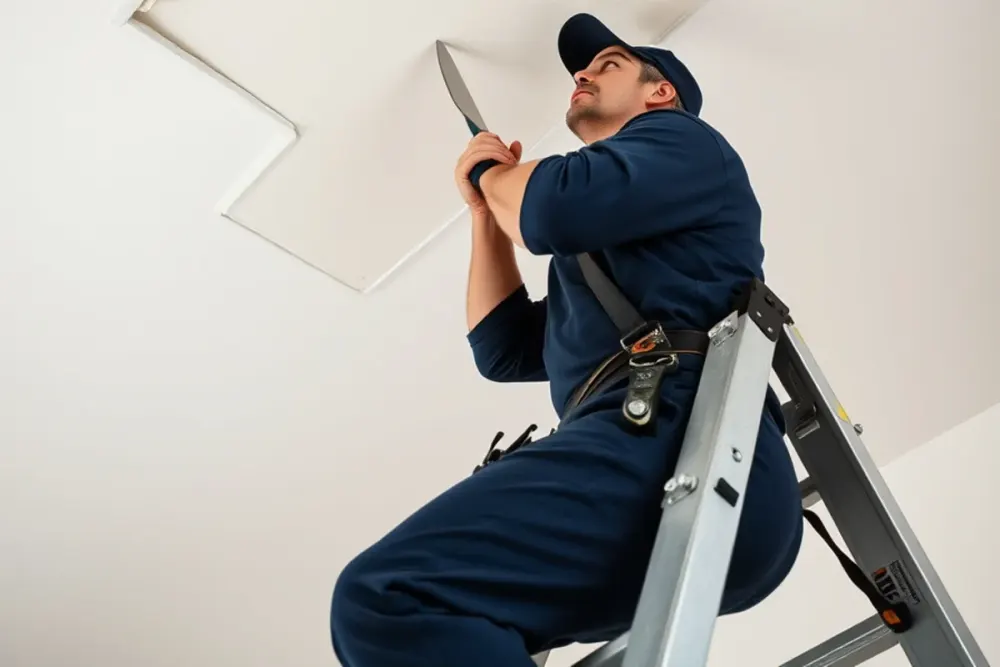
This surprises people, and it is worth explaining rather than just charging for.
Fiberglass batt insulation works by trapping air in a matrix of fibres. Air is the insulator; the glass just holds it in place. When the batt gets wet, water displaces that air, and the assembly loses most of its thermal value. Blown cellulose is worse — it mats down, compresses permanently, and does not recover its loft even after it dries.
The second problem is what wet insulation does to everything around it. It holds water directly against the ceiling drywall below and the framing above, and it keeps holding it. Insulation is one of the slowest-drying materials in a house, so leaving it in place after a roof leak effectively guarantees that the drywall and the joists stay wet for days longer than they otherwise would. That is a mold condition sitting on top of your ceiling.
Third, cellulose and some batt products carry additives that can be leached or degraded by water, which can affect their fire performance. Replacing it restores both the R-value and the assembly's intended properties. It is not an upsell — it is the reason the ceiling underneath will actually dry.
We handle the interior restoration; the roof repair itself is a licensed roofing scope we coordinate. Both belong on the claim.
A leak found during the first storm is contained. One discovered after several storm bands has soaked insulation, ceiling, wall cavities, and sometimes flooring below.
Removal and replacement is priced by area. Water spreads widely across an attic floor, so the affected area is usually much larger than the opening that let it in.
Drywall, tape, texture matched to the existing finish, and paint. Pre-1980 acoustic popcorn ceilings may need asbestos testing first, which affects the approach.
Low-clearance attics — common in Downey's single-story post-war stock — take longer to work in for both removal and drying equipment placement.
The failure points are consistent, and they are rarely in the middle of a healthy roof field.
Plumbing vent boots — the rubber collars where a pipe passes through the roof — dry out and crack under years of Southern California sun. They are probably the single most common residential leak source in this city, and cheap to fix before they cost you a ceiling.
Santa Ana events lift tiles and pull flashing without producing a single drop. The opening simply waits for the first atmospheric river. After a significant wind event, get the roof looked at before the rainy season.
In an under-insulated, under-ventilated attic, warm humid indoor air meets a cold roof deck in winter and condenses — damp insulation and eventually mold with no roof failure anywhere. Telling those apart saves people from paying for roof work they do not need.
Yes, and sooner is much cheaper. An intermittent leak means the opening is small or positioned so it only takes water under certain wind and rain conditions — but every time it leaks, it wets insulation and framing that then dry slowly. Repeated wetting of the same spot is a reliable path to rot and mold. It also stays cheap to fix while it is small.
It depends on the cause. Damage from a storm or wind event that created an opening is typically covered as a storm loss. A roof that simply wore out and started leaking is maintenance and is excluded. This is why we photograph the point of entry and tie it to the storm date — and why acting after a wind event, rather than after the ceiling stains months later, materially improves the odds.
We do emergency tarping immediately to stop the water, handle all the interior restoration — attic drying, insulation, ceiling, paint — and coordinate the permanent roof repair with licensed roofers. That way the sequencing is right: the envelope gets closed before we finish the ceiling, rather than repairing a ceiling under a roof that still leaks.
That is exactly what moisture metering answers, and it is worth knowing before you spend anything. An old dried stain from a leak that was already repaired reads at normal moisture content and needs only stain-blocking primer and paint. An active leak reads wet in the drywall and the framing above. We check rather than guess, because the two situations have completely different costs.
Yes, and during a storm that is usually the right sequence. Emergency tarping stops water entering so the interior can start drying, while permanent roof repair waits for dry weather and a proper daylight inspection. Insurers generally expect reasonable emergency measures to be taken, so keep the paperwork. We handle the tarping and the interior drying, and coordinate the roof repair itself with a licensed roofer.
A sagging ceiling is a collapse risk, not a cosmetic problem. Here is the order to do things in while the rain is still falling.
Read article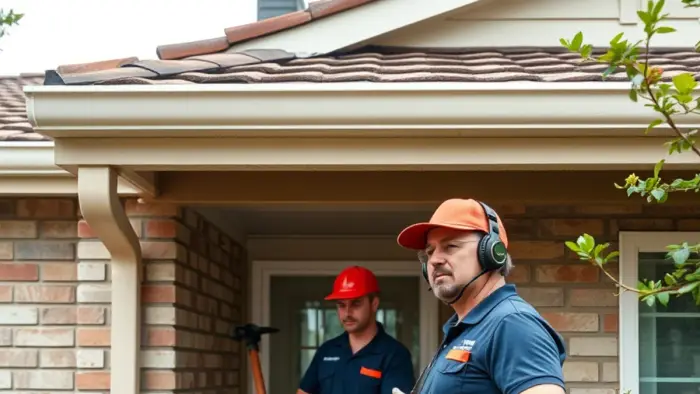
An average roof sheds hundreds of gallons in a modest storm. Where that water goes when it leaves the gutter is the whole question.
Read articleWe cover 43 areas from our base at 8615 Florence Ave. These are the ones we reach fastest:
We answer 24/7 and dispatch a crew within 60 minutes across Downey and the neighboring Gateway Cities. A person answers the phone — not an answering service.