Water Damage in a Retail Space: A Response Plan for Stonewood Center and Downey Landing Tenants
For a retail tenant the restoration invoice is rarely the biggest number. The closure is. Plan around that and everything else follows.
Read article
Specialist restoration
For a commercial property, the water damage is rarely the biggest number. The closure is.
A retail tenant losing a week of trading at Stonewood Center, an office where forty people cannot work, a warehouse where inventory is sitting in water — the restoration invoice is usually a fraction of the business interruption. So commercial work is planned around a different objective than residential: keep as much of the operation running as possible while the drying happens.
That means phasing the work, containing zones so unaffected areas stay open, running the disruptive stages overnight, and giving you a defensible timeline you can tell staff and customers. We work Downey's commercial corridors — the Firestone Boulevard retail strip, the Stonewood Center trade area, the Downey Landing development, the Imperial Highway strip commercial, and the industrial and distribution buildings along the 605 corridor toward Santa Fe Springs.
The failure modes in commercial buildings differ from residential, and several are specific to the building type:
If you manage a multi-tenant building, tell us at the first call which units are affected and which share walls or a plumbing stack with them. Water migrating between tenancies is the complication that most often gets missed.
Same restoration science as residential, different project management. Continuity of operations drives the sequencing.
Affected zones, an honest drying timeline, and what can stay operational. You cannot make business decisions without that, and guesswork helps nobody.
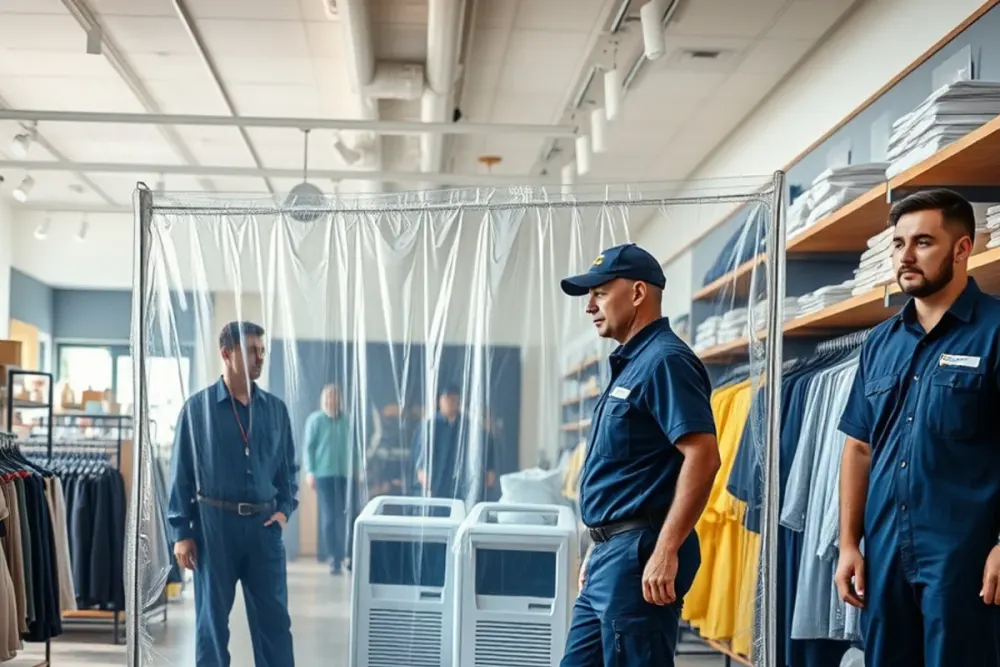
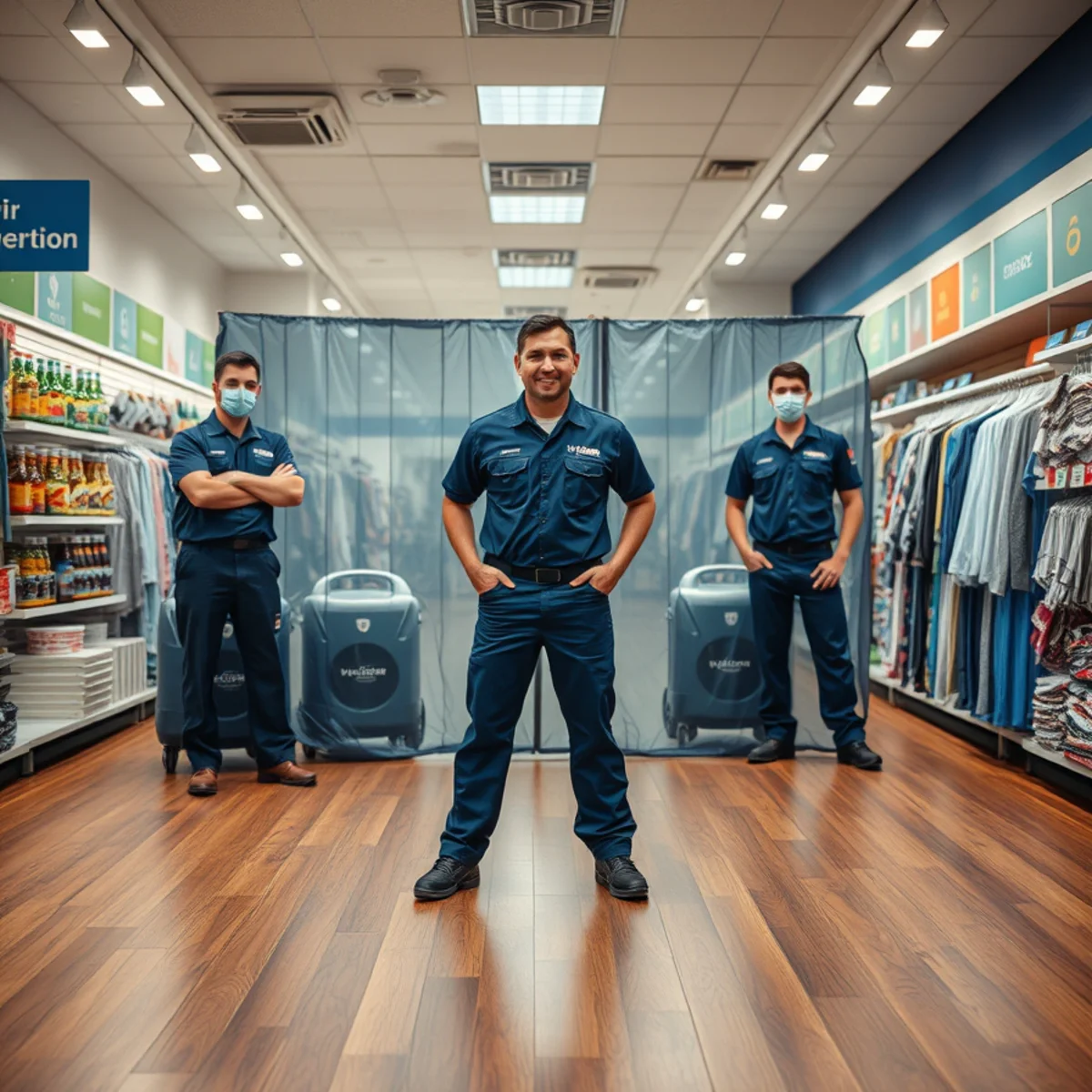
Physical containment isolates the affected area while the rest of the building stays open and clean. In retail that frequently means you trade normally while we work behind a barrier.
Desiccant dehumidification for large open volumes, and enough air movers to dry a warehouse floor rather than a bedroom. Demolition and extraction run outside your trading hours wherever the timeline allows.
Daily moisture logs, photographic records and an itemized scope formatted for commercial carriers, landlords and where relevant tenant or HOA boards. Origin and migration path documented per tenancy.
Areas are released back to you progressively as they clear, rather than all at the end, so you recover floor space and function as you go.
Same restoration science as residential, different project management. Continuity of operations drives the sequencing.
Within the first visit you get the affected zones, an honest drying timeline, and a plan for what can stay operational. You cannot make business decisions without that, and guesswork helps nobody.
Physical containment isolates the affected area so unaffected parts of the building stay open and clean. In retail that frequently means you keep trading while we work behind a barrier.
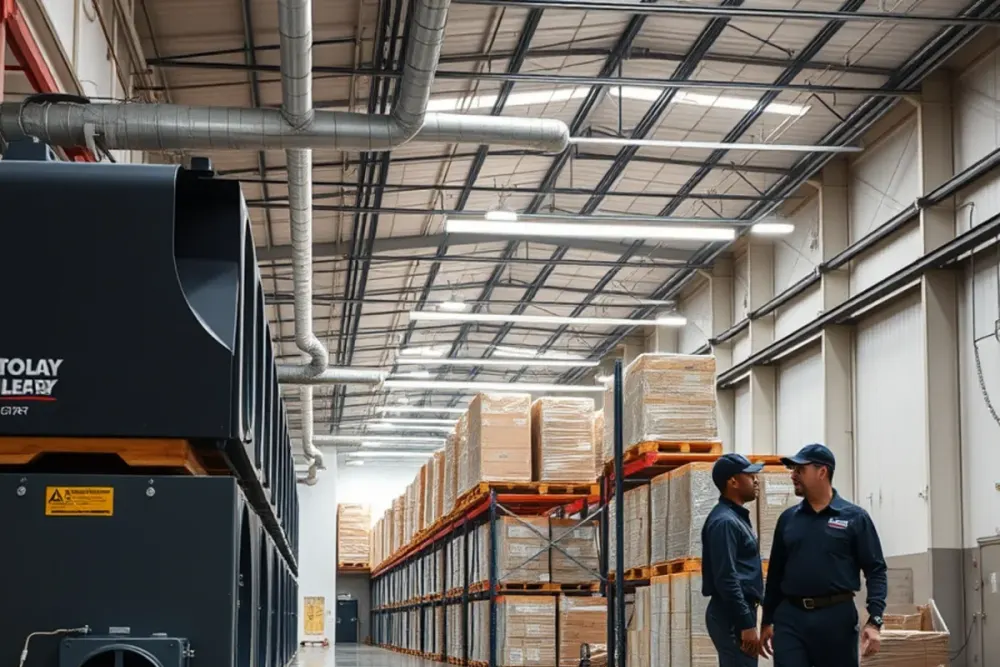
Commercial losses need commercial capacity — desiccant dehumidification for large open volumes, and enough air movers to dry a warehouse floor rather than a bedroom.
Demolition, extraction, and the disruptive stages run outside your trading hours wherever the timeline allows it. Equipment runs around the clock either way.
Inventory triage, pack-out where needed, and document recovery. Paper records and electronics get prioritized because their salvage window is the shortest.
Daily moisture logs, photographic records, and an itemized scope formatted for commercial carriers, landlords, and where relevant tenant or HOA boards. Multi-party claims need documentation that survives scrutiny.
Areas are released back to you as they clear rather than all at the end, so you recover floor space and function progressively.

Fire sprinkler systems save lives and property. They are also responsible for some of the largest water losses we see in commercial buildings, and the reason is volume.
A single activated sprinkler head discharges roughly 20 to 25 gallons per minute. Unless someone reaches the riser and closes the control valve, that continues. Twenty minutes is 400 to 500 gallons — into a retail floor, an office, or a warehouse aisle. And sprinkler water is not clean: it has been sitting in black steel pipe for years, so it comes out dark, rusty, and stains everything porous it touches.
Discharge is frequently accidental rather than fire-related. A forklift clips a head in a warehouse. A contractor knocks one during a tenant improvement. Corrosion causes a pinhole in an old wet-pipe system. A freeze event, rare here but not unknown, cracks a line in an unconditioned space.
The two things that limit the damage are both preparation, not response. Know where your sprinkler riser and control valve are, and make sure whoever is on site at 9 p.m. knows too. And have a restoration contractor's number on the emergency contact sheet before you need it — the difference between a 20-minute discharge and a 90-minute one is entirely about how fast someone reaches that valve.

In a multi-tenant building the restoration is usually the straightforward part. Working out who is responsible is not.
The typical split in a commercial lease: the landlord's policy covers the building structure and common areas, and the tenant's policy covers their improvements, fixtures, and contents. Water originating in one unit and damaging another creates a liability question between the tenants and their respective insurers. Business interruption coverage, if the tenant carries it, is a separate policy line again.
None of that should delay mitigation, and this is the practical point. Every hour spent establishing responsibility is an hour the building is getting wetter and the eventual claim is getting larger. Insurers understand this — mitigation is expected, and delaying it to sort out liability can itself reduce recovery.
What we do is document meticulously enough that the apportionment can be worked out afterwards from evidence rather than argument: origin of the loss, migration path between units, affected area per tenancy, and separate scopes and photographic records per unit. Then everyone's adjuster is looking at the same facts. It is far easier to divide a well-documented loss than to reconstruct an undocumented one.
Commercial pricing is driven by scale, access constraints, and how much of the work has to happen outside business hours.
Large open volumes — warehouses, showrooms, open-plan offices — need desiccant dehumidification and substantially more equipment than a comparable residential footprint.
Working overnight to keep you trading carries a labor premium, and it is almost always cheaper than the revenue lost to a daytime closure.
Inventory triage, pack-out, storage, and document or electronics recovery are separate scopes and can exceed the structural work in a stock-heavy tenancy.
Food service, medical, and childcare tenancies carry health-department and regulatory requirements that add sanitation, verification, and documentation steps.
For a commercial property the restoration invoice is rarely the biggest number. The closure is.
The Firestone Boulevard retail strip, the Stonewood Center trade area, Downey Landing, the 1960s–70s flat-roof strip commercial on Imperial Highway, and the distribution buildings along the 605 corridor toward Santa Fe Springs.
A single activated head puts out 20 to 25 gallons a minute until someone closes the control valve at the riser, and the water is rust-laden from years in black steel pipe. On inventory-heavy sites that staining is often the largest part of the loss.
The loss timeline, daily moisture logs, the drying schedule and area-by-area completion records. Your carrier calculates the financial loss, but that calculation needs a credible operational record.
Usually, at least partially. We contain the affected zone so the rest of the space stays open and clean, and schedule the disruptive stages — demolition, extraction, heavy equipment moves — outside your trading hours where the timeline allows. Full closure is sometimes unavoidable with a Category 3 loss or a large affected area, and if that is the situation we will tell you on day one rather than discovering it midway.
We dispatch within 60 minutes, 24/7, across Downey and the surrounding Gateway Cities. For commercial properties the most useful thing you can do is before the loss: give us your building details and emergency contacts in advance, so when the call comes we already know your riser location, access arrangements, and who can authorize work at 2 a.m.
Generally the landlord's policy covers structure and common areas, and each tenant's policy covers their own improvements and contents, with liability between tenants resolved by their insurers. The important part is not to let that question delay mitigation — we document origin, migration path, and per-unit damage in enough detail that apportionment can be settled from evidence afterwards.
We provide the restoration-side evidence a business interruption claim relies on: the loss timeline, daily moisture logs, the drying schedule, area-by-area completion records, and photographic documentation of what was unusable and when. Your carrier or accountant calculates the financial loss — but that calculation needs a credible operational record, and that is what we supply.
Yes. Overnight and weekend work is normal on commercial jobs, and closing the floor during business hours usually costs more than the after-hours scheduling does. We can also stage the work by zone, keeping unaffected parts of the building open behind containment while drying continues next door. Tell us your operating hours when you call and the schedule is built around them.

For a retail tenant the restoration invoice is rarely the biggest number. The closure is. Plan around that and everything else follows.
Read article
Structure and systems sit with the owner; contents and negligence sit with the tenant. Everything else is documentation and speed.
Read articleWe cover 43 areas from our base at 8615 Florence Ave. These are the ones we reach fastest:
We answer 24/7 and dispatch a crew within 60 minutes across Downey and the neighboring Gateway Cities. A person answers the phone — not an answering service.