

Claims guide
Water Damage Insurance Claims in California
What your policy covers, what it quietly excludes, and the record that decides whether a claim pays in full. Written from the documentation side of the job, by the crew that produces it.
- Open 24/7
- 60-minute emergency dispatch
- IICRC S500 standard
- Bonded & insured
- 24/7A person answers, day or night
- 60 minEmergency dispatch commitment
- IICRC S500The standard every job follows
- BondedBonded & insured for your protection
Sudden and accidental, or gradual?
Almost every California water damage decision turns on this one distinction. A supply line that bursts at 2 a.m. is sudden and accidental, and the resulting damage is normally covered. A fitting that wept behind a vanity for eight months is gradual, and normally is not — however real the damage looks when you finally open the wall.
Two things follow from that, and both surprise people. The failed part itself is usually excluded even when the damage it caused is covered, which is why a slab leak claim often pays to dry and rebuild but not to replace the pipe. And water that reaches your property across the ground is flood, not water damage, and sits outside a standard homeowners policy entirely.
Usually covered
- A supply line or washing machine hose that bursts
- A water heater that splits rather than seeps
- An overflowing appliance or fixture
- Storm water entering through sudden roof damage
- Resulting damage from a slab leak
Usually excluded
- Long-term seepage and deferred maintenance
- The failed pipe or component itself
- Flooding and surface water, without a flood policy
- Sewer backup, without a specific endorsement
- Damage worsened by a delayed response
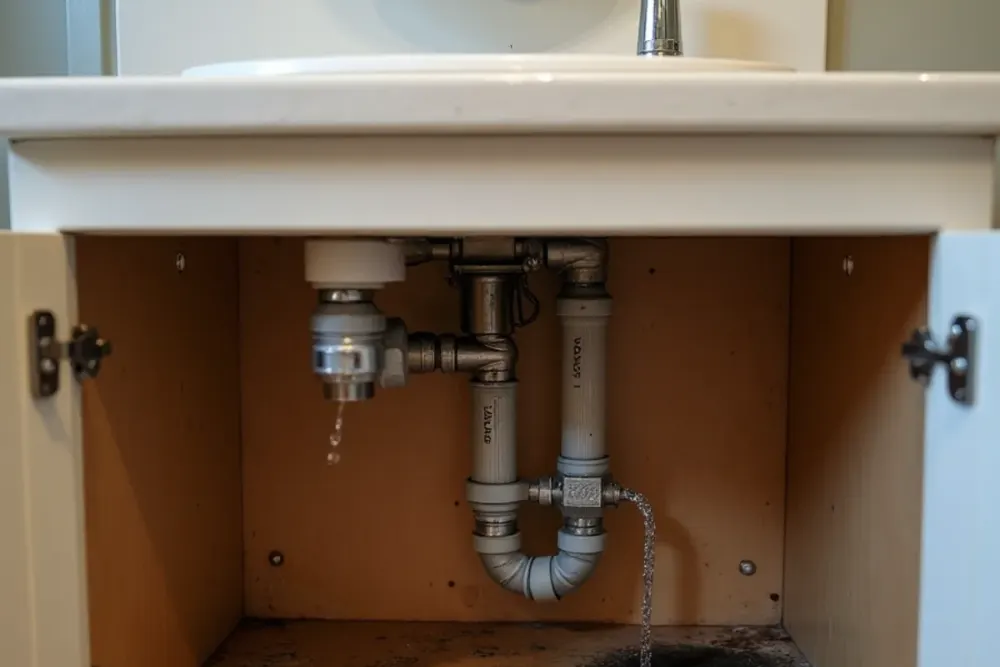
This is general guidance, not a reading of your policy. Your declarations page and endorsements govern, and they vary more than most people expect.
How a claim actually runs
Four points where claims are won or lost
Hour one
Stop the loss, then start the record
Shut the water off and photograph everything before you mop, move furniture or pull carpet. Pre-mitigation images are the ones that carry weight, and they are the only ones you cannot go back and take.
Same day
Notify the carrier and start mitigation
Policies require prompt notice and impose a duty to mitigate. Those run in parallel — waiting for an adjuster before drying starts is how part of a loss becomes avoidable, and avoidable damage is where carriers reduce.
Days 2–5
Measure the drying, do not estimate it
Daily moisture readings against the IICRC S500 dry standard turn a claim from an assertion into a record. Ask any restoration company for their daily log before you hire them.
Settlement
Hand over one itemized scope
Photographs, a moisture map of the real affected area, drying logs and an itemized scope in the format carriers expect. Claims are rarely cut because the damage was not real — they are cut because nobody could demonstrate it.
7 detailed guides
Go deeper on your situation
Each guide covers one stage of a claim in full. Start with whichever matches where you are.
What we hand you at the end of a job
The documentation is not an add-on to the restoration work — it is the part that decides what your carrier pays. Every job we run in Downey and the Gateway Cities produces the same record, whether the claim ends up contested or not.
- Pre-mitigation photographs, taken before anything was moved
- A moisture map of the genuinely affected area, not a room count
- Daily drying logs: material moisture content, humidity, temperature, grains per pound
- An itemized scope in the format carriers expect
- Dated records establishing when the loss began
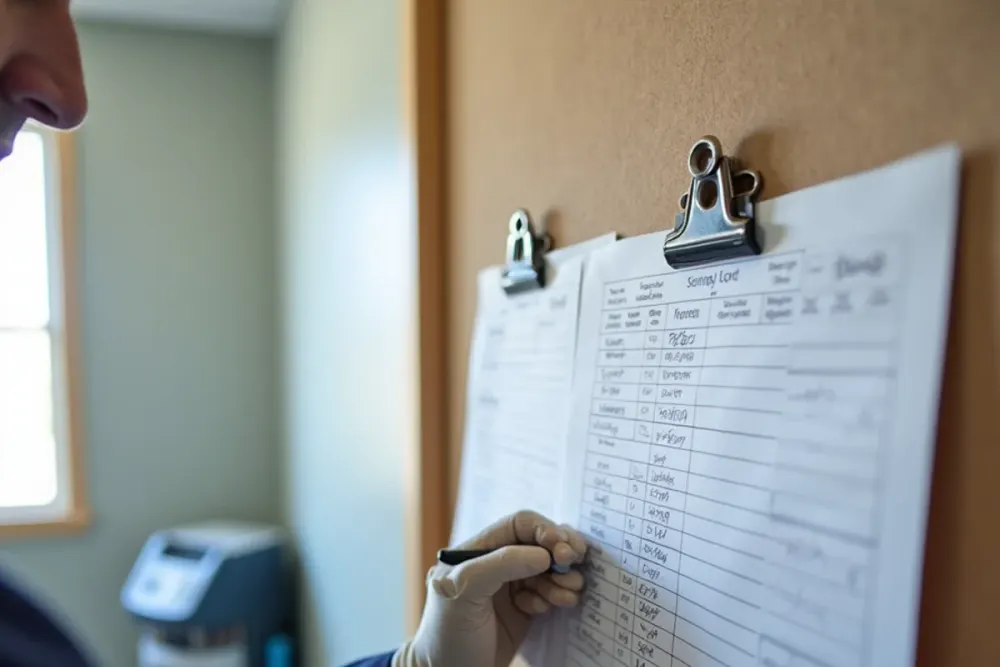
If you are comparing companies, ask to see a sample daily log before you hire. A company that cannot produce one is not measuring the drying, and an unmeasured dry-out is the hardest kind of claim to defend. More on how we work in structural drying and how we run a job.
Common questions
Water damage claims in California
Usually yes when the escape of water was sudden and accidental — a burst supply line, a failed water heater, an overflowing appliance. Usually no when it was gradual: a slow leak that ran for months, deferred maintenance, or seepage through a foundation. Flooding from outside the building is a separate policy entirely. The failed part itself is also normally excluded even when the resulting damage is covered, which is why a slab leak claim often pays to dry and rebuild but not to replace the pipe.
Everything, from wide to close. Start with a room-wide shot from the doorway that establishes the extent, then work in: standing water against baseboards, the wet line on drywall, saturated carpet pad, the failed component itself, and the serial plate on any appliance involved. Photograph before you mop, move furniture or pull carpet, because pre-mitigation images are the ones that carry weight. Keep every receipt from the first hour onward, including the fans you bought yourself.
Policies require prompt notice rather than a fixed number of days, and most also impose a duty to mitigate — meaning you are expected to stop the damage spreading rather than wait for an adjuster. Delay is where claims get reduced: if drying started late, a carrier can argue part of the loss was avoidable. Call your insurer the same day, start documented mitigation immediately, and let the two run in parallel.
It depends which insurance convention your CC&Rs adopt — bare walls, original specification, or all-in — and that single clause decides whether your policy or the association's covers the drywall, flooring and cabinetry. Read the insurance section of your CC&Rs before you need it. Where water crosses a party wall, expect two carriers and the association to be reading the same file, which is why per-unit documentation matters so much.
Yes. A carrier may recommend a preferred vendor, and you are free to use them, but in California the choice of contractor is yours. What the carrier controls is what it will pay, not who holds the equipment. Ask any company for their daily moisture log before you hire them — if one does not exist, the drying is not being measured, and an unmeasured dry-out is the hardest kind of claim to defend.
Rarely a dispute about whether the damage happened. Far more often it is that nobody could demonstrate the scope: no pre-mitigation photographs, no moisture map of the real affected area, no daily drying logs, no itemized scope in the format the carrier expects. Long-term seepage is the other common reason, which is why dating the loss and documenting from the first visit matters more than any argument made later.
We document from the first hour, not the last
Free on-site estimate, itemized before any work is authorized. Call +1 (201) 277-9344 and a person answers.
- Open 24/7
- 60-minute emergency dispatch
- IICRC S500 standard
- Bonded & insured
8615 Florence Ave, Downey, CA 90240
+1 (201) 277-9344 · Get Directions