Costs & Insurance
Flood Insurance vs. Homeowners Insurance: What Actually Covers Storm Water
Water that fell from the sky and water that rose from the ground are two different claims, even when it is the same storm and the same room.
The short answer
Water that fell from the sky and entered through a storm-created opening is usually covered by your homeowners policy. Water that rose off the ground and came in at a threshold is flooding, and needs separate coverage — normally through the NFIP, which carries a 30-day waiting period before it takes effect.
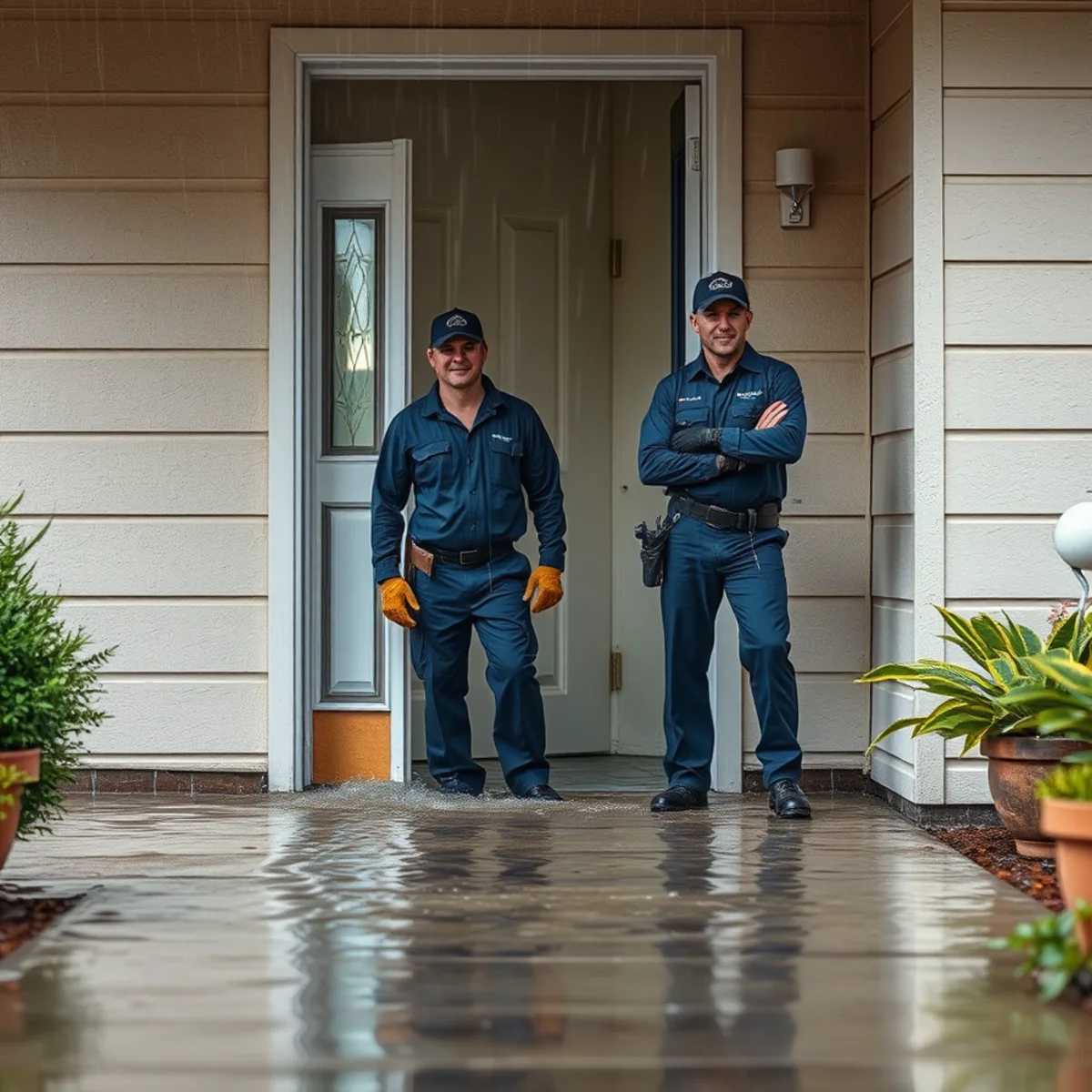
Here is the distinction that surprises almost everyone after a storm: your homeowners policy may cover the water damage in your living room and not the water damage in your garage, from the same storm on the same night.
It is not arbitrary. It comes down to where the water was immediately before it got in.
The dividing line
| Where the water came from | Which policy | Typically covered? |
|---|---|---|
| Fell from the sky and entered through a storm-created opening | Homeowners | Usually yes |
| Rose off the ground and came in at a threshold | Flood policy | Only with separate flood coverage |
| Backed up out of a drain or sewer line | Homeowners with a backup endorsement | Only with the endorsement |
| Came from a burst pipe or appliance inside the house | Homeowners | Usually yes |
| Ran down a slope from uphill | Flood policy | Generally treated as surface water and excluded |
Rain driving through a window the wind broke is covered. The same rain, having landed in the street and pooled up to your doorway, is flooding. Same storm, same house, sometimes the same room.
Why we photograph the point of entry
Because it decides the claim, and it is the one piece of evidence that disappears fastest.
On any storm loss we document the entry route in detail: the opening itself, the debris or water line showing height, the direction of travel inside, and the exterior damage that created the opening. If wind lifted tiles and water came in through the roof, that is demonstrable — and it is the difference between a covered claim and a declined one.
What flood insurance actually is
Flood coverage is a separate policy, most commonly through the National Flood Insurance Program, with private options also available. Key things worth knowing before you need it:
- There is normally a 30-day waiting period before a new NFIP policy takes effect — you cannot buy it when the storm is forecast
- Building coverage and contents coverage are purchased separately; buying only the building leaves your possessions uncovered
- NFIP building coverage is capped, and high-value homes may need excess coverage on top
- It is available whether or not you are in a mapped high-risk zone, and it is much cheaper outside one
- A meaningful share of flood claims come from properties outside designated high-risk zones
Downey's actual flood picture
Climate risk modeling puts roughly 24% of Downey buildings at meaningful flood risk, with five of the city's census tracts having more than half their buildings exposed. That is not a trivial number for a city that most people do not think of as flood-prone.
The historical context matters too. Downey grew up in the floodplain between the San Gabriel River and the Rio Hondo, and the 1868 floods that reshaped what was then Los Nietos are part of why the flood control system exists. Both rivers are now concrete channels operated by the LA County Flood Control District, with Whittier Narrows Dam upstream.
That system works — riverine flooding of the historical kind is no longer the risk. What replaced it is urban flooding driven by rainfall intensity. When an atmospheric river drops two inches in an hour, as happened repeatedly during the 2022–2023 sequence, the storm drains cannot take it. Water backs up at the inlets and goes to the lowest doorway, in neighborhoods that have never had a problem.
Where it happens first here
In our experience the lowest-elevation homes closest to the San Gabriel River channel — the Rio San Gabriel neighborhood — take water first, followed by South Downey below Imperial Highway. Older drainage in pockets of Downtown Downey backs up under intense cells.
But intensity beats geography. A slow-moving cell dropping two inches an hour will overwhelm inlets in streets with no flooding history at all.
What to do about it
- Check your specific address against FEMA's flood map service rather than assuming either way
- Read your declarations page and confirm what you actually have — most people are surprised in one direction or the other
- If you have any exposure, price a flood policy; outside a high-risk zone it is usually inexpensive
- Add a sewer and water backup endorsement, which many California policies exclude by default
- Clear yard and area drains before November — they silt up over a dry summer and nobody checks
- Keep a couple of sandbags if your garage has taken water before
One thing that is always true
Whatever the coverage outcome, water that came in from outside is Category 3 contaminated — it has crossed soil, roadway, and storm drain. Keep people and pets out of it, do not run box fans on it, and understand that porous materials which absorbed it, particularly carpet pad, need removal rather than drying.
That is true whether the claim is paid or not, and it is the part that affects your household's health rather than your finances.
Frequently asked
Worth pricing, at least. A meaningful share of flood claims come from properties outside designated high-risk zones, and outside one the premium is usually low. Around 24% of Downey buildings carry meaningful flood exposure, and the modern risk here is urban flooding from rainfall intensity, which does not respect zone boundaries the way riverine flooding did.
No. NFIP policies normally have a 30-day waiting period before taking effect, specifically to prevent that. It is a decision to make in summer, not during a storm watch. Private flood options exist with different terms, but the general principle holds — coverage bought at the last minute usually does not respond.
By where the water was immediately before it got in. Rain entering through a storm-created opening — a broken window, damaged roof — is typically a covered homeowners claim. Water that pooled on the ground and came in at a threshold is flooding. We document the point of entry, the water line, and the exterior damage precisely, because that evidence is what the determination rests on.
Same storm, two different claims
The distinction is not arbitrary — it comes down to where the water was immediately before it got in. That is why we photograph the point of entry in detail on every storm loss, because it frequently decides whether the claim is paid.
Roughly 24% of Downey buildings carry meaningful flood exposure, with five census tracts above 50%. A meaningful share of flood claims also come from properties outside mapped high-risk zones, where the premium is much lower.
Whatever the coverage outcome, water that came in from outside is Category 3 contaminated. Keep people and pets out of it, and do not run box fans on it. For the whole claim process end to end, see our California water damage insurance claims guide.
Services mentioned in this article
Flood Cleanup
Storm and overflow flooding handled end to end — pump-out, contaminated material removal, disinfection, and documented drying.
Learn moreStorm Damage Cleanup
Emergency tarping to stop the water first, then extraction, drying, and full documentation for the claim.
Learn more24/7 Emergency Water Removal
A person answers, 24/7. Crews dispatched within 60 minutes — nights, weekends, and holidays included.
Learn moreAreas covered in this article
1960s–70s tract expansion south of Imperial Highway — newer slab construction, but in the direct San Gabriel River…
about 10 minutes from our Florence Ave baseRio San GabrielAdjacent to the historic San Gabriel River channel — the lowest-elevation homes in Downey, with the city's highest…
6 to 9 minutes from our Florence Ave base