Costs & Insurance
Sewage Backup Cleanup Costs — and Whether Insurance Will Pay
Sewage costs more than clean water at every stage, for reasons that are all defensible. And the coverage most people assume they have is usually excluded by default.
The short answer
Sewage cleanup costs more than clean water at every stage because Category 3 work requires containment, protective equipment, HEPA filtration, mandatory removal of porous materials and regulated disposal. And most standard California homeowners policies exclude sewer backup entirely unless you carry a specific endorsement.
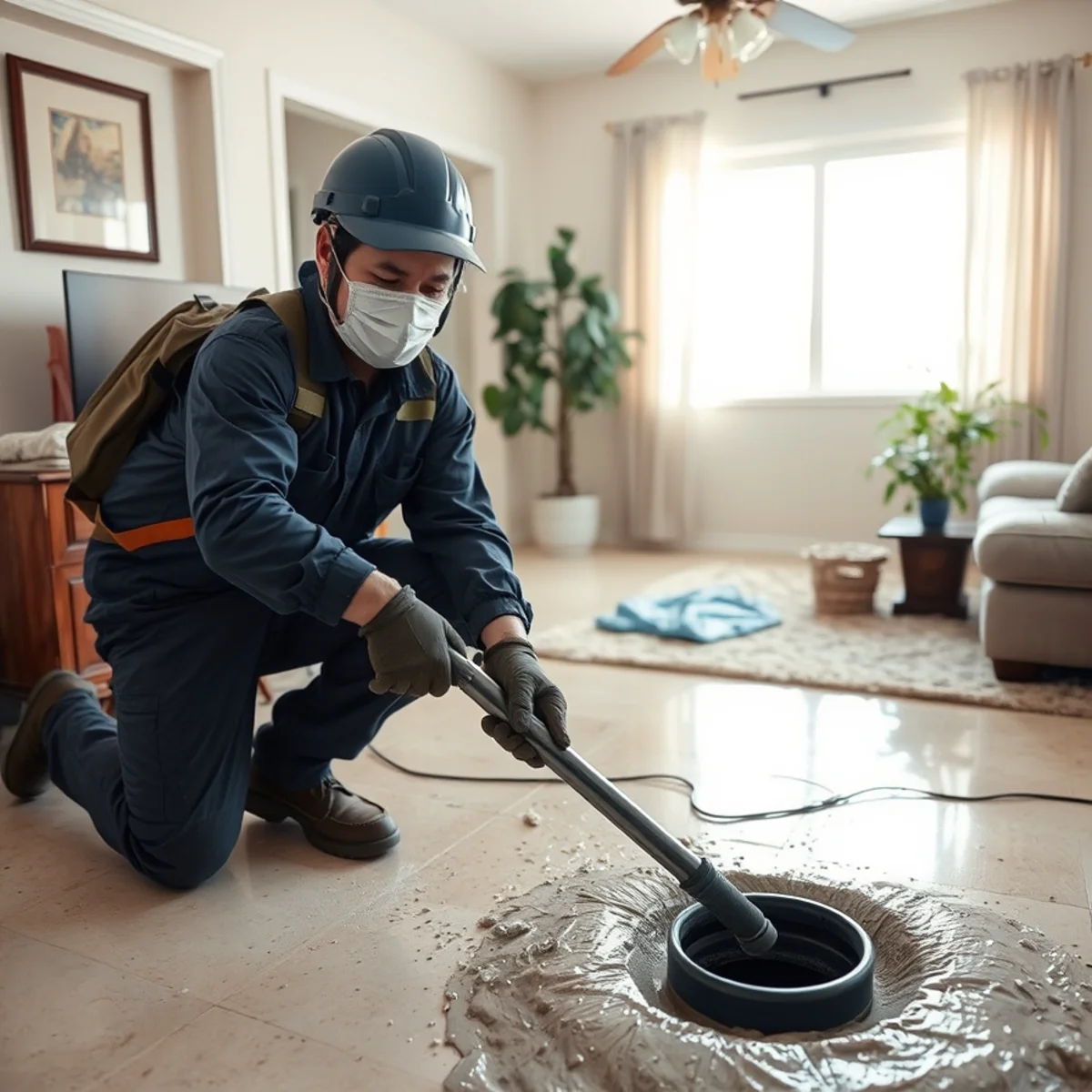
Two unwelcome facts about sewage backups. They cost substantially more to clean up than a comparable clean water loss. And most standard California homeowners policies exclude them by default.
Both are worth understanding before you are standing in one.
Why Category 3 costs more
Every additional cost here maps to a specific requirement, not a premium for unpleasantness.
- Containment — physical barriers and negative air pressure so contaminated air flows into HEPA filtration rather than into your living space
- Protective equipment for every technician on every entry, which is a genuine consumable cost
- Dedicated equipment that never gets used on clean water jobs
- Mandatory removal of porous materials — carpet, pad, affected drywall, insulation, particle board — because nothing porous that absorbed sewage is dried and reused
- Physical cleaning before disinfection, because disinfectant over organic soil does not work
- Hospital-grade antimicrobial with full dwell times
- Regulated disposal — contaminated material cannot go in your bin
- HEPA air scrubbing throughout the job
None of that applies to a burst supply line in the same room. That is the whole difference.
What moves the number
| Factor | Effect |
|---|---|
| Contained to one bathroom vs crossed into living space | The single biggest driver — carpeted areas multiply the scope |
| Hard floor vs carpet | Tile is cleaned and disinfected; carpet and pad are removed and disposed of |
| Whether it reached HVAC returns or ducting | Major escalation — the system distributes contamination house-wide |
| How long it sat | Longer means deeper wicking into wall bases and subfloor, and higher mold risk |
| Whether the line itself needs work | Clearing, lining, or replacing the lateral is a separate plumbing scope |
| Rebuild finishes | Replacing tile, cabinetry, or flooring after removal is often the larger half |
The coverage most people do not have
The endorsement typically covers backups through drains and sewer lines and sump pump failures, up to a stated limit. Limits vary considerably, and it is worth checking whether yours would actually cover a full cleanup with rebuild rather than just the mitigation.
Coverage may also apply differently if the backup was caused by a sudden covered event rather than gradual blockage. That is worth raising with your adjuster rather than assuming the exclusion settles it.
Why Downey homes back up
Two local factors account for most of what we attend, and both are functions of the city's age.
Tree roots first. Established neighborhoods — Independence Park, Furman Park, the streets around Columbia Way — were planted with shade trees in the 1950s and 60s that are now fully mature. Roots find the joints in clay-tile laterals, enter through gaps that decades of clay soil movement have opened, and form a mat that catches everything passing through.
Pipe age second. Homes built before about 1960 across Downtown Downey, North Downey, and Studebaker/Firestone have original clay-tile laterals and cast-iron drains. Clay tile cracks as the ground shifts; cast iron corrodes until the bottom of the pipe gives out.
Heavy rain compounds both. Rising groundwater infiltrates cracked laterals and adds volume a marginal line was never carrying — which is why we see a spike in sewage calls in the two days after a significant storm.
The prevention that actually works
Root blockages give months of warning, and the warning is easy to dismiss.
- A shower or tub draining slower than it used to
- A toilet gurgling when the washing machine discharges — two fixtures talking to each other always means the shared line
- Multiple drains slow at the same time
- A backup that clears itself, which is the most dangerous signal of all
A backup that clears itself has not resolved. It means the blockage is nearly complete and something shifted enough to let flow resume. At that point a camera scope down the lateral costs a small fraction of a sewage cleanup and tells you exactly what you are dealing with.
If a root mat is found, the lateral can usually be cleared and then lined from the inside — a resin liner cured in place that seals the joints so roots cannot re-enter, with no trench and no need to remove the tree.
Is it safe to stay?
Our honest answer depends on where the sewage went and who lives there. Contained to one bathroom on a slab, most households stay put and lose the use of that room for a few days. If it crossed into living space, a bedroom, or the kitchen, or reached the HVAC system, we generally recommend staying elsewhere until the contaminated material is out and the area has been cleaned and cleared.
The threshold moves for households with infants, elderly residents, anyone pregnant or immunocompromised. And additional living expenses during mitigation are frequently covered — ask your adjuster rather than spending a night in a house you should not be in because you assumed you would be paying for the alternative.
Frequently asked
Usually only with a specific sewer and water backup endorsement, which many standard California policies exclude by default. It is typically inexpensive to add — and it cannot be added after the backup. Check your declarations page now. Given the age of the sewer laterals across Downey and the surrounding Gateway Cities, it is one of the more sensible endorsements to carry here.
Every extra cost maps to a requirement. Containment and negative air, protective equipment on every entry, dedicated equipment, mandatory removal of all porous materials that absorbed it, physical cleaning before disinfection, hospital-grade antimicrobial with full dwell times, HEPA air scrubbing, and regulated disposal. None of that applies to a burst supply line in the same room.
We strongly advise against it. Household bleach does not reliably kill everything in sewage, a mop spreads it, and a shop vac aerosolizes pathogens into the air. Beyond the surface, sewage wicks under flooring and into wall bases where you cannot reach it — and that hidden contamination causes the lingering odor and mold. A few square feet on hard floor caught instantly may be manageable with gloves; anything on carpet or across rooms is not.
Check your declarations page today
Every additional cost in a sewage cleanup maps to a public-health requirement rather than a pricing preference. None of it applies to a burst supply line in the same room.
The endorsement is usually inexpensive and cannot be added after the backup. Given the age of the clay-tile laterals across Downey and the surrounding Gateway Cities, it is one of the more sensible ones to carry here.
The cheaper path is prevention. Root blockages announce themselves for months through slow drains, gurgling fixtures and backups that clear themselves — and a camera scope at any point in that window costs a fraction of the cleanup. For the whole claim process end to end, see our California water damage insurance claims guide.
Services mentioned in this article
Sewage Cleanup & Backup Removal
Category 3 backups handled under containment — full protective equipment, regulated disposal, and verified disinfection.
Learn moreMold Remediation
Contained removal that fixes the moisture source first — because mold that is only cleaned off comes straight back.
Learn more24/7 Emergency Water Removal
A person answers, 24/7. Crews dispatched within 60 minutes — nights, weekends, and holidays included.
Learn moreAreas covered in this article
An industrial-residential mix along the 605 corridor — commercial water losses in distribution and warehouse space…
about 15 minutes from our Downey baseIndependence ParkFamily tracts around Independence Park on Bellflower Blvd — 1950s–60s homes whose mature shade trees now send roots…
about 10 minutes from our Florence Ave base