Costs & Insurance
What Drives Mold Remediation Costs Up (or Down)
Mold pricing varies more than any other restoration service, because two jobs with identical visible growth can have completely different scopes behind the wall.
The short answer
Five things move the number: how far growth extends behind the surface, how accessible the location is, containment complexity, whether the moisture source repair is included, and the rebuild after removal. Visible growth is usually the smaller part, which is why two jobs with identical patches can price very differently.
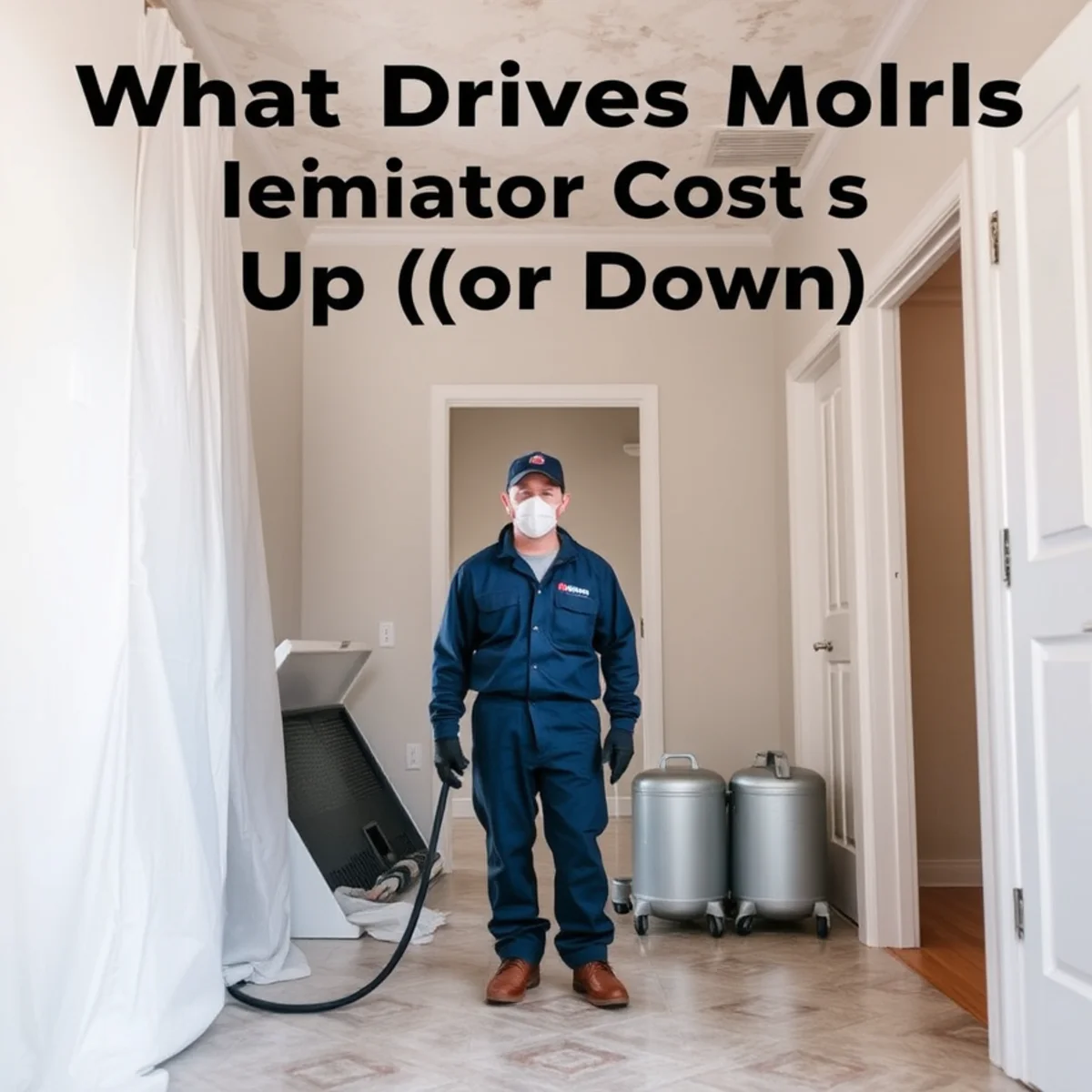
Mold remediation quotes vary more than anything else we do, and homeowners understandably find that suspicious. It is worth explaining why, because the variation is real rather than opportunistic.
Two homes can have identical visible growth — the same patch on the same kind of wall — and need completely different scopes. What you can see is almost never the job.
1. The area you cannot see
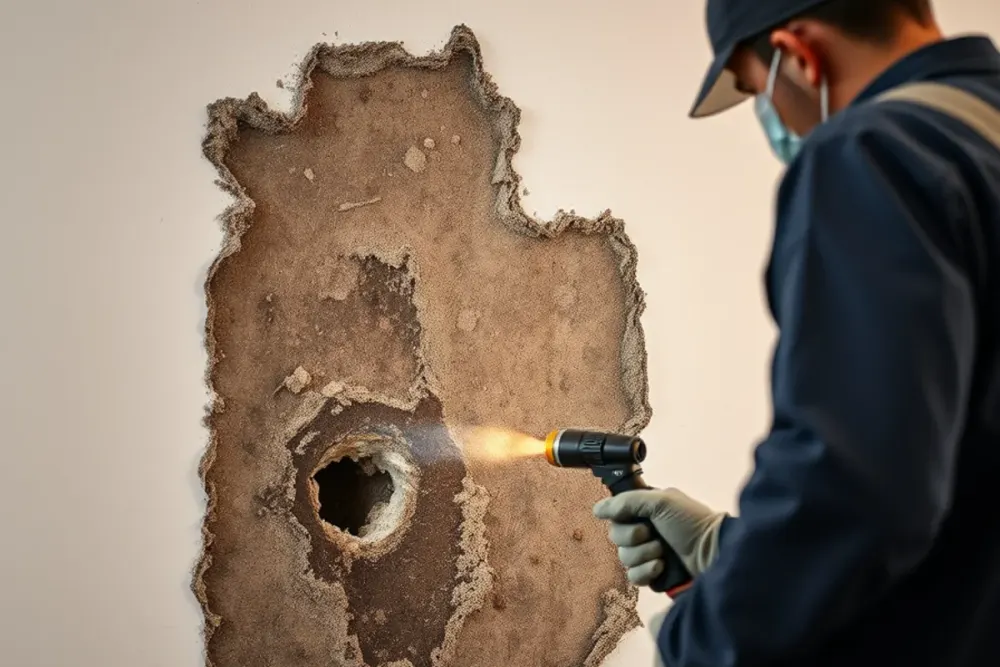
Visible growth is usually the smaller part. Mold grows where moisture is, and moisture is inside the assembly — the back face of drywall, the bottom plate, the cavity insulation, the subfloor.
So the first thing that moves the price is what an actual inspection finds behind the surface. A one-foot patch in a closet can be a one-foot patch. It can also be the visible corner of growth running four feet along a wall base, which is a different job entirely.
2. Where it is
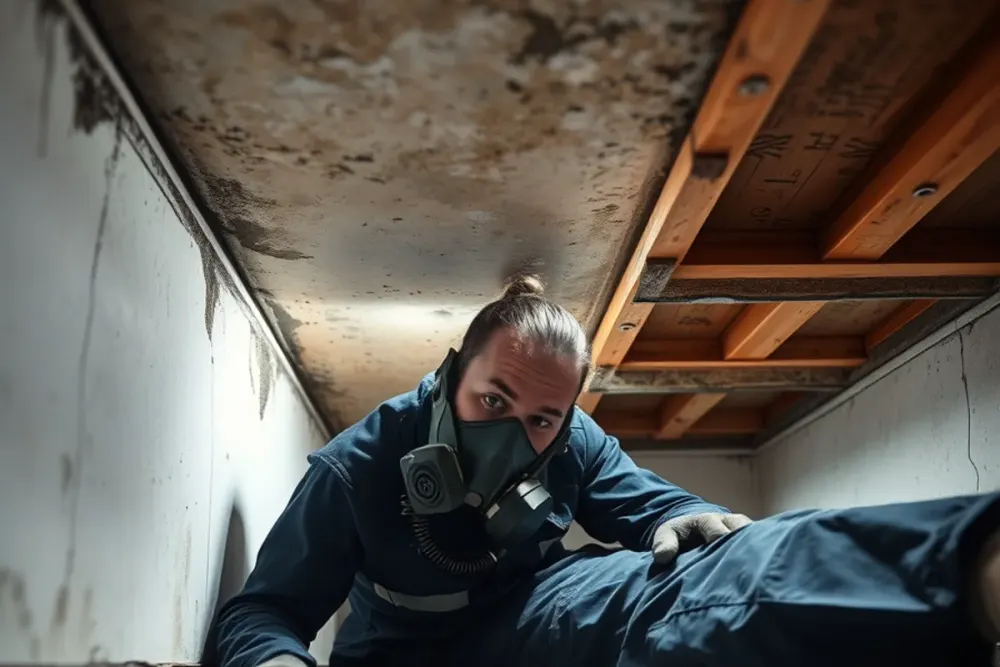
| Location | Relative difficulty |
|---|---|
| Open wall surface in a normal room | Lowest — accessible, easy to contain |
| Inside a wall cavity | Higher — requires opening, cavity drying, rebuild |
| Under a bathroom or kitchen with fixtures | Higher — fixtures and cabinetry to work around |
| Crawl space | High — confined space work, safety requirements, awkward access |
| Attic | High — low clearance, insulation removal, heat |
| Behind or under built-in cabinetry | Highest — removal and reinstatement of joinery |
3. Containment complexity
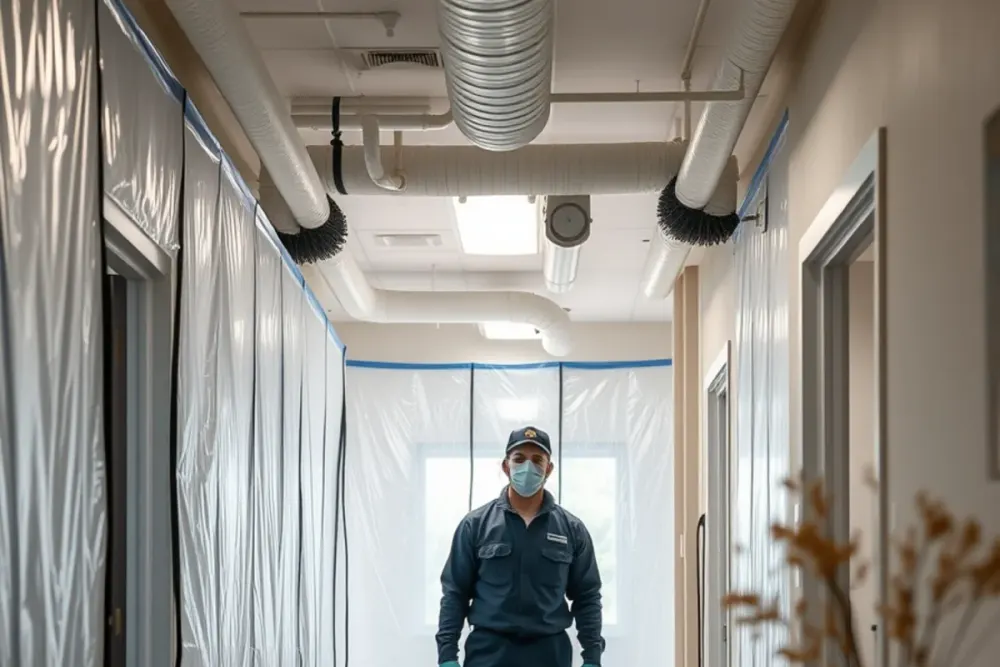
A single contained bathroom is straightforward. A job spanning several rooms, or one where the household has to live around containment for a week, needs more barrier material, more negative air machines, more HEPA filtration, and considerably more labor.
Containment is not optional and it is not padding. Cutting into mold-affected material without it distributes spores through the entire house, which converts a contained problem into a whole-home one.
4. The moisture source — the cost everyone forgets
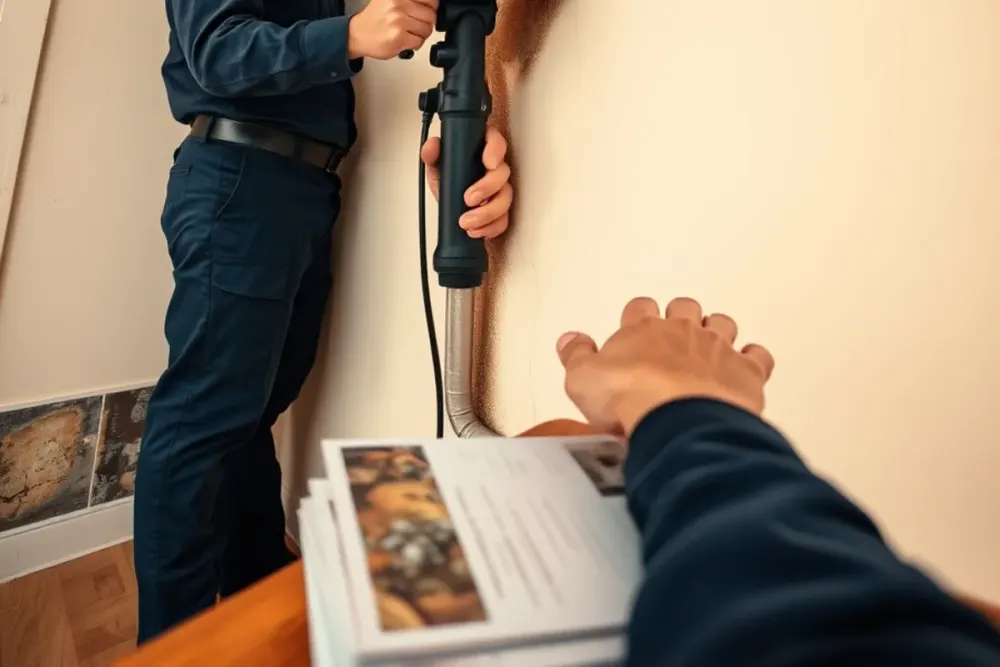
This is the line item that surprises people most on a mold quote, and it is why we always identify and price the source separately rather than bundling it invisibly.
5. Rebuild
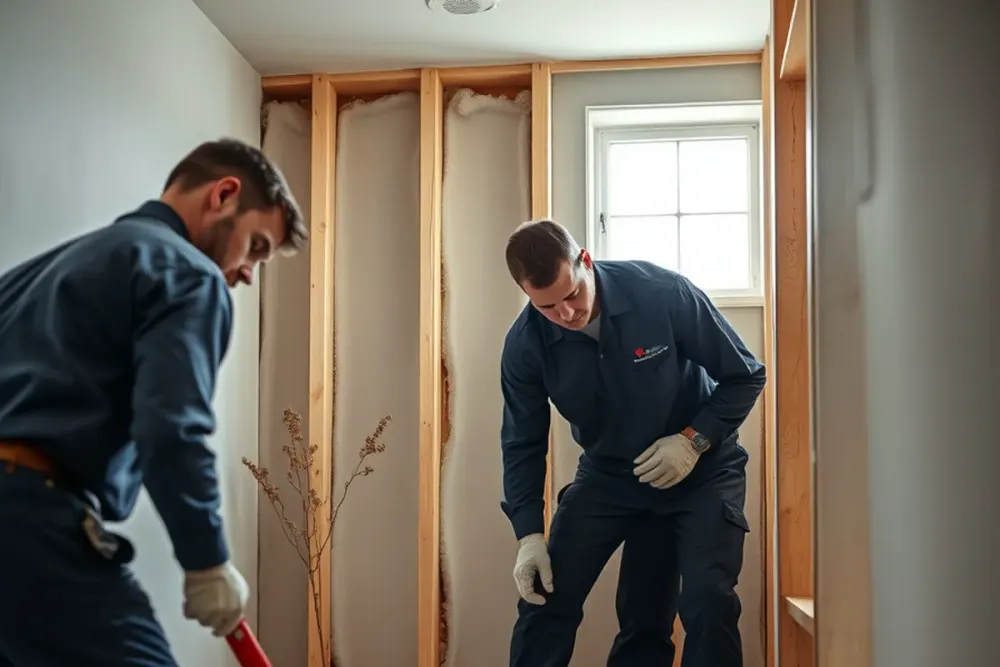
Removal leaves an open assembly. Putting back drywall, texture matched to the existing finish, paint, trim, insulation, and flooring is a separate scope — and it is the part homeowners most often forget to budget for.
On a bathroom or kitchen with tile and cabinetry, rebuild frequently exceeds the remediation cost.
What makes it cheaper
- Catching it early — a small contained area is a fraction of the cost of an established colony
- Accessible location, on an open wall rather than inside cabinetry or a crawl space
- A moisture source that is simple and already fixed
- Non-porous or semi-porous materials, which are cleaned rather than removed
- Simple finishes to rebuild — painted drywall rather than tile, stone, or custom joinery
The insurance reality
Many California policies cap mold remediation at a sublimit — commonly $5,000 or $10,000 — regardless of your overall dwelling coverage. A genuine multi-room remediation with rebuild can exceed that comfortably.
Coverage also depends on cause. Mold resulting from a sudden covered loss you reported promptly is often covered up to the sublimit. Mold from a long-term leak, deferred maintenance, or humidity is generally excluded as gradual damage.
Which produces a clear practical rule: report water events immediately, even small ones. The paper trail showing you reported a burst pipe on day one is what makes the mold that appears three weeks later a covered consequence rather than a maintenance failure.
On testing
If you can see growth and the moisture source is identifiable, pre-remediation testing usually confirms what is already visible without changing the scope of work. The remediation approach is driven by containment and moisture control rather than by which species is present.
Testing genuinely earns its keep in two situations: post-remediation verification, and when a physician wants documentation for a health claim. For verification we recommend an independent third-party assessor rather than testing our own work — a company grading its own homework is worth less to you than an independent clearance.
Why LA County homes get mold without flooding
Most of the mold we find has no dramatic water event behind it. Slab leaks under 1960s–70s tract housing releasing water continuously for months. Garage water heaters seeping against a shared wall. Blocked HVAC condensate lines backing up into a ceiling. Roof flashing that has been letting water in since a Santa Ana wind event two winters ago.
In every case the mold is a downstream symptom, and pricing the remediation without finding the source is pricing half a job.
Frequently asked
Because the scopes genuinely differ. One company may have inspected behind the surface and priced the actual extent; another may have quoted the visible patch. Ask each for what they found behind the wall, how they will contain the area, whether the moisture source is included or separate, and whether rebuild is in the number. Those four questions usually explain the whole spread.
Usually not. If you can see growth and the moisture source is identifiable, testing beforehand mostly confirms what is visible without changing the scope — the approach is driven by containment and moisture control rather than by species. Testing is genuinely valuable as post-remediation verification, and there we recommend an independent assessor rather than the company that did the work.
Often only up to a sublimit. Many California policies cap mold at $5,000 or $10,000 regardless of your overall dwelling coverage, and a real multi-room remediation with rebuild can exceed that. Coverage also depends on cause — mold from a promptly reported sudden loss is often covered; mold from a long-term leak is generally excluded as gradual damage.
Why the quotes vary so much
A quote reflects what the contractor actually inspected. One may have opened the wall and priced the real extent; another may have priced the patch you can see.
Ask each of them four questions: what did you find behind the surface, how will you contain the area, is the moisture source repair included or separate, and is rebuild in this number. Those usually explain the entire spread.
On coverage, many California policies cap mold at a sublimit such as $5,000 or $10,000 regardless of your dwelling limit, and mold from a long-term leak is generally excluded as gradual damage. Reporting the original water event promptly is what keeps the door open.
Services mentioned in this article
Mold Remediation
Contained removal that fixes the moisture source first — because mold that is only cleaned off comes straight back.
Learn moreLeak Detection & Repair Coordination
Acoustic, thermal, and pressure testing that pinpoints the leak — so the repair opens one small area, not the whole floor.
Learn moreStructural Drying & Dehumidification
Metered, monitored drying that takes the structure back to its dry standard — not just the surface you can touch.
Learn moreAreas covered in this article
Built on former orchard and farmland — 1950s–60s tract homes sitting on clay-loam soil that expands and contracts h…
about 10 minutes from our Downey baseFurman ParkEstablished 1950s–60s streets around Furman Park on Rives Ave — original slab-on-grade construction with cast-iron…
about 5 minutes from our Florence Ave base