Costs & Insurance
How to Document Water Damage for an Insurance Claim
The most valuable photographs of the entire claim are the ones taken before anyone touches anything. That window closes in about an hour.
The short answer
Photograph everything before anything is moved, mopped or extracted — pre-mitigation images carry more weight with adjusters than anything captured later. Take wide room shots, close-ups of damaged materials, the water line on walls, and appliance serial plates, then record the timeline and keep every receipt.
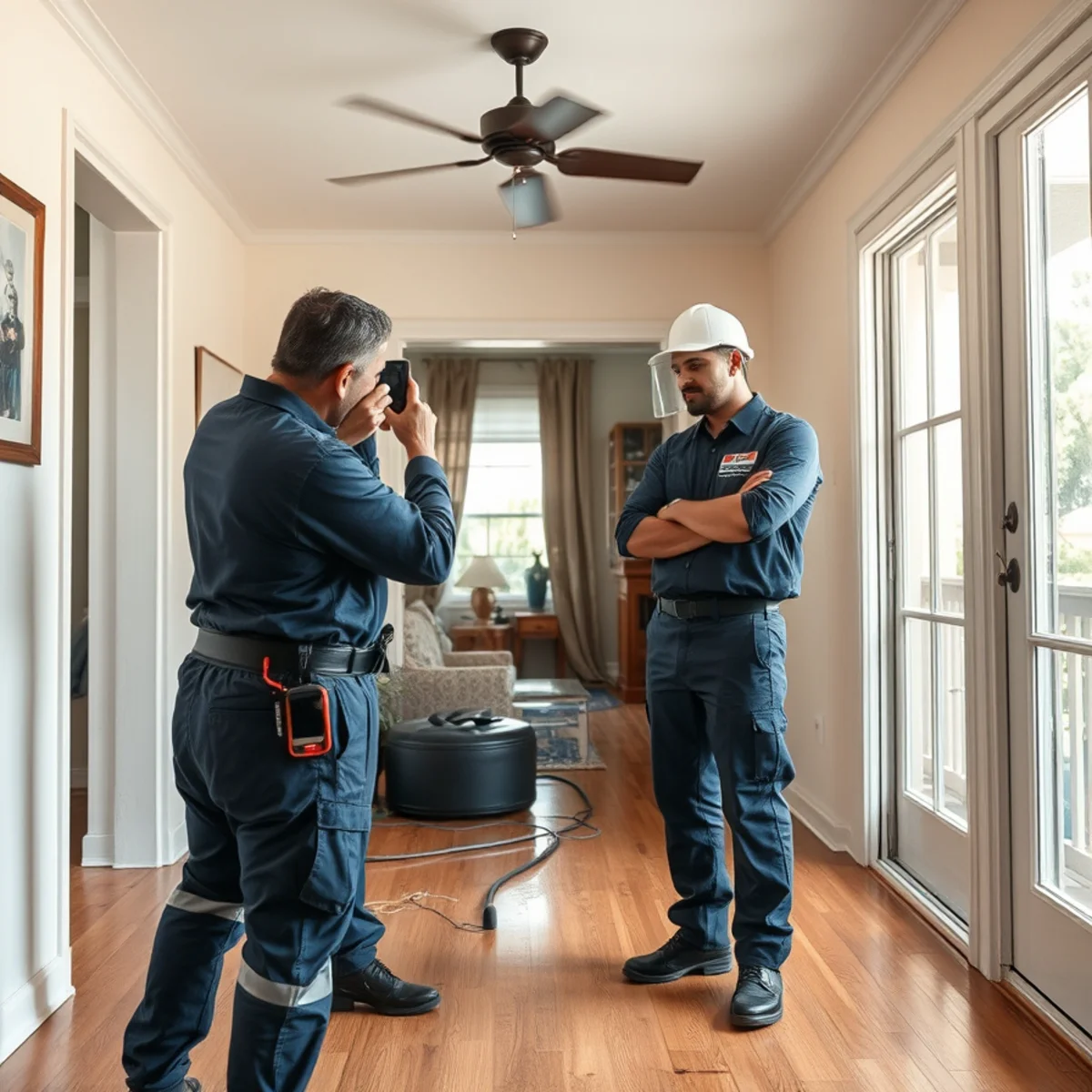
Claims are not usually reduced because the damage was not real. They are reduced because nobody could demonstrate its extent, its cause, or when it started.
All three of those are documentation problems, and all three are solvable in the first hour with a phone.
Why claims get reduced
Pre-mitigation photographs — taken before anything is moved, mopped, extracted, or removed — carry more weight with adjusters than anything captured later. They establish the state of the loss before anyone intervened.
Once a restoration crew starts extracting, that state no longer exists. It is the right thing to do for your house and it permanently removes evidence, which is why we photograph before we touch anything and why you should too.
The photo checklist
- A wide shot of every affected room, taken from the doorway so the scale is readable
- The same wide shots from the opposite corner, so nothing is hidden behind furniture
- The water line on walls, cabinets, and door frames — this is how the depth gets established
- Close-ups of every damaged material: flooring, baseboards, drywall, cabinetry, doors
- The source of the loss, if visible — the burst pipe, the failed hose, the tank, the roof opening — before anyone repairs it
- Model and serial plates on affected appliances, which insurers use for valuation
- Damaged contents individually, not just as a pile
- The ceiling below, if the loss was on an upper floor
- Anything that was already damp or stained before this event, so it does not get disputed later
What to record beyond photographs
- The date and time you discovered it, and the date and time you believe it started, if different
- What you did and when — closed the main at 6:15, called the carrier at 6:40
- The claim number as soon as you have it
- The name of every person you spoke to at the carrier, with date and time
- The weather, if a storm was involved — this matters for establishing the peril
The contents inventory is yours to make
This is the part homeowners most often leave to someone else, and it is the part nobody else can do. Your restoration company documents the structure. Your contents claim is settled from your list.
| Column | What to put in it |
|---|---|
| Item | Specific description, not 'clothes' or 'kitchen stuff' |
| Room | Where it was when it was damaged |
| Age | Approximate purchase year |
| Replacement cost | What it would cost to buy new today |
| Proof | Photo, receipt, credit card record, or listing link |
Do not throw anything away before it is documented and before the adjuster has had the chance to see it or waive inspection. Photograph it, list it, and if it must be removed for health reasons — as with sewage-contaminated items — photograph it thoroughly first and note why it was disposed of.
Keep every receipt
Mitigation costs and reasonable expenses during a covered loss are frequently reimbursable, and people routinely fail to claim things they were entitled to.
- The restoration invoice and any plumbing or roofing repair
- Hotel and meals, if the home is uninhabitable — ask about additional living expenses coverage
- The increase in your electricity bill while drying equipment runs; keep the bill and the same month last year for comparison
- Anything you bought to limit the damage — tarps, buckets, a wet vac, fans
- Laundry or cleaning for affected textiles
- Storage costs if contents had to be moved out
What a restoration company should provide
Your documentation and ours are different things, and the claim needs both. What you should expect from any competent restoration contractor:
- Pre-mitigation photographs taken before work started
- A moisture map showing the real affected area, which is nearly always larger than the visible one
- Daily drying logs — material moisture content, relative humidity, temperature, grains per pound
- An itemized scope in the format carriers expect
- Photographic records through the job, not just at the start and end
- Willingness to meet your adjuster on site and walk the loss together
If a company cannot produce daily moisture logs, they are not measuring the drying — they are guessing at it, and your claim file will show that gap.
A word on public adjusters
A restoration contractor documents and performs the work. A public adjuster represents you in negotiating the settlement and takes a percentage of it. They are different roles and it is worth knowing which you are talking to.
We are a restoration contractor. We do not negotiate settlements, and we would be skeptical of any contractor who promises to get your claim approved — that is not something they control. What thorough documentation does is remove the grounds on which most disputes start.
Frequently asked
Before, and it is the single most important timing point in the whole claim. Pre-mitigation photographs establish the state of the loss before anyone intervened, and adjusters weight them heavily. Once extraction begins that state is gone permanently. Three minutes with a phone before you move anything is the highest-return work you will do.
Not without documenting them thoroughly first. Photograph each item, list it with age and replacement cost, and note why it was disposed of. For sewage-contaminated items that genuinely cannot stay in the house, document heavily and tell your adjuster immediately — most will accept photographic evidence when disposal was necessary for health reasons.
We handle the documentation the claim depends on — pre-mitigation photos, moisture maps, daily drying logs, an itemized scope — and we will meet your adjuster on site. What we do not do is negotiate your settlement; that is a public adjuster's role, and they charge a percentage of it. Anyone promising to get your claim approved is describing something they cannot control.
The window that closes fastest
Claims are rarely reduced because the damage was not real. They are reduced because nobody could demonstrate its extent, its cause, or when it started — and all three are documentation problems solvable in the first hour with a phone.
Your contents claim is settled from your list, not your contractor's. Item, room, age, replacement cost and proof, built while you still remember what was in the room.
Ask any restoration company for their daily moisture log before you hire them. If one does not exist, the drying was never being measured — and that gap shows up in your claim file. For the whole claim process end to end, see our California water damage insurance claims guide.
Services mentioned in this article
24/7 Emergency Water Removal
A person answers, 24/7. Crews dispatched within 60 minutes — nights, weekends, and holidays included.
Learn moreResidential Water Damage Restoration
One team from the first extraction to the last coat of paint — no handing you off to three other contractors.
Learn moreWater Extraction & Removal
Truck-mounted extractors pull standing water out in a single pass — the fastest way to stop damage from spreading downward.
Learn moreAreas covered in this article
A planned 1960s–70s community built on former dairy land — residential slab-leak territory alongside the Los Cerrit…
about 18 minutes from our Downey baseFurman ParkEstablished 1950s–60s streets around Furman Park on Rives Ave — original slab-on-grade construction with cast-iron…
about 5 minutes from our Florence Ave base