
6 min read
Stormwater Got Inside: What's Salvageable After a Flood and What Isn't
One principle does most of the work: can the material be cleaned all the way through, or did it absorb the water? Everything else follows from that.
Read article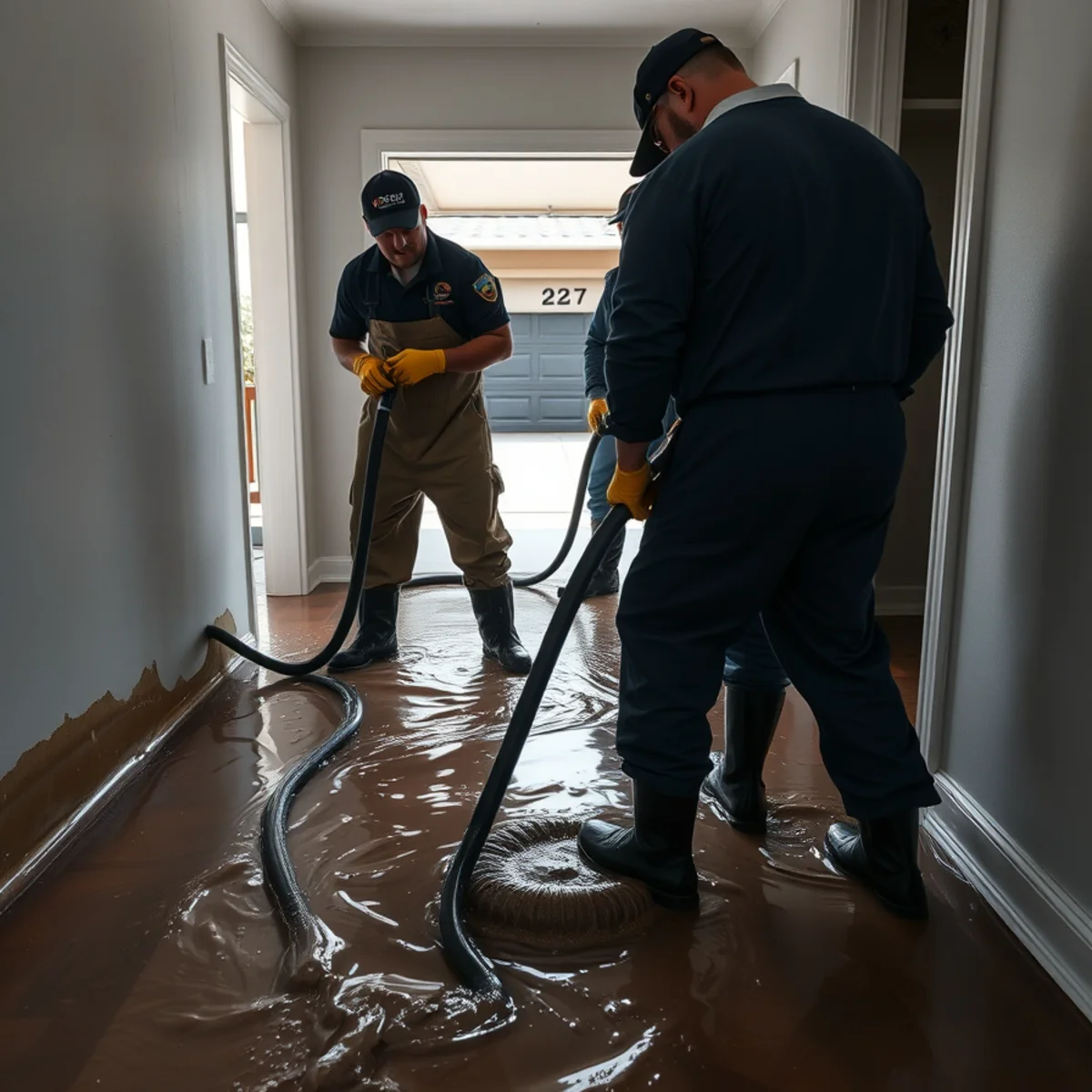
Core restoration service
Floodwater is not the same problem as a burst pipe, and it should not be cleaned up the same way.
Water that came in from outside — over a threshold during a winter storm, backing out of a street drain, or up through a garage slab — has been in contact with soil, roadway runoff, fertiliser, and whatever else the storm drain was carrying. Under the IICRC S500 standard that makes it Category 3 water regardless of how clear it looks. Porous materials that absorbed it do not get dried and reused. They get removed, and the structure underneath gets disinfected.
Downey knows this ground. Roughly 24% of buildings in the city carry meaningful flood risk, and this town was literally born in a floodplain — the 1868 floods that reshaped Los Nietos are the reason the drainage system exists at all. We work these losses constantly, and we know which neighborhoods take water first.
If any of these describe your situation, treat the water as contaminated and keep people and pets out of it until a crew arrives:
Do not run a household vacuum or box fan on floodwater. Both spread contamination — fans in particular aerosolize it into air the household is breathing.
Flood work is Category 3 from the moment water crosses your threshold, and the scope reflects that at every stage.
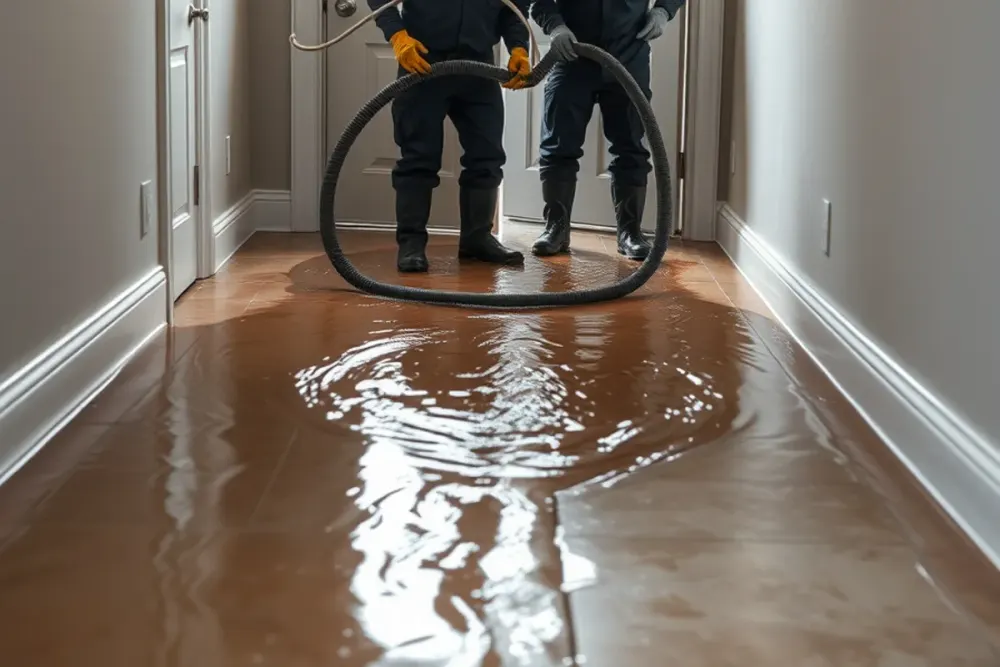
Submersible pumps clear standing depth, then truck-mounted extraction takes the rest out of flooring and materials. Silt and solids leave with the water rather than drying into your carpet.
Photographs of the debris line, water height marked on each wall, and a full contents inventory. On flood claims this record has to exist before cleanup starts, and it frequently decides what gets paid.
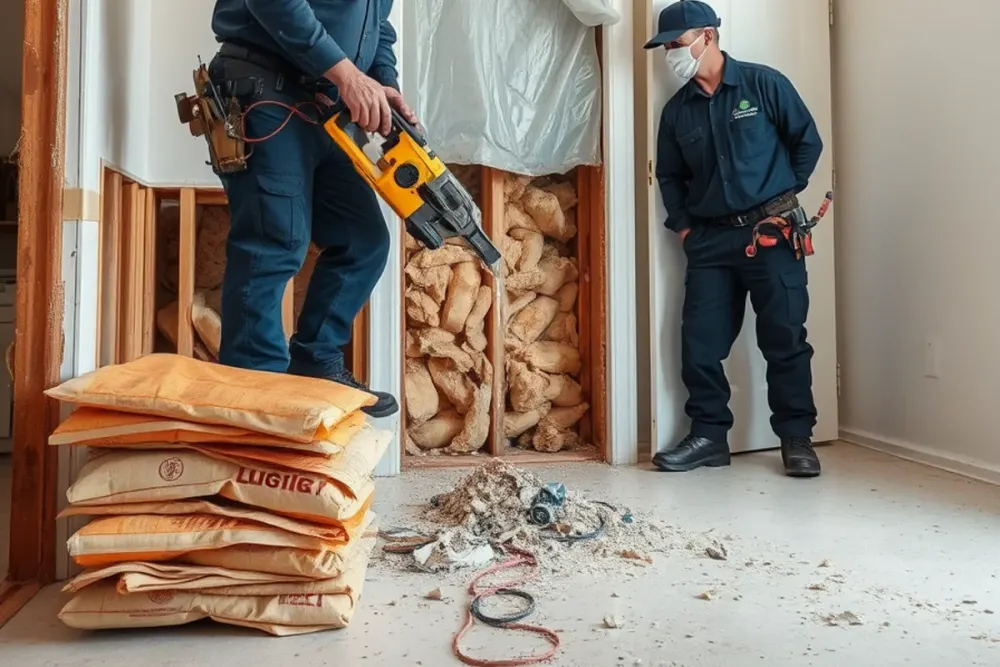
Carpet and pad, saturated drywall cut to a defined line above the flood height, wet insulation and particle board. Not optional on Category 3 water — porous material that absorbed floodwater cannot be safely returned to service.
Every surface the water touched is physically cleaned before any antimicrobial is applied, because disinfectant over organic soil does not work. HEPA air scrubbers run throughout so demolition does not cross-contaminate the rest of your home.
Documents and photographs are the one category where waiting helps. Bag them, freeze them if you can, and tell us — freeze-drying recovers a surprising amount.
Flood work runs in a strict order because contamination control drives everything. Skipping ahead to drying is the mistake that turns a four-day job into a mold remediation.
Electrical hazard check first, then gas if the water was deep. We confirm the structure is safe to enter and identify whether floodwater has reached outlets, the panel, or HVAC returns.
Photos and video of the debris line, water height marks on each wall, and the full contents inventory before anything is discarded. On flood claims this documentation matters enormously, and it has to exist before cleanup starts.
Submersible pumps handle standing depth, then truck-mounted extractors take the rest out of flooring and materials. Silt and solids get removed with the water rather than left behind to dry into the carpet.
Carpet and pad, saturated drywall to a defined line above the flood height, wet insulation, particle board, and affected contents. This is not optional on Category 3 water — porous material that absorbed floodwater cannot be safely returned to service.
Every surface the water touched gets cleaned, then treated with an antimicrobial appropriate to the material. Framing, slab, and the back of remaining assemblies all get addressed, not just what is visible.
HEPA air scrubbers run throughout to capture airborne contaminants and spores stirred up by demolition, keeping the rest of your home from being cross-contaminated.
Only once the structure is clean does drying begin — metered daily against the dry standard, with the full log going into your claim file.
Downey sits in the historic floodplain of the San Gabriel River, in the low basin between that channel and the Rio Hondo. Both are now concrete flood-control channels operated by the LA County Flood Control District, and together with the Whittier Narrows Dam upstream they are the reason Downey does not flood the way it did in the nineteenth century.
But channelized does not mean immune. Climate risk modeling puts about 24% of Downey buildings at meaningful flood risk, and five of the city's census tracts have more than half their buildings exposed. The pattern we see on the ground matches that: the lowest-elevation homes in Rio San Gabriel take water first, South Downey below Imperial Highway is next, and the older drainage in parts of Downtown Downey struggles when a storm cell parks overhead.
The modern risk is less about the river jumping its banks and more about intensity. When an atmospheric river drops two inches in an hour — as happened repeatedly across LA County during the 2022–2023 sequence — the storm drains simply cannot take it fast enough. Water backs up at the inlets, sheets across the street, and finds the lowest doorway. Firestone Boulevard used to run like a river before the 1957 drain installation transformed that corridor, and the older parts of the system still show their age in a hard downpour.
Non-porous and semi-porous items usually come back. Tile, sealed concrete, glass, metal, solid wood furniture, and most hard-surface contents can be cleaned, disinfected, and returned to use.
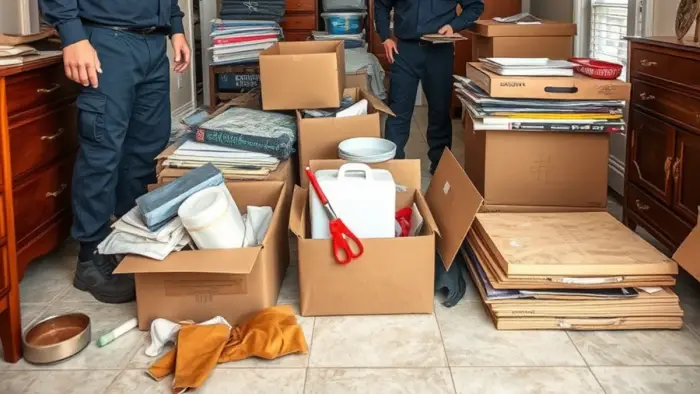
Porous items that absorbed floodwater generally cannot. Carpet pad, mattresses, upholstered furniture, particle board and MDF furniture, and stuffed toys are the standard losses. Drywall and insulation below the flood line come out. We know that is hard to hear about a sofa you liked, and we would rather tell you honestly than dry it, deliver it back, and have you smell it in August.
Documents and photographs are the exception worth fighting for. If they matter to you, do not throw them out and do not try to separate wet pages. Bag them, freeze them if you can, and tell us — freeze-drying recovers a surprising amount, and it is the one category where waiting actually helps.
Flood losses cost more than clean-water losses for structural reasons, not arbitrary ones. Here is where the money goes.
Floodwater is Category 3. That means protective equipment, containment, HEPA filtration, antimicrobial treatment, and regulated disposal — a materially different scope than a clean supply-line leak.
The flood line sets the demolition scope. Two inches of water is a very different job from eighteen, because drywall and insulation are removed to a set height above the water line.
Contaminated carpet, drywall, insulation, and contents have to be bagged and hauled under disposal rules. Volume drives this directly.
This is the one that catches people. Standard homeowners policies exclude natural flooding — you need separate flood coverage. Storm water that entered because of a roof or window failure may be covered under the standard policy. We help you work out which conversation you are having.
Roughly 24% of buildings in this city carry meaningful flood exposure, and five census tracts sit above 50%. We work these losses every winter.
Rio San Gabriel sits lowest and closest to the river channel. South Downey below Imperial Highway follows. Older drainage in parts of Downtown Downey backs up under an intense cell. That is not guesswork — it is where our storm calls concentrate.
When an atmospheric river hits, call volume spikes across the whole basin at once. We will give you a real arrival time rather than a number we cannot hit, and we will tell you what to do in the meantime.
Water that fell from the sky and got in through a wind-created opening is often covered. Water that rose off the ground is flooding and needs separate coverage. Same storm, two different claims — and the photographs decide which one you have.
Usually not, if the water came from outside as natural flooding — that requires a separate flood policy, typically through the NFIP. But the distinction matters enormously: if storm water got in because wind tore off shingles or broke a window, that is often covered as storm damage under your standard policy. We document the point of entry carefully for exactly this reason, because it frequently decides whether the claim is paid.
Yes, and the appearance is misleading. Water that has crossed soil, roadway, or a storm drain carries bacteria and chemical contaminants that are invisible. The IICRC S500 standard classes it as Category 3, and porous materials that absorbed it cannot be reliably decontaminated. Carpet pad always goes. Carpet itself effectively always goes on a genuine flood loss.
In our experience the lowest-elevation homes closest to the San Gabriel River channel — the Rio San Gabriel neighborhood — see water first, followed by South Downey below Imperial Highway. Older drainage in pockets of Downtown Downey backs up in intense cells. But intensity beats geography in this town: a slow-moving storm dropping two inches an hour will overwhelm inlets in neighborhoods that have never had an issue.
Immediately. The mold clock on Category 3 water is the same 24 to 48 hours as any other loss, but the health stakes are higher because of what is in the water. We run 24/7 and dispatch within 60 minutes. If you are calling during a major storm event when everyone is calling at once, we will give you an honest arrival window rather than a number we cannot hit.
No, and this is the mistake that causes the most harm. Water that crossed roadway and storm drain is Category 3 contaminated regardless of how clear it looked, carrying soil bacteria, petroleum residue and whatever the drain was holding. Running box fans on it aerosolizes that into the air your household is breathing. Keep children and pets out entirely and let a crew handle it under containment.
One principle does most of the work: can the material be cleaned all the way through, or did it absorb the water? Everything else follows from that.
Read article
For a city most people do not think of as flood-prone, roughly a quarter of buildings carry meaningful exposure — and five census tracts are above half.
Read articleWe cover 43 areas from our base at 8615 Florence Ave. These are the ones we reach fastest:
We answer 24/7 and dispatch a crew within 60 minutes across Downey and the neighboring Gateway Cities. A person answers the phone — not an answering service.