Problem Solving
Stormwater Got Inside: What's Salvageable and What Isn't
One principle does most of the work: can the material be cleaned all the way through, or did it absorb the water? Everything else follows from that.
The short answer
One principle decides most of it: can the material be cleaned all the way through? Non-porous items — tile, metal, glass, solid wood — generally come back. Porous items that absorbed the water — carpet pad, mattresses, upholstery, particle board — generally do not, because storm water is Category 3.
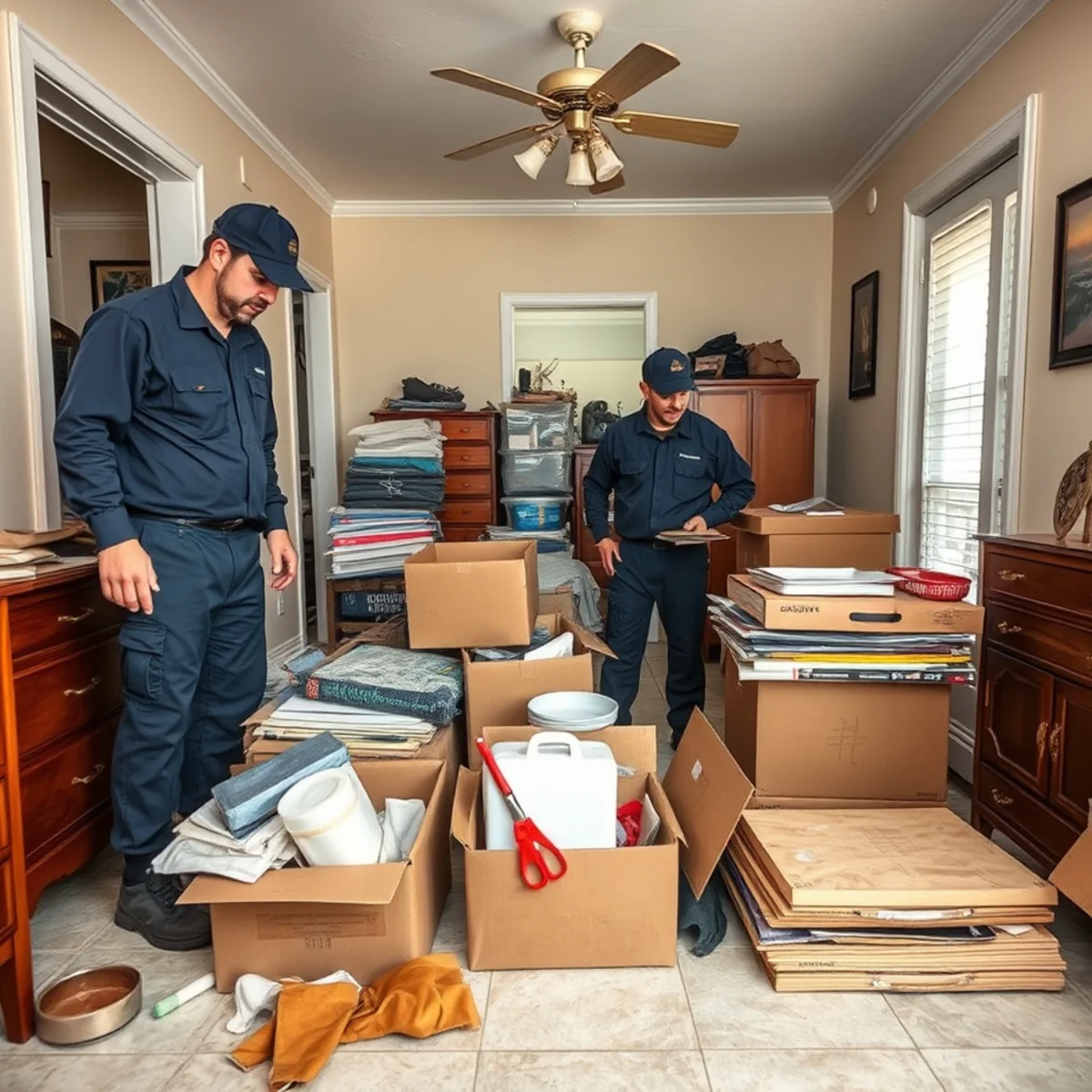
First, the thing people find hardest to accept: storm water that came in from outside is Category 3 contaminated, regardless of how clear it looked. It crossed soil, roadway, and storm drain, and it carries what those carry.
That single fact drives every salvage decision below.
The principle
Generally salvageable
- Tile, stone, sealed concrete, and glass
- Metal furniture, appliances, and fixtures — though electrical items need assessment before being energized
- Solid wood furniture, if dried promptly and properly; finishes may need attention
- Dishes, glassware, and non-porous kitchenware, after proper cleaning and disinfection
- Jewelry, coins, and hard non-porous valuables
- Most hard-surface toys and household items
Generally not salvageable
- Carpet pad — always, on any category of flood water
- Carpet itself, on Category 3 water
- Mattresses, pillows, and upholstered furniture
- Particle board and MDF furniture, which swells irreversibly and loses integrity
- Stuffed toys and soft goods that absorbed contaminated water
- Drywall and insulation below the flood line
- Cosmetics, medicines, and any food, including sealed containers that were submerged
- Baby bottles, pacifiers, and children's feeding items
The judgment calls
| Item | It depends on |
|---|---|
| Clothing and textiles | Frequently recoverable with hot-water laundering and appropriate disinfection; heavily soiled or delicate items may not be |
| Solid hardwood flooring | Salvageable within about 24 hours with drying panels; permanent deformation after that |
| Kitchen cabinets | Solid wood doors and frames often survive; particle board carcasses usually do not |
| Electronics | Assume loss if submerged; anything that got wet must be assessed before being powered on |
| Antiques and heirlooms | Specialist conservation is often worth it — do not discard before asking |
| Area rugs | Valuable rugs can sometimes be professionally restored; ordinary rugs rarely justify it |
Documents and photographs: the exception
This is the one category where waiting actually helps, and where people throw things away that could have been saved.
Do not try to separate wet pages — they tear, and separation is a specialist process. Do not lay them out to air dry, which sets the damage. Instead, bag them and freeze them if you can. Freezing stops deterioration and biological growth and buys you weeks. Freeze-drying then recovers a surprising amount, including material that looks beyond hope.
Tell us at the first visit if there are documents or photographs that matter. It changes what we prioritize.
Document before you discard
Everything you throw out is part of your contents claim, and the claim is settled from your list rather than ours.
- Photograph each item, or each grouping where individual shots are impractical
- List item, room, approximate age, and replacement cost
- Keep receipts, credit card records, or listing links where you have them
- Note why disposal was necessary — contamination, structural failure of the material
- Ask your adjuster before disposing of anything substantial, or confirm they waive inspection
Safety while sorting
- Waterproof gloves and boots, always — this is contaminated material
- Do not sort in the affected area if there is visible mold growth; get it contained first
- Wash hands thoroughly before eating, drinking, or touching your face
- Keep children and pets out entirely
- Do not run box fans in a contaminated area, which aerosolizes it into your air
- Check your tetanus status if you are handling debris with metal or broken material in it
The part we take on
Structural decisions are ours — how far up the wall the drywall comes out, whether the flooring can be dried, what the framing needs. Contents decisions are collaborative, and we would always rather flag something as questionable and let you decide than throw out something that mattered to you.
If something is genuinely borderline, say so. There is often a specialist route for items with real value, sentimental or otherwise.
Frequently asked
Yes on a genuine flood loss, and the appearance is misleading. Water that crossed soil, roadway, or a storm drain carries bacteria and chemical contaminants you cannot see. The IICRC S500 standard classes it as Category 3, and porous materials that absorbed it cannot be reliably decontaminated. Carpet pad always goes; carpet effectively always goes.
Often, and this is the one category where acting differently helps. Do not try to separate wet pages and do not lay them out to air dry — both set the damage. Bag them and freeze them, which halts deterioration and buys weeks. Freeze-drying then recovers a surprising amount. Tell your restoration crew at the first visit if there are items that matter.
Usually, if it is dried promptly and properly — solid wood is dense enough that contamination stays largely at the surface and can be cleaned. Finishes may need refinishing and joints can loosen as the wood moves. What does not survive is particle board and MDF furniture, which swells irreversibly and loses structural integrity.
The one category where waiting helps
Documents and photographs are the exception worth fighting for. Do not try to separate wet pages and do not lay them out to air dry — both set the damage. Bag them, freeze them, and tell your restoration crew. Freeze-drying recovers a surprising amount.
Everything you discard is part of your contents claim, so photograph and list it before it leaves the house — item, room, age, replacement cost. For sewage-contaminated items that genuinely cannot stay, document heavily and tell your adjuster why.
Structural decisions are ours; contents decisions are yours. We would always rather flag something as borderline and let you choose than throw out something that mattered to you.
Services mentioned in this article
Flood Cleanup
Storm and overflow flooding handled end to end — pump-out, contaminated material removal, disinfection, and documented drying.
Learn moreStorm Damage Cleanup
Emergency tarping to stop the water first, then extraction, drying, and full documentation for the claim.
Learn moreSewage Cleanup & Backup Removal
Category 3 backups handled under containment — full protective equipment, regulated disposal, and verified disinfection.
Learn moreAreas covered in this article
Adjacent to the historic San Gabriel River channel — the lowest-elevation homes in Downey, with the city's highest…
6 to 9 minutes from our Florence Ave baseSouth Downey1960s–70s tract expansion south of Imperial Highway — newer slab construction, but in the direct San Gabriel River…
about 10 minutes from our Florence Ave base