Problem Solving
How Pros Find Slab Leaks Without Tearing Up Your Whole Floor
Anyone can find a leak by opening concrete until they hit water. The point of detection is opening two square feet instead of twenty.
The short answer
Detection runs in sequence: meter isolation to confirm the leak, pressure testing to separate supply from drain, thermal imaging to narrow the area, acoustic listening to pinpoint it within inches, and tracer gas for leaks too quiet to hear. Concrete is only opened at the marked spot.
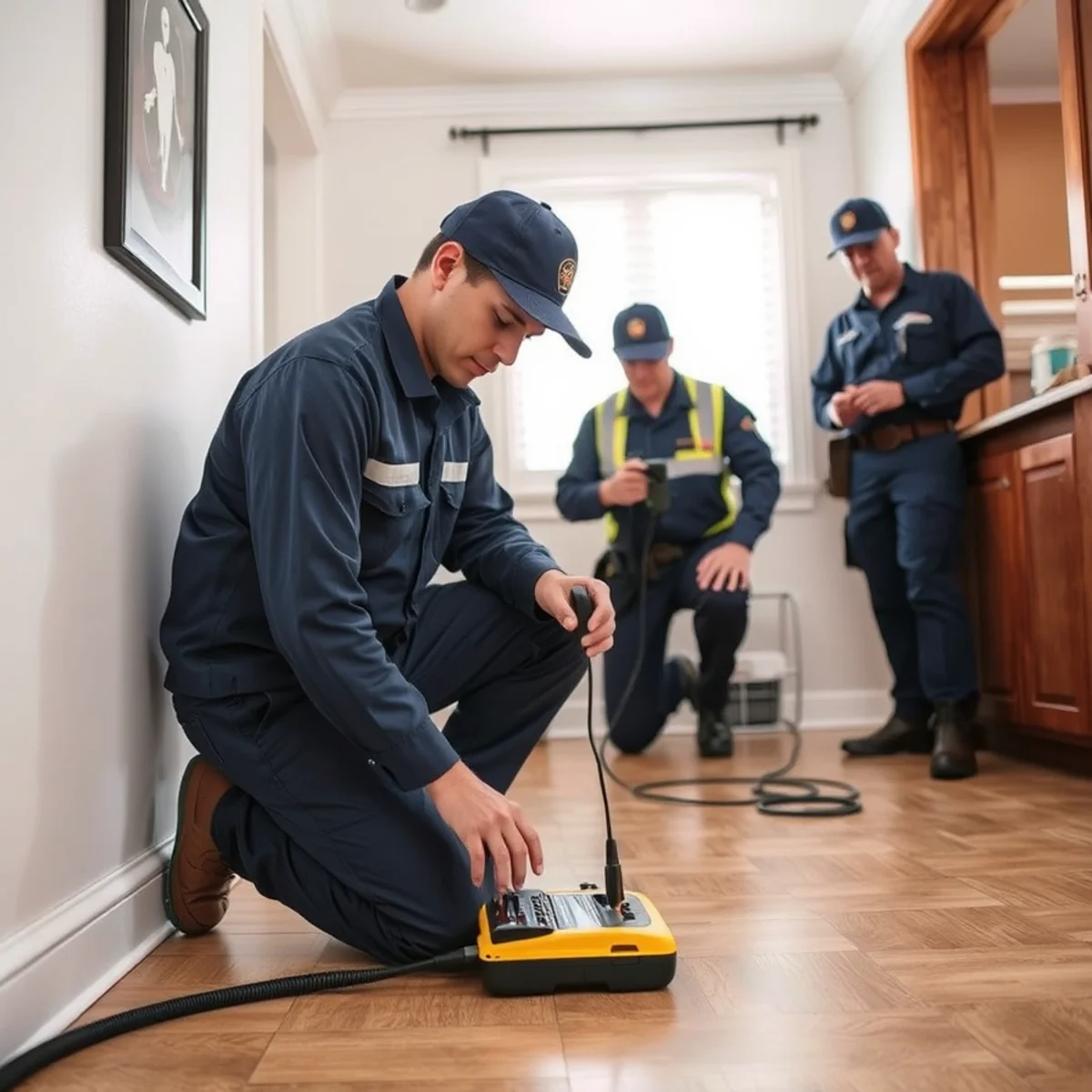
The value of professional leak detection is not that it finds the leak. Given enough demolition, anyone finds the leak eventually. The value is precision — putting a mark on the floor accurate to within inches, so the repair opens one small area instead of exploring your living room.
Here is how that is actually done, in the order it happens.
1. Meter isolation
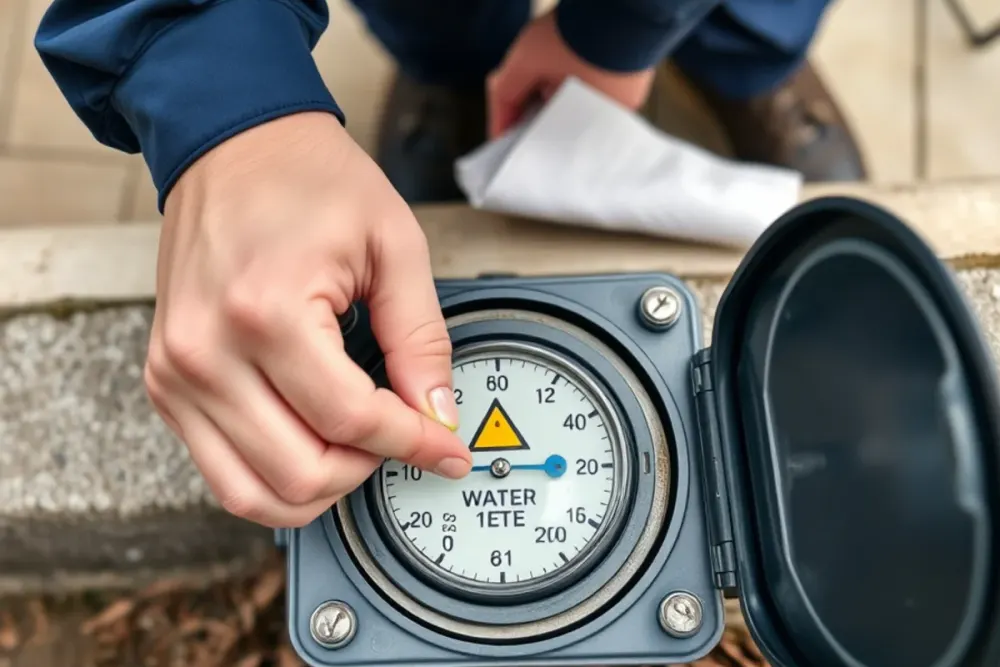
First, confirm the leak is real and establish roughly where it lives. Every fixture off, watch the meter's leak indicator. Then close the main at the house and watch again — still moving means the leak is between the meter and the house, stopped means it is inside.
Then isolate systems in turn: shut off irrigation, the pool fill, and any outbuilding supply. Ruling out the cheap possibilities first is not laziness, it is method.
2. Pressure testing
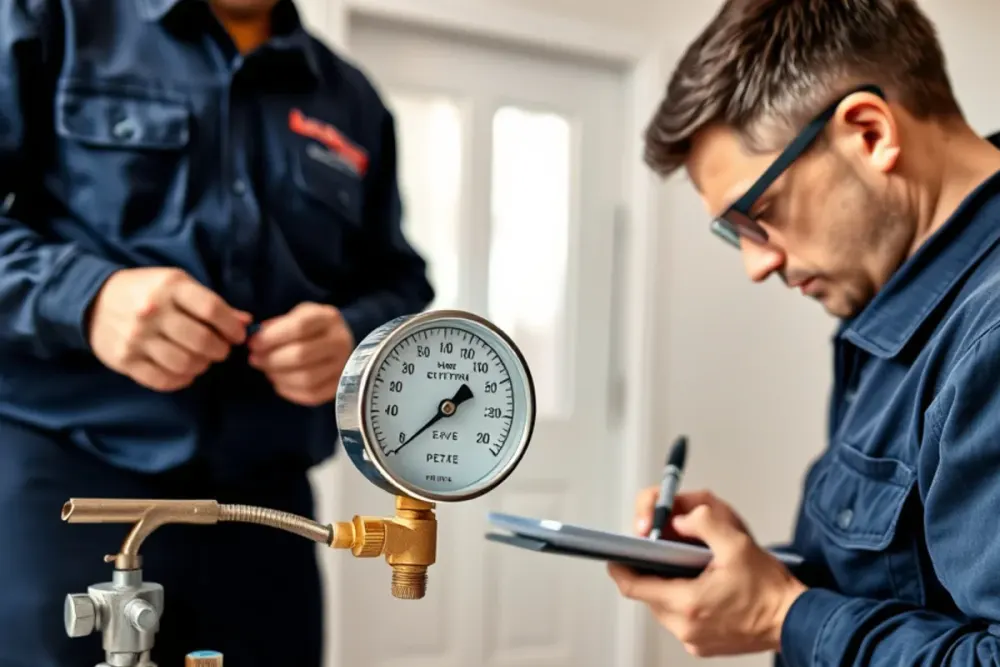
Isolating and pressurizing the supply system establishes whether we are chasing a supply-side leak or a drain-side one. Those are completely different searches using different tools, and getting it wrong wastes a day.
A pressurized system that holds is not the source; one that drops tells us the rate and gives a sense of the size of the breach.
3. Thermal imaging
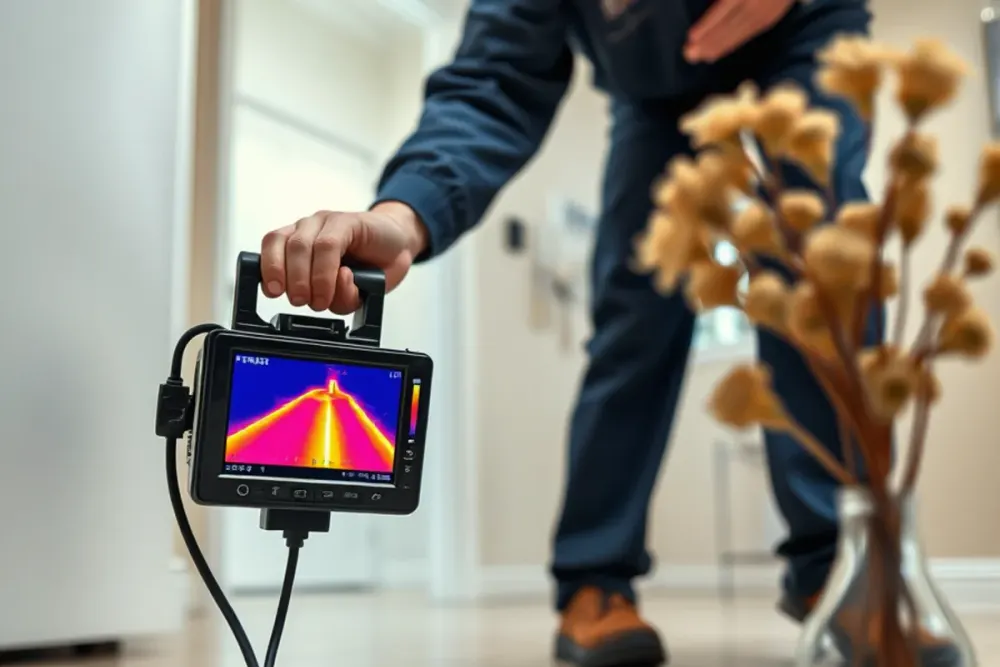
A hot-water leak under a slab warms the concrete above it, and that heat signature reads clearly through tile, vinyl, and even carpet on an infrared camera. It turns a whole-house search into a few square feet in minutes.
Cold-water leaks show up differently — as an area of evaporative cooling — which is subtler but still readable under the right conditions.
4. Acoustic listening
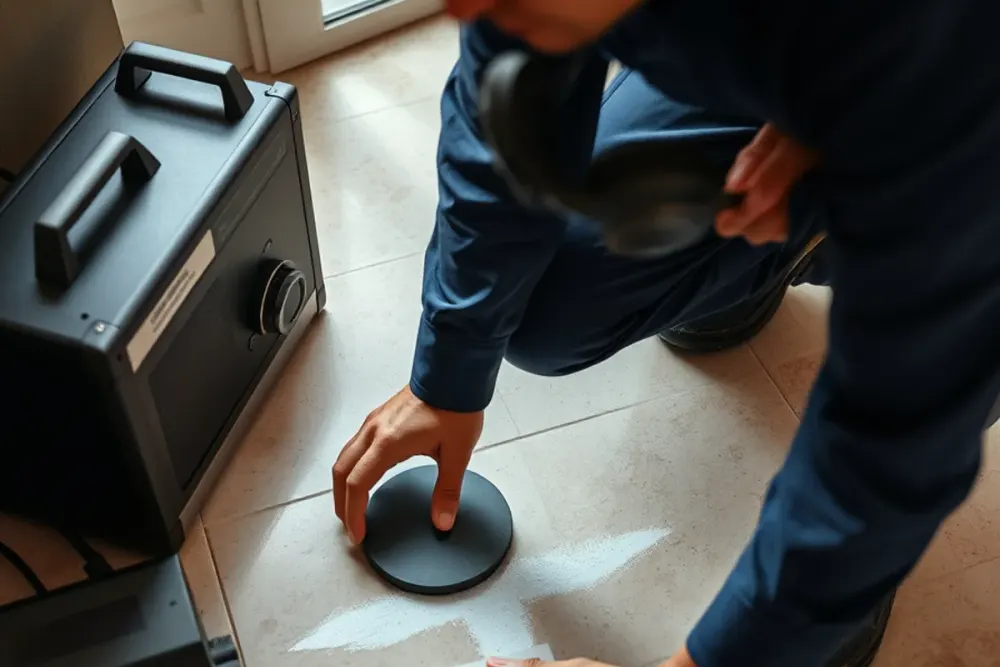
The tool that puts the mark down. Pressurized water escaping a pipe produces sound at a characteristic frequency, and ground microphones and amplified listening discs pick it up through concrete, tile, and hardwood.
The technician works a grid across the suspected area, listening for where the signal is loudest. Done properly this locates a leak to within inches. It is also the step where experience matters most — distinguishing the leak from HVAC noise, traffic, a refrigerator compressor, and the house's own sounds is a learned skill.
5. Tracer gas, when needed
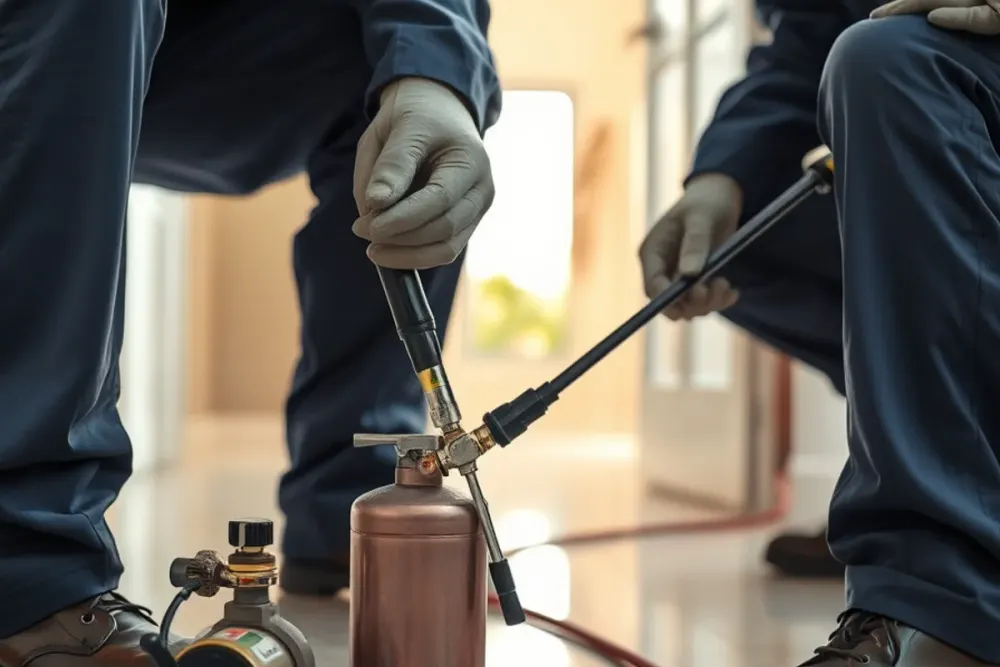
Some leaks will not make enough noise — very small ones, low-pressure leaks, or drain-side leaks that are not under pressure at all. For those, a safe helium-nitrogen mix is introduced into the isolated line.
Helium is small enough to escape through the breach and light enough to rise through concrete and flooring, where a sensitive detector picks it up at the surface. It is the method that finds what the others miss.
6. Video camera for drain lines
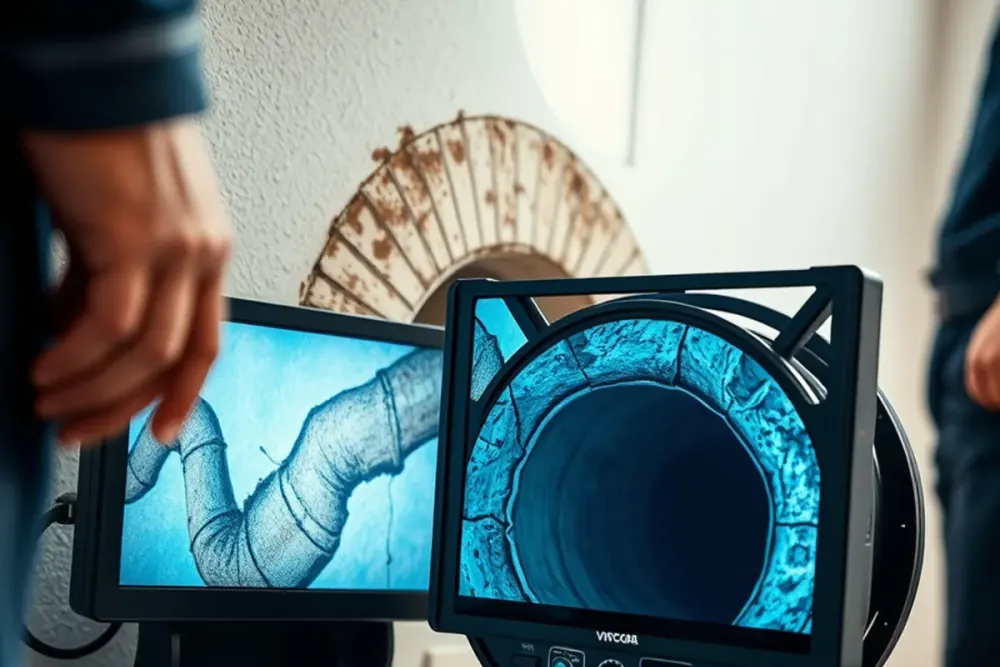
If the problem is drain-side rather than supply-side, a camera goes down the line from a cleanout. That shows cracks, offsets, bellies, root intrusion, and the pipe's material and condition directly — and it locates the fault by measured distance from the access point.
What the whole sequence achieves
| Approach | Concrete opened |
|---|---|
| Professional detection | Typically one small area at the marked location |
| Exploratory demolition | Whatever it takes — often several openings before finding it |
In a home with tile or hardwood over the slab, that difference is frequently larger than the detection cost several times over — because opening and restoring flooring is expensive, and matching a discontinued tile is sometimes impossible.
Why Downey slabs leak
Three conditions attack buried copper here simultaneously, and most of the city's slab housing sits on all three.
- Age — the 1960s–70s tracts across South Downey, Apollo, and the Warren High subdivisions have plumbing at fifty-five to sixty-five years
- Soil — clay-rich alluvium from the San Gabriel River system swells with winter rain and shrinks through summer, flexing anything rigid buried in it
- Chemistry and abrasion — pinhole corrosion from the inside, plus thermal cycling rubbing hot lines against the concrete they pass through
After it is found
Three options, and the right one depends on how much life is left in the rest of the system. A spot repair opens the slab and fixes that section. A reroute abandons the failed run and reruns that line overhead through the attic. A full repipe replaces everything, typically in PEX.
Our rule of thumb: one leak is a repair, two leaks is information. In a house where every line is the same age, in the same soil, carrying the same water, a second failure means the others are coming.
We do detection and restoration, not plumbing, so we have no financial interest in which you choose — which is exactly why we are comfortable telling you plainly.
Frequently asked
No. Detection is entirely non-invasive — meter isolation, pressure testing, thermal imaging, acoustic listening, and tracer gas all work through the slab. Concrete is only opened for the repair itself, at the marked location. That is the whole point of paying for precise detection: the difference between opening two square feet and exploring twenty.
Done properly, within inches. Pressurized water escaping a pipe produces sound at a characteristic frequency that ground microphones pick up through concrete, tile, and hardwood. The technician works a grid to find where the signal peaks. The skill is in distinguishing the leak from HVAC noise, traffic, and the house's own sounds, which is why experience matters on this step.
That is what tracer gas is for. A safe helium-nitrogen mix is introduced into the isolated line — helium is small enough to escape through a tiny breach and light enough to rise through concrete and flooring, where a sensitive detector picks it up at the surface. It finds low-pressure and intermittent leaks that acoustics cannot.
What precision actually buys you
Anyone can find a leak by opening concrete until they hit water. The value of detection is the difference between opening two square feet and exploring twenty — and in a home with tile or hardwood over the slab, that difference usually exceeds the detection cost several times over.
Downey produces a lot of these because three conditions stack up: buried copper at fifty-five to sixty-five years, clay soil that swells and shrinks every season, and thermal cycling abrading hot lines against the concrete.
Once it is found, the honest rule is that one leak is a repair and two leaks is information. We do detection and restoration rather than plumbing, so we have no stake in which option you pick.
Services mentioned in this article
Leak Detection & Repair Coordination
Acoustic, thermal, and pressure testing that pinpoints the leak — so the repair opens one small area, not the whole floor.
Learn moreSlab Leak Water Damage Restoration
Detection, controlled slab access, and drying of the flooring and wall bases the leak has been quietly soaking.
Learn moreStructural Drying & Dehumidification
Metered, monitored drying that takes the structure back to its dry standard — not just the surface you can touch.
Learn moreAreas covered in this article
Established 1950s–60s streets around Furman Park on Rives Ave — original slab-on-grade construction with cast-iron…
about 5 minutes from our Florence Ave baseLakewoodOne of the country's great post-war planned communities — roughly 17,500 homes built in a few years, which means an…
about 15 minutes from our Downey base