Problem Solving
Black Mold vs. Mildew: How to Tell the Difference
Color tells you almost nothing. What actually matters is whether it is on the surface or in the material — and whether something behind it is wet.
The short answer
Color tells you very little — plenty of harmless mold is black, and Stachybotrys often looks dark green or gray. What matters is whether it wipes off completely. Surface growth on tile or grout is mildew; growth that smears or persists on drywall, wood or carpet has penetrated the material.
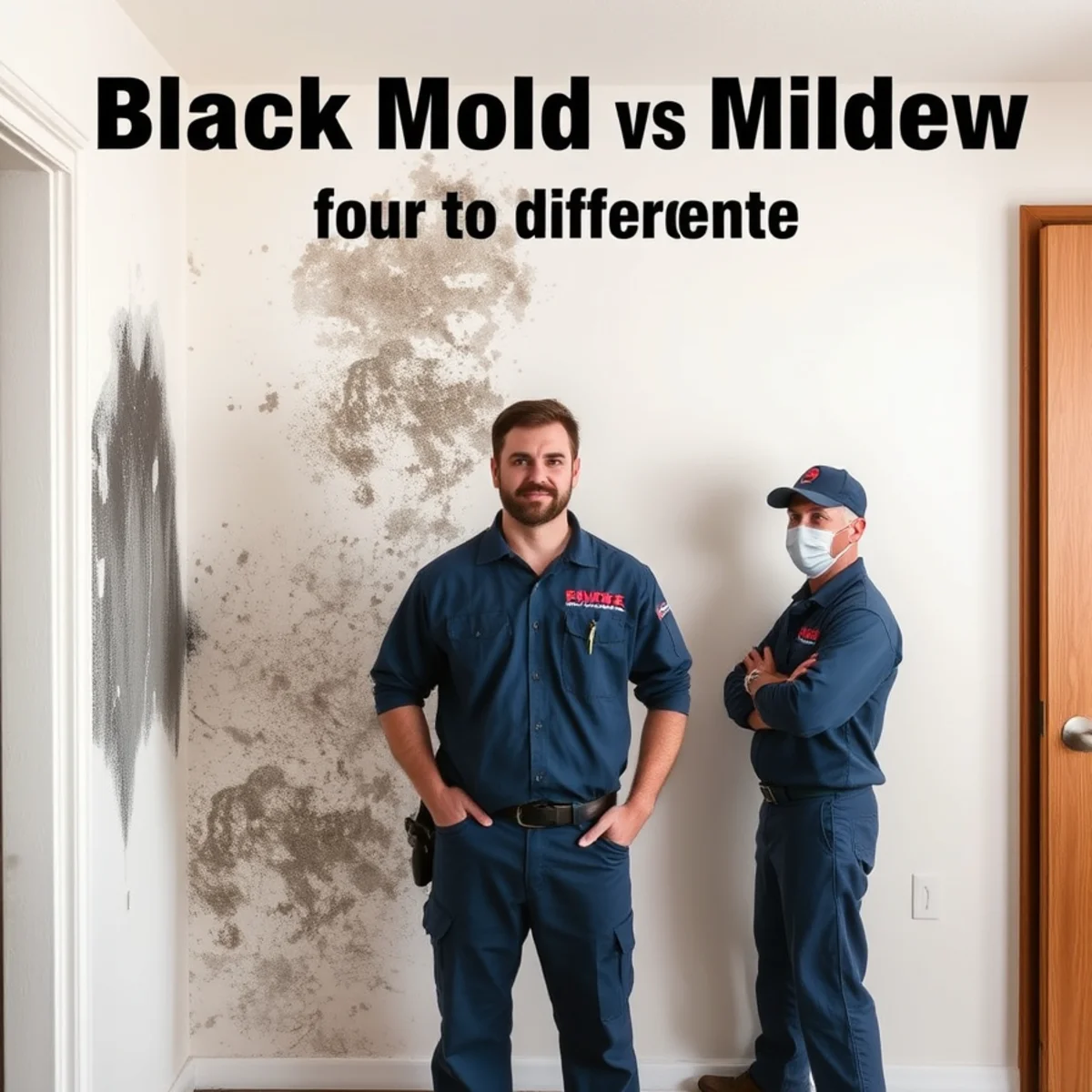
Two things get confused here, and the confusion runs in both directions — people panic about harmless bathroom mildew, and people ignore genuine structural growth because it is not black.
Mildew: surface growth
Mildew is a surface-level fungal growth. In practice, what people call mildew is what grows on your shower grout, tile, and window sills — flat, often powdery, usually white, gray, or a yellowish-brown, and it sits on top of the material rather than in it.
It wipes off. That is the practical test. If a damp cloth with a household cleaner removes it and the surface underneath is sound, you had surface growth on a non-porous material, and the answer is ventilation and regular cleaning.
Mold: growth into the material
Mold that matters penetrates the material it is growing on. It has texture — fuzzy, slimy, or raised rather than flat — and it does not wipe away cleanly. Wiping it smears it, or removes the surface layer while the growth in the material remains.
It also tends to appear in places that point to a moisture problem: the base of a wall, inside a closet, behind furniture, around a window frame, on a ceiling, or in a cabinet. Those locations are the diagnostic, more than the appearance.
What color actually tells you
More useful is our practical position: the remediation approach does not change much based on species. Any significant indoor growth gets contained and removed the same way, because the process is driven by containment and moisture control rather than by which organism it is.
Which means paying for species testing before remediation usually buys you a lab report rather than a different scope of work.
The questions that actually matter
| Question | Surface issue | Structural issue |
|---|---|---|
| Does it wipe off completely? | Yes | No — it smears or persists |
| What is it growing on? | Tile, grout, glass, painted non-porous | Drywall, wood, insulation, carpet |
| Where is it? | Shower, window sill, damp bathroom | Wall base, closet, ceiling, cabinet, behind furniture |
| Does it come back after cleaning? | Only with poor ventilation | Yes, reliably — the moisture source is still there |
| Is there a smell? | Usually not | Often a persistent musty odor |
| Is the material sound? | Yes | Often soft, stained, or deteriorating |
When to handle it yourself
- Surface growth on non-porous bathroom surfaces — tile, grout, glass, a sound painted surface
- A small area, under about ten square feet, on a material that can be fully cleaned
- No musty smell elsewhere in the house
- No known water event behind it
- The material underneath is sound, not soft or stained
Clean it, then fix the ventilation — run the bathroom fan during and for twenty minutes after showers, and if there is no fan, that is the actual repair.
When to call someone
- It is growing on drywall, wood, insulation, or carpet
- It keeps coming back after cleaning, which always means a moisture source
- There is a musty smell with no visible growth — the growth is somewhere you cannot see
- There was a water event, even months ago
- The area is larger than about ten square feet
- Anyone in the household has unexplained respiratory symptoms that ease when away from home
- It is on a ceiling, which usually means a leak above
The thing not to do
Do not disturb suspected structural growth before containment is up. Scrubbing or knocking loose an established colony releases a large spore burden into the air, and the house's own air movement distributes it to rooms that were clean. A contained problem becomes a whole-home one in an afternoon.
And do not paint over it. Encapsulating primer over active growth on wet material buys a few weeks. The mold keeps growing behind the paint, the moisture source is still feeding it, and now it is hidden from view.
In a Downey home specifically
Most of the structural growth we find has no dramatic water event behind it. It is a slab leak under a 1960s tract home that ran for months. A garage water heater seeping against the wall shared with a bedroom. A blocked HVAC condensate line. Roof flashing that has been letting water in since a Santa Ana wind event two winters ago.
In every case the mold is the symptom that finally became visible. If you find growth and there was no obvious leak, the useful question is not what species it is. It is where the water is coming from.
Frequently asked
Color is not a reliable indicator — plenty of harmless mold is black, and Stachybotrys often looks dark green or gray. More usefully, the remediation approach does not change much by species, because it is driven by containment and moisture control. Any significant indoor growth should be contained and removed the same way, which is why pre-remediation species testing usually does not change the scope of work.
The practical test is whether it wipes off completely. Surface mildew on tile, grout, or glass comes away with a damp cloth and leaves sound material behind. Mold that has penetrated drywall, wood, or carpet smears or persists, has texture rather than being flat, and usually comes back after cleaning — which means the moisture feeding it is still there.
As a rough guide, surface growth on non-porous material under about ten square feet, with no musty smell elsewhere, no known water event, and sound material underneath. Beyond that — porous materials, recurring growth, any smell you cannot locate, or anyone in the household with unexplained respiratory symptoms — get it assessed rather than disturbed.
Species matters less than you think
The remediation approach barely changes by species, because it is driven by containment and moisture control rather than by which organism is present. Pre-remediation species testing usually buys a lab report, not a different scope of work.
Testing earns its keep as post-remediation verification, or when a physician wants documentation. For that we recommend an independent assessor rather than the company that did the work.
The important question is never what species it is. It is where the water is coming from — and in Downey that is usually a slab leak, a garage water heater, a blocked HVAC condensate line, or flashing that failed after a wind event.
Services mentioned in this article
Mold Remediation
Contained removal that fixes the moisture source first — because mold that is only cleaned off comes straight back.
Learn moreLeak Detection & Repair Coordination
Acoustic, thermal, and pressure testing that pinpoints the leak — so the repair opens one small area, not the whole floor.
Learn moreStructural Drying & Dehumidification
Metered, monitored drying that takes the structure back to its dry standard — not just the surface you can touch.
Learn moreAreas covered in this article
A 1950s–60s residential pocket that sits within about five minutes of our 8615 Florence Ave base — our fastest resp…
about 5 minutes from our Florence Ave baseFurman ParkEstablished 1950s–60s streets around Furman Park on Rives Ave — original slab-on-grade construction with cast-iron…
about 5 minutes from our Florence Ave base