Problem Solving
How Fast Does Mold Grow After a Leak? The 24–48 Hour Window
The 24 to 48 hour figure gets quoted constantly and rarely explained. Here is what is actually happening, and what it means for your decisions.
The short answer
Colonization can begin within 24 to 48 hours on wet cellulose like drywall paper, though visible growth usually takes three to twelve days. That gap matters: by the time you can see it, it has typically been established for a week and the visible patch is the smaller part.
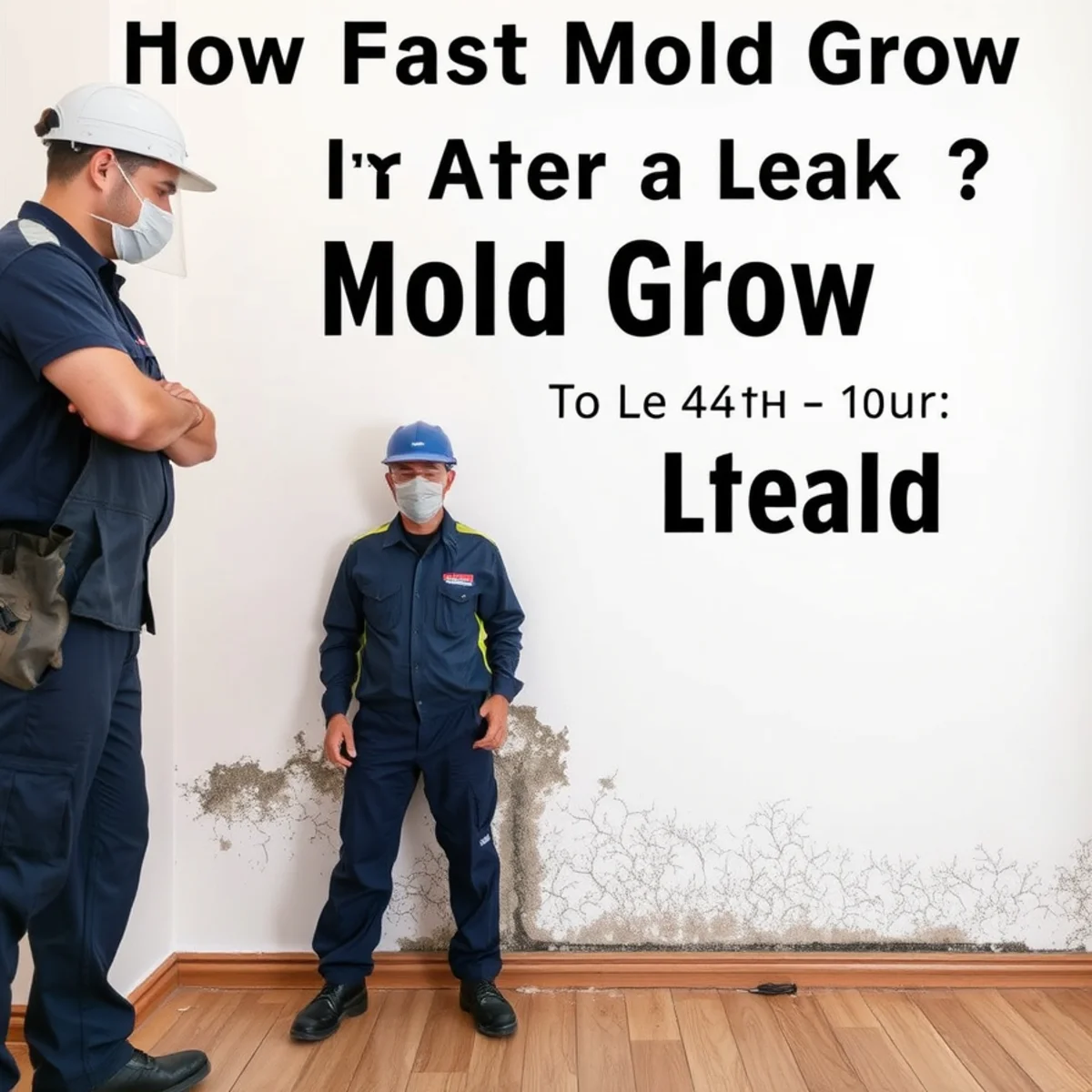
You will hear 24 to 48 hours quoted by every restoration company in the country, usually as a reason to call immediately. It is accurate. It is also worth understanding properly, because what it means is more specific than most people assume.
What mold needs
Four things, and three of them are already in your house permanently.
- Spores — present in every indoor environment on earth, always
- Food — cellulose, which means drywall paper, wood, dust, paper, and fabric
- Temperature — anywhere from roughly 40°F to 100°F, so normal room temperature is ideal
- Moisture — the only one you control
This is why moisture control is the entire game. You cannot remove spores from a building, you cannot remove the cellulose your house is built from, and you are not going to keep your home at 35 degrees. Take away the water and nothing grows.
The actual timeline
| Time after wetting | What is happening |
|---|---|
| 0-24 hours | Spores absorb moisture and begin to activate. Nothing visible. |
| 24-48 hours | Germination and colonization begin on wet cellulose. Still nothing visible. |
| 48-72 hours | Hyphae spread through the material. A faint musty smell may begin. |
| 3-12 days | Colonies become visible. Smell is noticeable. Spore production begins. |
| 1-3 weeks | Established growth, actively releasing spores into the air. |
What speeds it up
- Warm temperatures — a summer loss in a closed-up Downey house is the fastest scenario there is
- Poor airflow — closets, cabinet voids, wall cavities and crawl spaces are ideal
- Cellulose-rich material — drywall paper is close to a perfect substrate
- Contaminated water, which arrives carrying its own microbial load
- Existing dust and organic debris, which is additional food
- High indoor humidity, which keeps materials from giving up moisture
Where it starts in a Downey home
Consistently the same places, and they are all places nobody looks.
Wall cavities and bottom plates, where water wicked up and the wall was closed before the cavity dried. The void under a kitchen cabinet run, which has no airflow at all. Under carpet pad that was dried in place rather than replaced. Inside crawl spaces beneath the raised-foundation homes across North Downey and the Woodruff/Florence corridor. And in closets — dark, still, and closed for weeks at a time.
You control exactly one of the four
A loss that is fully extracted and dried to a metered standard within 48 hours very rarely becomes a mold job. That is not marketing — it follows directly from the biology. Colonization requires sustained moisture; remove the moisture inside the window and the process never gets going.
Which is also why we are pedantic about metering rather than judging by feel. A room that feels dry on day two, with a wall cavity still above the dry standard, is a room where the clock is still running in the one place you cannot see.
What if you are already past the window?
Not a disaster, and not a reason to delay further. Past 48 hours the approach changes from prevention to assessment: find the moisture, find the extent of any growth, contain the area before disturbing anything, and remediate properly.
The one thing not to do is disturb visible growth before containment is up. Scrubbing or knocking it loose releases a large spore burden into the air and spreads the problem to rooms that were clean.
The claim consequence
Timing matters for coverage as well as biology. Mold resulting from a sudden covered loss you reported promptly is often covered, though many California policies cap it at a sublimit such as $5,000 or $10,000. Mold from a leak that was known about and left is generally excluded as gradual damage.
So the paper trail showing you reported the water event on day one is what makes mold appearing three weeks later a covered consequence rather than a maintenance failure. Report it immediately, even if it seems small.
Frequently asked
Very likely, provided everything actually reached the dry standard — including wall cavities, subfloor, and any voids, not just the surfaces you can feel. That caveat is the whole point. Most mold we find after a supposedly dried loss is in a cavity that was closed up early, which means the material was still wet even though the room felt fine.
Usually at least a week, often considerably longer. Colonization begins within 24 to 48 hours but growth is not visible until roughly three to twelve days in. By the time you can see it, it has been established for a while — and the visible patch is generally the smaller part of what is present in the assembly behind it.
Not as a solution. On a hard non-porous surface, cleaning removes what is there — but if the moisture source is still present it returns within weeks. On porous material like drywall, the growth extends into the material where surface cleaning cannot reach. And disturbing growth without containment releases a large spore burden into your air, which spreads it to clean rooms.
Why fast drying genuinely works
Mold needs four things and you control exactly one. Spores, cellulose and room temperature are permanent features of any house — moisture is the only variable, which is why moisture control is the whole game.
A loss fully extracted and dried to a metered standard inside 48 hours very rarely becomes a mold job. That is biology rather than marketing.
Timing also decides coverage. Mold from a promptly reported sudden loss is often covered up to a sublimit; mold from a leak that was known about and left is generally excluded as gradual damage. Report water events the day they happen, even small ones.
Services mentioned in this article
Mold Remediation
Contained removal that fixes the moisture source first — because mold that is only cleaned off comes straight back.
Learn moreStructural Drying & Dehumidification
Metered, monitored drying that takes the structure back to its dry standard — not just the surface you can touch.
Learn moreWater Extraction & Removal
Truck-mounted extractors pull standing water out in a single pass — the fastest way to stop damage from spreading downward.
Learn moreAreas covered in this article
Historic core along Firestone Blvd and Old River School Rd — 1920s–40s commercial buildings and pre-1960 homes with…
about 6 minutes from our Florence Ave baseNorth Downey1940s–50s post-war bungalow belt — the highest concentration of pre-1960 homes in Downey, and the oldest galvanized…
3 to 7 minutes from our Florence Ave base