
6 min read
Burst Pipe? Your First-Hour Action Plan to Stop the Damage
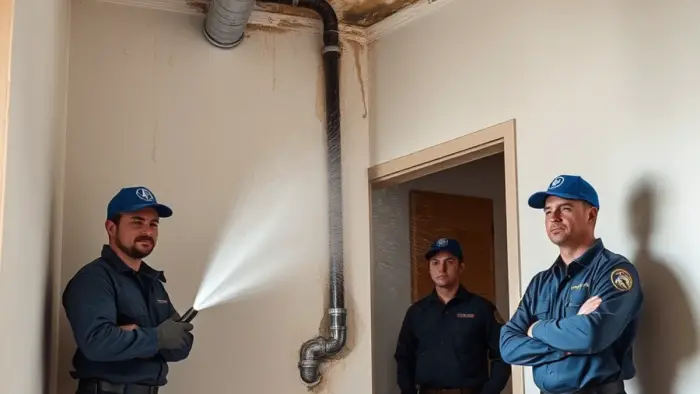
Six to eight gallons a minute, until someone closes a valve. What you do in the next sixty minutes decides whether this is a dry-out or a rebuild.
Read article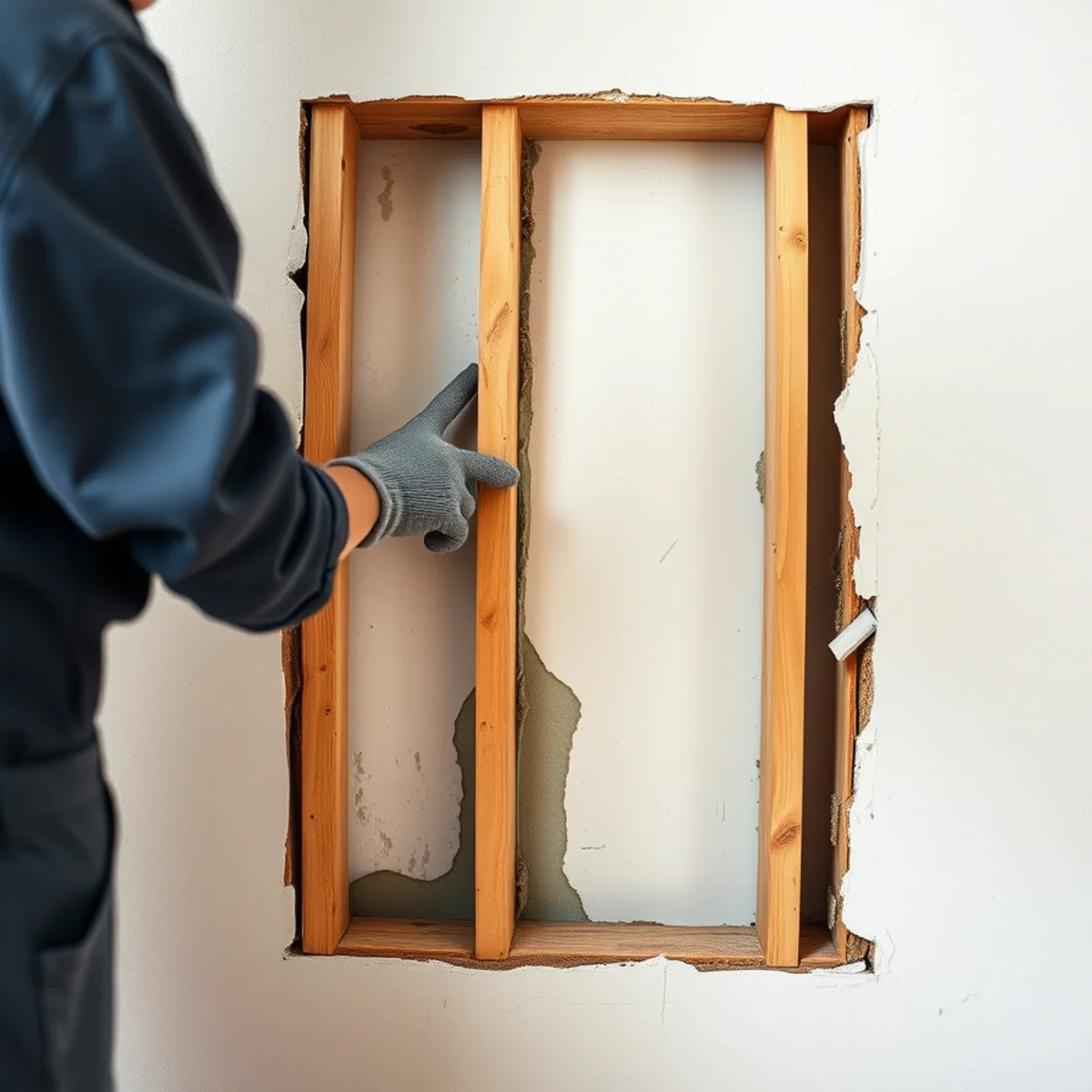
24/7 emergency service
A burst supply line releases six to eight gallons a minute. Left running for an hour, that is enough water to flood the ground floor of an average Downey house.
The first move is the shut-off, and if you are reading this while water is running, skip ahead: your main is most likely on the street-facing side of the house near the hose bib, or in the meter box at the sidewalk. Turn it clockwise until it stops. Then call us — the dispatcher will confirm you found the right valve.
What makes burst pipes different from other losses is where the water goes. A pipe inside a wall or above a ceiling releases water into the assembly first, so by the time it appears in your living space, the cavity, the insulation, and the framing have already been soaking. Cleaning up the floor is the visible half of the job. The half that matters is what we do inside the wall.
Sometimes a burst is obvious. Often it announces itself first, and catching that saves the whole loss:
Discolored water and repeat pinholes are the system telling you it is near the end. In a pre-1960 Downey home that is the moment to price a repipe, not the moment to patch again.
Two jobs run in parallel: getting water out of your living space, and getting it out of the assembly it burst inside.
First thing on the phone. If you cannot find or turn the main we talk you to it, and if it will not budge the crew handles it on arrival.
Thermal imaging and moisture meters trace how far water traveled inside the wall — up, down and sideways into neighboring stud bays. It is essentially always further than the visible damage suggests.
Small deliberate openings at the wet cavity, usually low and behind the baseboard line where the repair is easy to hide. Cavity drying systems push conditioned air directly inside the wall while air movers handle the room.
We sequence a licensed plumber so the pipe is fixed while the wall is already open, then put back insulation, drywall, matched texture, paint and trim.
Wet fiberglass insulation in the cavity loses its R-value and holds water against the framing indefinitely. On any wall we open, the insulation in the wet bays comes out.
Two jobs run in parallel: getting the water out of your living space, and getting it out of the assembly it burst inside.
First thing on the phone, before anything else. If you cannot find or turn the main, we talk you to it, and if it will not budge the crew handles it on arrival.
Pre-mitigation photos and video, then truck-mounted extraction of everything on the floor. Bulk water leaves the building first.
Thermal imaging and moisture meters trace how far water traveled inside the cavity — up, down, and sideways. It is essentially always further than the visible damage suggests.
Small, deliberate openings at the wet cavity, usually low and behind the baseboard line where the repair is easy to hide. Enough to dry and inspect, not a demolition.
We work with licensed plumbers and sequence it so the pipe is fixed while the wall is already open. You are not running the schedule between two companies.
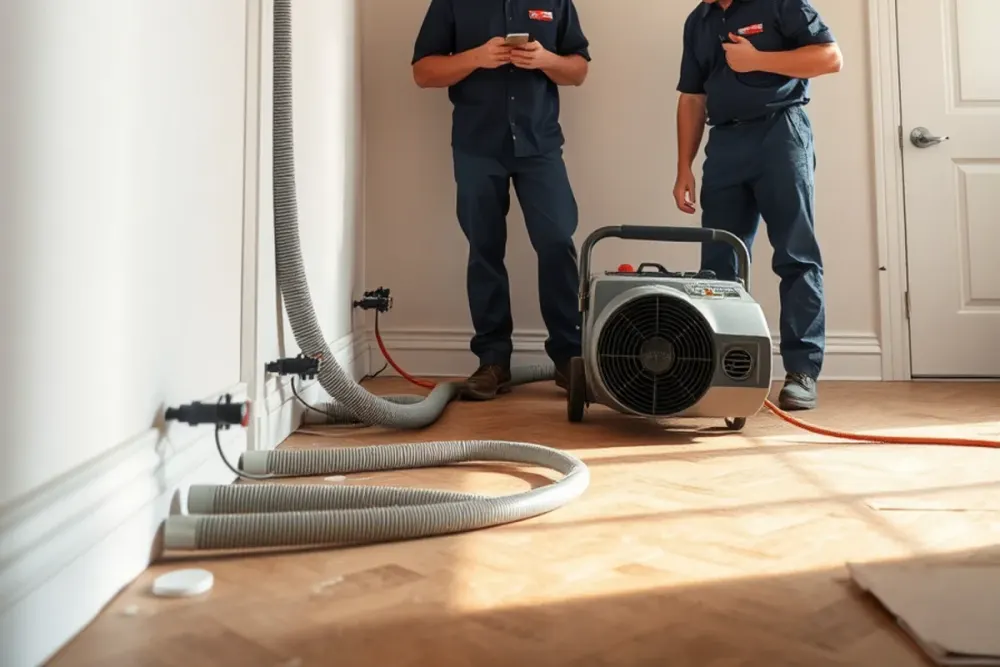
Cavity drying systems push conditioned air directly inside the wall while air movers and dehumidifiers handle the room. Metered daily until both hit the dry standard.
Insulation, drywall, texture matched to the existing wall, paint, and trim. The finished repair should not be findable.
There is a specific, predictable reason we get so many burst pipe calls in this city, and it is written into Downey's building history.
The post-war boom filled North Downey, the Woodruff/Florence corridor, and the Studebaker/Firestone area with bungalows built in the 1940s and 50s. Those homes were plumbed with galvanized steel — zinc-coated pipe that was the standard of the day and was expected to last around fifty years. Do the arithmetic: that stock is now seventy to eighty years old, well past design life.
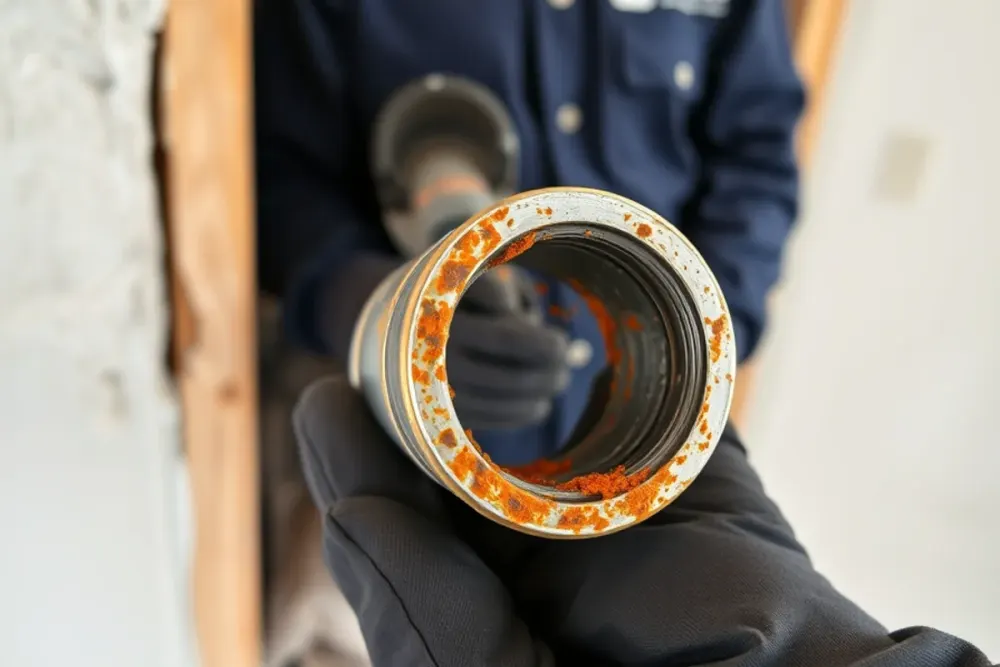
Galvanized fails from the inside out. The zinc coating erodes, the steel underneath corrodes, and rust builds into a scale that narrows the bore. Pressure rises in the remaining channel while the pipe wall gets thinner, until a section lets go — usually at a threaded joint, usually inside a wall, and usually at the worst possible moment.
The warning signs run for months first: rust-tinted water when a tap has been sitting, pressure that has quietly declined for years, and small pinhole leaks appearing more often. If your Downey home still has original galvanized supply lines, those symptoms are not a plumbing annoyance. They are a countdown.
The part of a burst pipe job you cannot see is the part that decides whether you have a mold problem in three weeks.
When a supply line lets go inside a stud bay, water hits the back of the drywall and the framing under full pressure. It runs down the cavity to the bottom plate and pools there. It saturates any insulation in the bay — and wet fiberglass loses its R-value and holds water against the framing for a very long time. It wicks upward into the drywall from below, and it travels sideways along the bottom plate into neighboring bays, which is how a burst in one room ends up wetting the wall of the room next door.
Closing that wall back up without properly drying it is the single most common shortcut in this trade. The room looks fixed. The cavity stays wet. Six weeks later there is a musty smell nobody can locate and dark spotting bleeding through fresh paint. We meter inside the cavity and dry it to standard before anything gets closed, and you get the readings that prove it.
The restoration scope is what we price. The plumbing repair itself is a separate licensed trade, and we will tell you plainly which is which.
The dominant variable. A burst caught in ten minutes is a one-room job. One that ran overnight while the house was empty can affect the entire floor plan and the ceiling below.
An exposed line in a garage is straightforward. Inside a wall means cavity drying and drywall repair. Above a ceiling means the ceiling assembly, insulation, and everything the water landed on below.
Opening, drying, and closing a wall properly — insulation, drywall, matched texture, paint, trim — is a real scope beyond extraction and fans.
If the burst is a symptom of failing galvanized throughout, a spot repair is a temporary fix. We will say so, and coordinate a plumber for the honest options.
There is a specific, predictable reason, and it is written into the city's building history.
The post-war bungalow belt across North Downey, the Woodruff/Florence corridor and Studebaker/Firestone was plumbed with galvanized steel designed for about fifty years. That stock is now seventy to eighty. It fails at threaded joints, inside walls.
Rust-tinted water after a tap has sat, pressure that declined so gradually nobody noticed, pinholes appearing more often. In a home of that era those are a countdown, and we will say so even though a repipe is not work we sell.
Closing a wall over a wet cavity is the most common shortcut in this trade and it is invisible for about six weeks. You get the readings that prove it was dry first.
In most Downey homes it is on the street-facing side of the house, often near the hose bib, or in the meter box at the sidewalk. Turn it clockwise. If it is a lever, a quarter turn to perpendicular closes it. Older gate valves seize — if it will not move, do not force it hard enough to snap it. Find the meter box valve instead, or call us and we will handle it on arrival.
Sudden accidental discharge is one of the most reliably covered losses there is. Your policy typically pays for the resulting water damage minus the deductible, and often for the access cost to reach the pipe, though usually not the pipe repair itself. The exception is a leak you knew about and left — that becomes gradual damage and is commonly excluded. Report it promptly and document from the first hour.
We handle the water damage and the reconstruction, and we coordinate the plumbing repair with licensed plumbers so it is sequenced properly — the pipe gets fixed while the wall is already open, then we dry and close it. You deal with us for scheduling rather than project-managing two trades.
Yes, and it is worth acting on now. Rust-colored water in a home of that era is the signature of galvanized steel supply lines corroding from the inside. Combined with declining pressure and occasional pinhole leaks, it means the system is at the end of its service life. A repipe is a planned expense. A burst at 2 a.m. is that expense plus a water damage claim.
Almost certainly not — it is your own pipes. Galvanized steel corrodes from the inside out, and rust released overnight while water sits in the line is the signature symptom. If it clears after running the tap a minute and returns the next morning, that is coming from inside your walls. Combined with declining pressure and repeat pinholes, it means the system is at the end of its service life, and a planned repipe costs far less than a burst at 2 a.m. plus the water damage.
Six to eight gallons a minute, until someone closes a valve. What you do in the next sixty minutes decides whether this is a dry-out or a rebuild.
Read article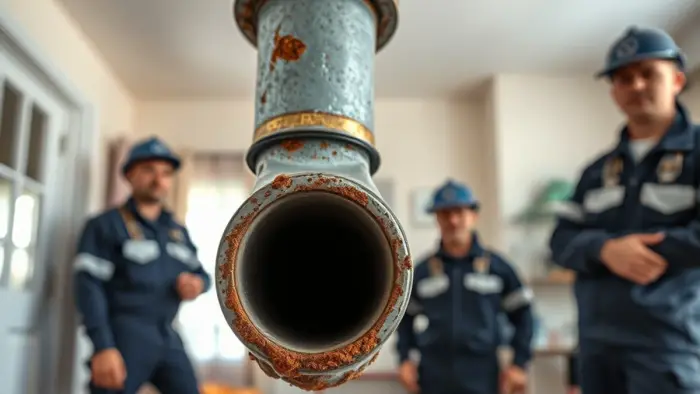
It was designed to last fifty years. North Downey's is at seventy-five. This is not deterioration — it is expiry, arriving neighborhood by neighborhood.
Read articleWe cover 43 areas from our base at 8615 Florence Ave. These are the ones we reach fastest:
We answer 24/7 and dispatch a crew within 60 minutes across Downey and the neighboring Gateway Cities. A person answers the phone — not an answering service.