Emergency Guides
Burst Pipe? Your First-Hour Action Plan to Stop the Damage
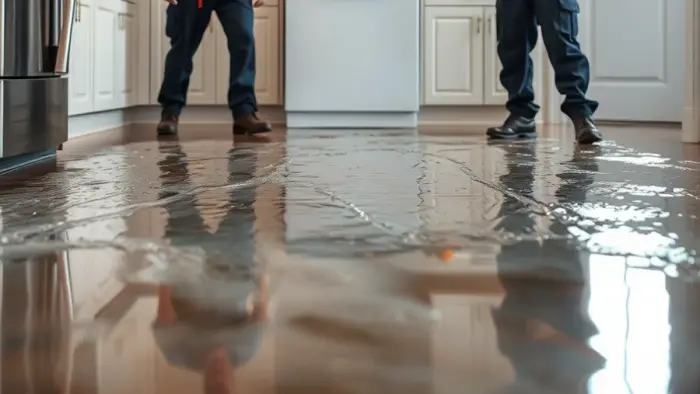
Six to eight gallons a minute, until someone closes a valve. What you do in the next sixty minutes decides whether this is a dry-out or a rebuild.
The short answer
Shut off the water at the main first — that is the only step that stops the damage growing. Then cut power to the affected area if the panel is dry, photograph everything before you move it, call your insurer to open a claim, and call a restoration crew. A burst supply line releases six to eight gallons a minute until someone closes a valve.
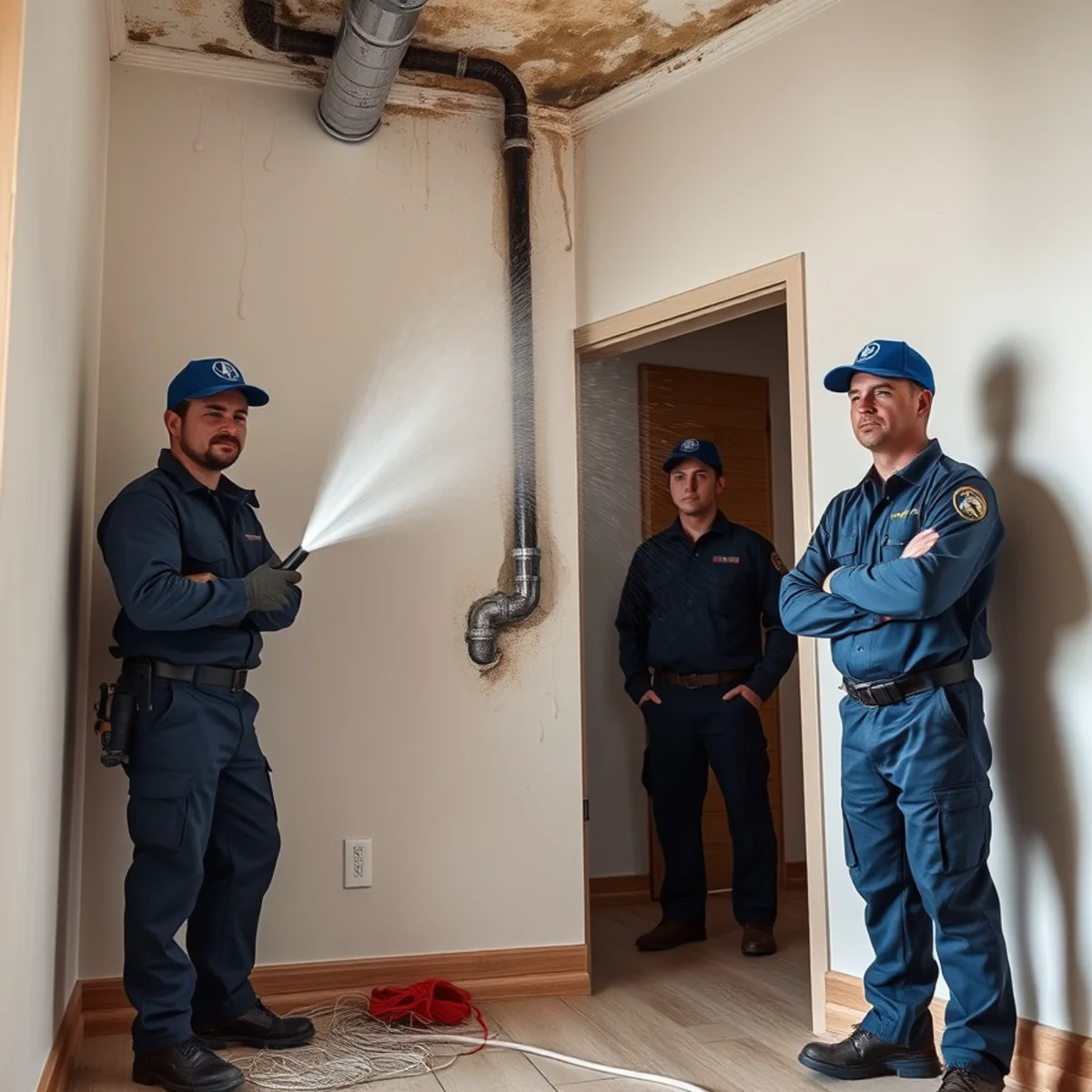
A burst supply line releases six to eight gallons a minute. That is not a dramatic figure chosen for effect — it is roughly what a half-inch line at normal household pressure delivers. Run it for an hour and you have put around 400 gallons into your house.
If water is moving right now, stop reading and go to step one. Everything else on this page will still be here in five minutes.
Step 1: Shut off the water
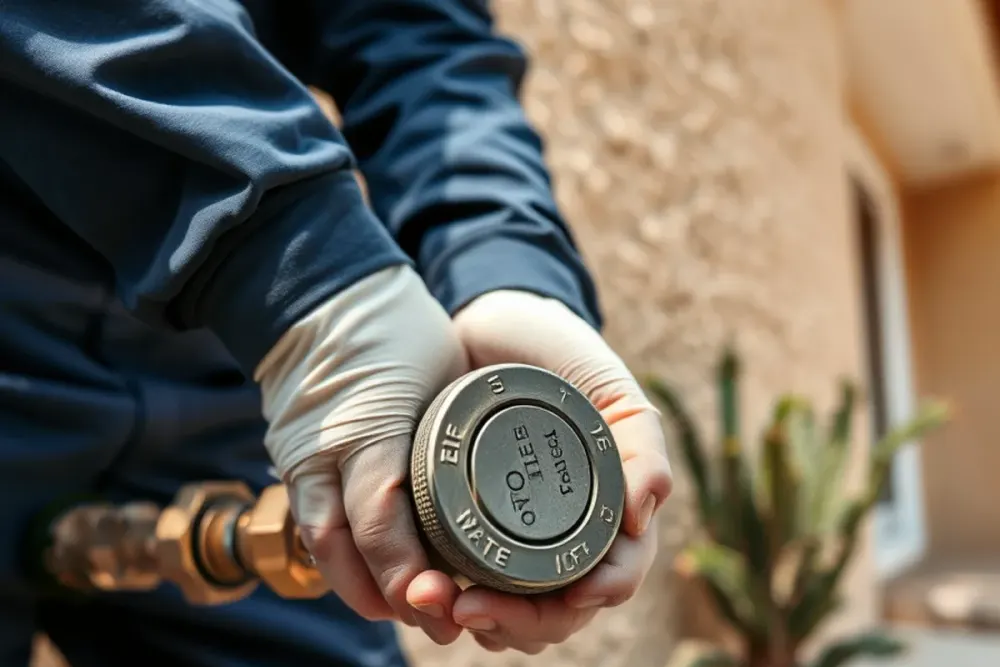
This is the only step that actually stops the damage growing. Everything else is management.
In most Downey homes the main shut-off is on the street-facing side of the house, often close to the hose bib, or in the meter box at the sidewalk. If it is a round handle, turn it clockwise until it stops. If it is a lever, a quarter turn to perpendicular closes it.
Step 2: Cut the power — but only if it is safe
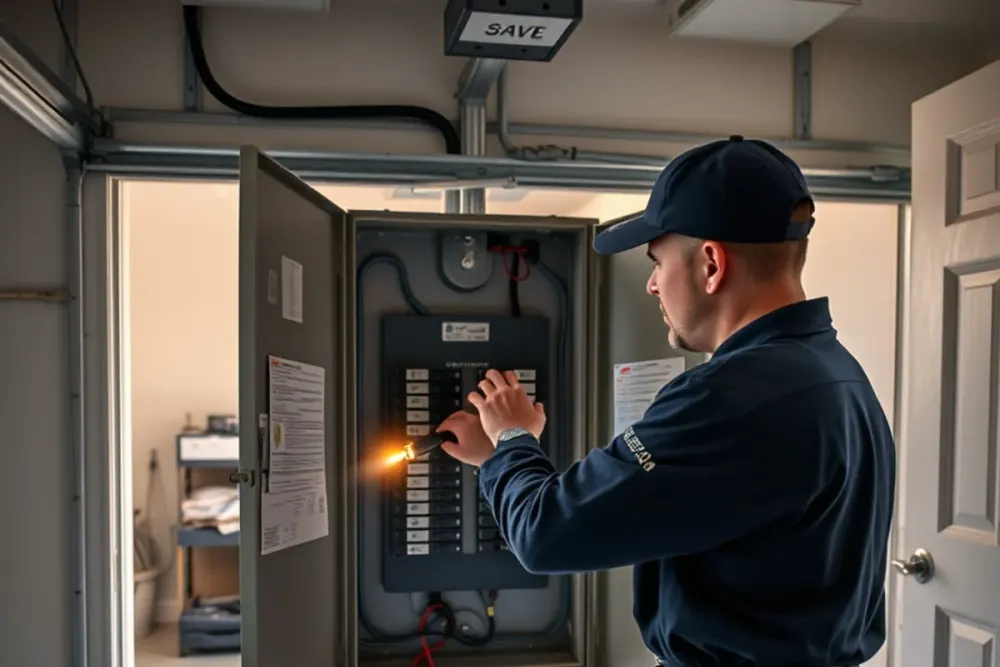
If water has reached outlets, appliances, or is running down inside walls where wiring lives, kill the breaker to that area. Only do this if the panel itself is dry and you can reach it without standing in water. If it is not, leave it, stay out of the room, and tell the crew when they arrive.
Nobody should be walking through standing water in a room where the power is still on. That is the one instruction in this article with a fatality risk attached.
Step 3: Photograph everything before you move it

This takes three minutes and it is the highest-return three minutes of the whole event. Adjusters weight pre-mitigation documentation heavily, and once you start moving furniture and mopping, that evidence is gone.
- Wide shots of every affected room from the doorway, so scale is clear
- Close-ups of damaged materials — flooring, baseboards, cabinets, drywall
- The water line on the walls, if there is one
- The failure point itself, if you can see it, before anyone repairs it
- Serial and model plates on any affected appliances
- A short video walkthrough, narrating what you are seeing and the time
Step 4: Call your insurer and open the claim
Most policies require prompt notification, and delayed reporting is a legitimate basis for reducing or denying a claim. You do not need to know the extent of the damage to open a claim — you need a claim number, which the restoration company will attach all documentation to.
Sudden accidental discharge from a burst pipe is one of the most reliably covered losses there is. The exception is a leak you knew about and left, which becomes gradual damage and is commonly excluded.
Step 5: Call a restoration crew — not just a plumber
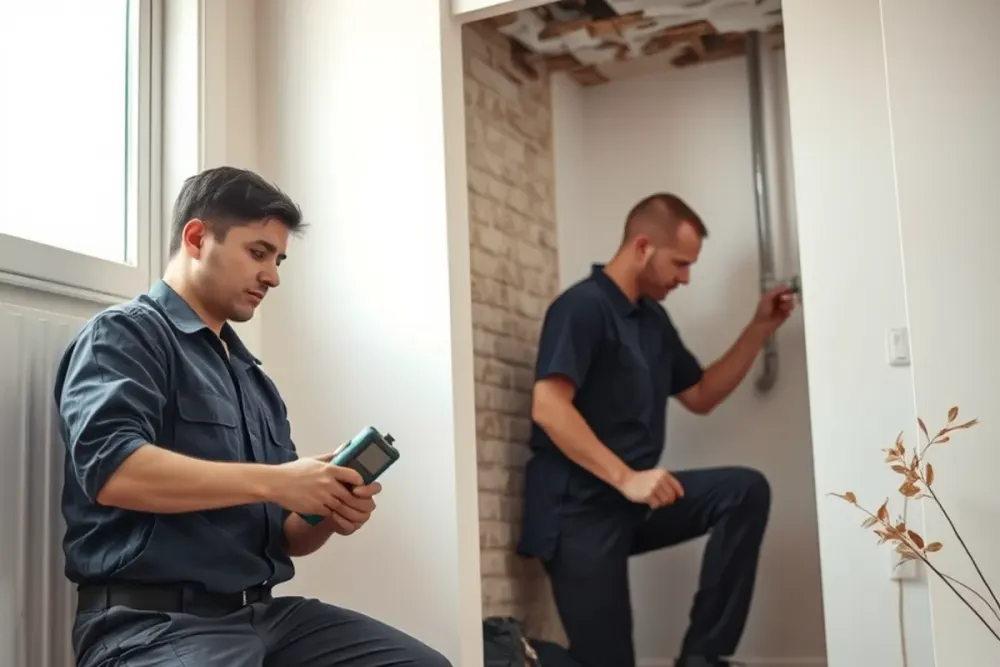
A plumber fixes the pipe. That is necessary and it is not the same job as getting the water out of your structure. The wall cavity the pipe burst inside, the subfloor beneath the flooring, and the bottom plate of the framing are all wet, and none of them are the plumber's scope.
Our line is answered by a person 24/7 and we dispatch within 60 minutes across Downey and the neighboring Gateway Cities. We coordinate the plumbing repair so the pipe gets fixed while the wall is already open.
Step 6: Limit the spread while you wait
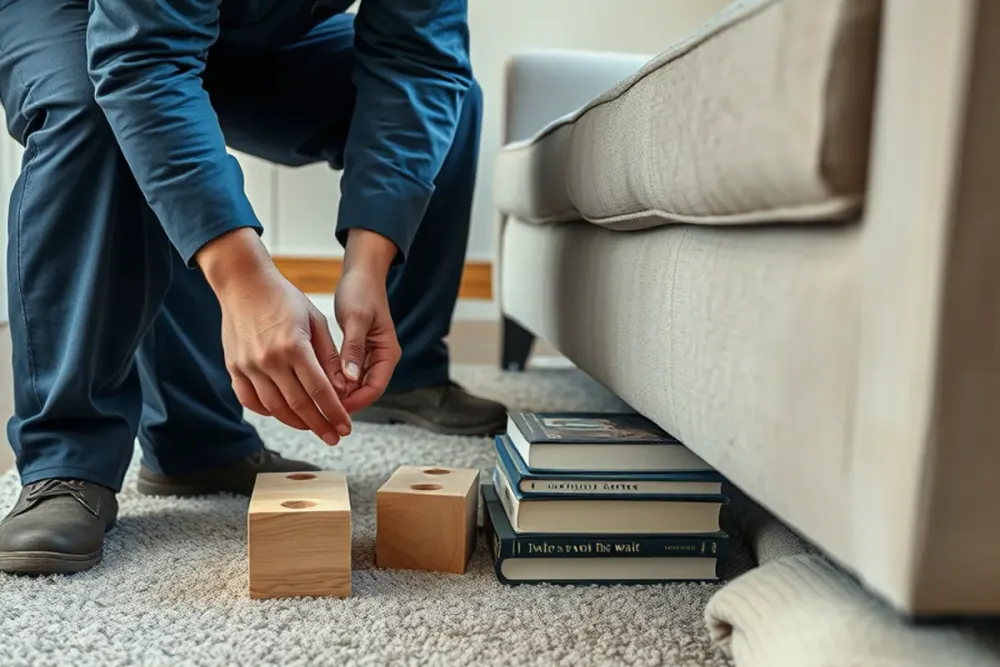
- Lift what you can — electronics, documents, anything with fabric or paper, up off the floor
- Put foil or wood blocks under furniture legs so stains do not bleed into wet carpet
- Move rugs out of the affected area entirely
- Open interior doors so air can move between rooms
- Do not run a household vacuum on standing water, and do not use box fans if the water is contaminated
Why the first hour matters this much
Water damage does not progress in a straight line. It accelerates through thresholds, and each one moves the job into a more expensive category.
| Elapsed time | What is happening | Typical scope |
|---|---|---|
| 0-1 hour | Surface water on flooring | Extraction and drying |
| 1-4 hours | Wicking several inches up drywall, pad saturated | Extraction, pad replacement, drying |
| 4-24 hours | Subfloor and bottom plate saturated | Add drywall removal and cavity drying |
| 24-48 hours | Mold colonization begins on wet cellulose | Add containment and remediation |
That table is the entire argument for calling immediately rather than waiting to see how bad it gets. The difference between hour one and hour twenty-four is usually the difference between drying your floor and replacing it.
A note for older Downey homes
If your house dates from the 1940s or 50s — which describes much of North Downey, the Woodruff/Florence corridor, and Studebaker/Firestone — a burst is rarely random. Galvanized steel supply pipe has a design life around fifty years and that stock is at seventy to eighty. Rust-tinted water in the mornings and pressure that has quietly declined are the system telling you what is coming.
Frequently asked
Call both, and the order barely matters as long as the water is already off. The plumber fixes the pipe; the restoration crew gets the water out of your structure and dries the cavity it burst inside. If you can only make one call, make it to the restoration company — we coordinate the plumbing repair and sequence it so the pipe is fixed while the wall is already open.
You can remove surface water, and that helps. What you cannot do is dry the wall cavity, the subfloor, and the bottom plate, or verify with a meter that they reached a dry standard. Those are exactly the places that produce mold two weeks later. If the water stayed on a hard floor in one small area and you caught it instantly, you may be fine. Anything on carpet or across rooms needs a crew.
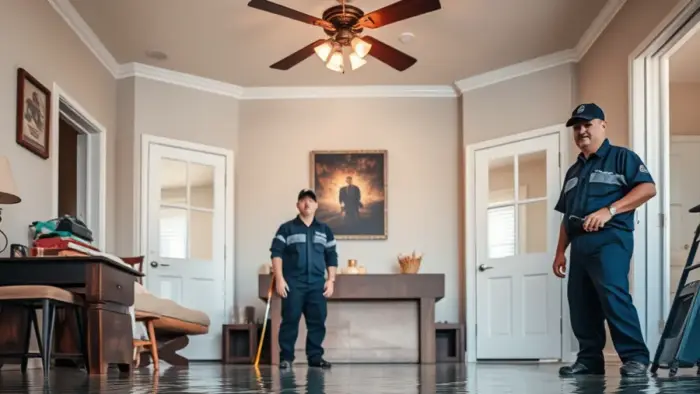
Six to eight gallons a minute from a typical half-inch supply line at normal household pressure, and it continues until someone closes a valve. That is roughly 400 gallons an hour. Overnight in an empty house, it is enough to flood an entire ground floor.
The one thing to remember
Everything on this page collapses into a single instruction: close the valve, then document, then call. The order matters because each step protects the one after it.
Water damage accelerates rather than progressing steadily. Surface water at hour one becomes saturated subfloor by hour eight and a mold conversation past twenty-four. The gap between those states is measured in decisions, not luck.
If your home dates from Downey's post-war era and the water has been running rust-tinted in the mornings, treat this burst as the system telling you something rather than as bad luck. We answer 24/7 and dispatch within 60 minutes across Downey and the Gateway Cities.
Services mentioned in this article
Burst Pipe Cleanup
Shut-off guidance on the phone, extraction on arrival, and the wall cavity dried properly — not just the carpet.
Learn more24/7 Emergency Water Removal
A person answers, 24/7. Crews dispatched within 60 minutes — nights, weekends, and holidays included.
Learn moreWater Extraction & Removal
Truck-mounted extractors pull standing water out in a single pass — the fastest way to stop damage from spreading downward.
Learn moreAreas covered in this article
1940s–50s post-war bungalow belt — the highest concentration of pre-1960 homes in Downey, and the oldest galvanized…
3 to 7 minutes from our Florence Ave baseWoodruff / FlorenceDense 1940s–50s post-war housing along the Florence Ave corridor — the highest concentration of original galvanized…
3 to 5 minutes from our Florence Ave base — our home block