
6 min read
How Long Does Structural Drying Take? A Room-by-Room Timeline
Three to five days is the honest average. What moves you outside it is materials, not the size of the spill.
Read article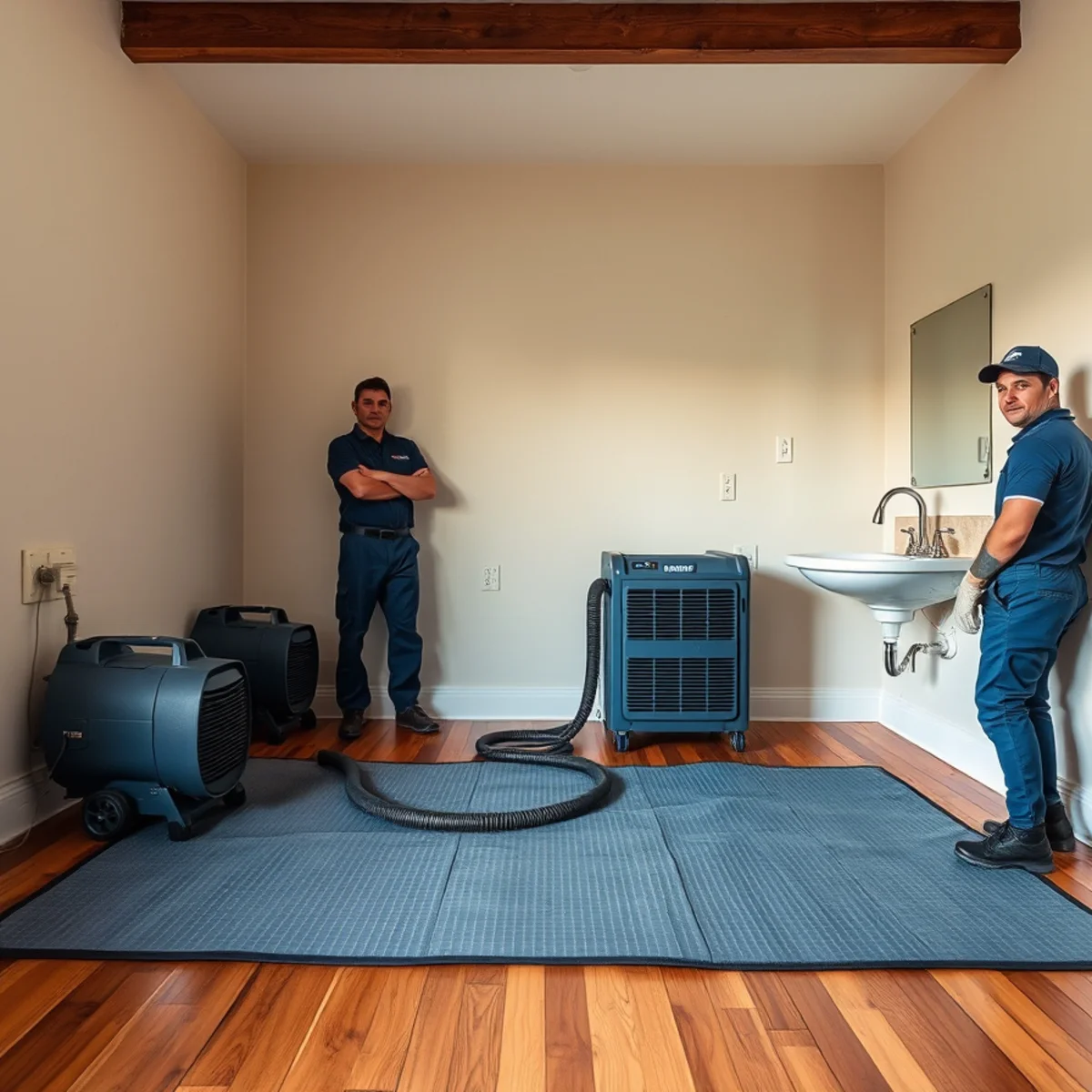
Core restoration service
The floor feels dry. The wall looks fine. And there is still six gallons of water inside the framing.
This is where most water damage jobs quietly go wrong. Surfaces dry first because that is where the air is. The material behind them — the bottom plate, the stud, the subfloor, the back side of the drywall — holds moisture for days after the visible surface stops feeling damp. If the job stops when the carpet feels dry, that trapped water has nowhere to go and about 48 hours before it becomes a mold problem.
Proper structural drying is a measured process with a defined endpoint. We establish what dry actually means for your specific building materials, then run equipment and take readings daily until we hit it. You get the numbers, and so does your insurance company.
We get called out to a lot of homes where someone already ran fans for a few days and called it done. These are the tells:
Any of these mean moisture is still in the assembly. The fix is a fresh moisture map, not more fans.
Drying is billed on equipment, days and monitoring. Here is what each of those actually buys you.
Air movers and dehumidifiers calculated against the cubic footage, the class of water damage and the materials involved. Low-grain refrigerant units for our normal warm conditions, desiccant capacity when a winter atmospheric river pushes outdoor dew points up.
We meter unaffected material of the same type elsewhere in your home — a dry stud, a dry section of subfloor — to establish the target. Without that baseline nobody can honestly say when the job is finished.
Every day, same locations, recorded: material moisture content, relative humidity, temperature and grains per pound. Equipment gets repositioned based on the readings rather than left where it landed on day one.
Wall cavities, under-cabinet voids and floor systems reached directly with injection drying, cavity ventilation and floor drying mats. Hardwood over a Downey slab gets panels that pull moisture up through the boards.
At the end you receive the complete moisture log. Carriers expect moisture readings and equipment records, and that document is what turns a drying invoice into a supported claim.
Drying is engineering, not guesswork. Three variables control the whole thing: airflow across wet surfaces, the moisture load in the air, and temperature. We manage all three and measure the result every day.
We meter unaffected materials of the same type elsewhere in your house — a dry stud, a dry section of subfloor — to establish the target reading. Without that baseline, nobody can honestly say when the job is finished.
Air movers and dehumidifiers get sized to the cubic footage, the class of water damage, and the materials involved. Too few and it never dries. Too many and you are paying for equipment that is not moving the number.
Air movers are angled to sweep across wet surfaces, not blast at them. We create a circulating pattern that peels the saturated boundary layer off the material so the dehumidifier can capture it.
Low-grain refrigerant dehumidifiers strip the evaporated water out of the room and drain it away. Without them, air movers just move humid air around and drive moisture into dry materials elsewhere in the house.
Wall cavities, under-cabinet voids, and floor systems get targeted directly — injection drying, cavity ventilation, and floor drying mats reach water that room air never will.
Every day, same points, recorded: material moisture content, relative humidity, temperature, and grains per pound. Equipment is adjusted based on the readings. The log becomes part of your claim file.
Equipment comes out when the readings hit the dry standard, not when the calendar says three days. Then we walk it with you and hand over the complete moisture log.
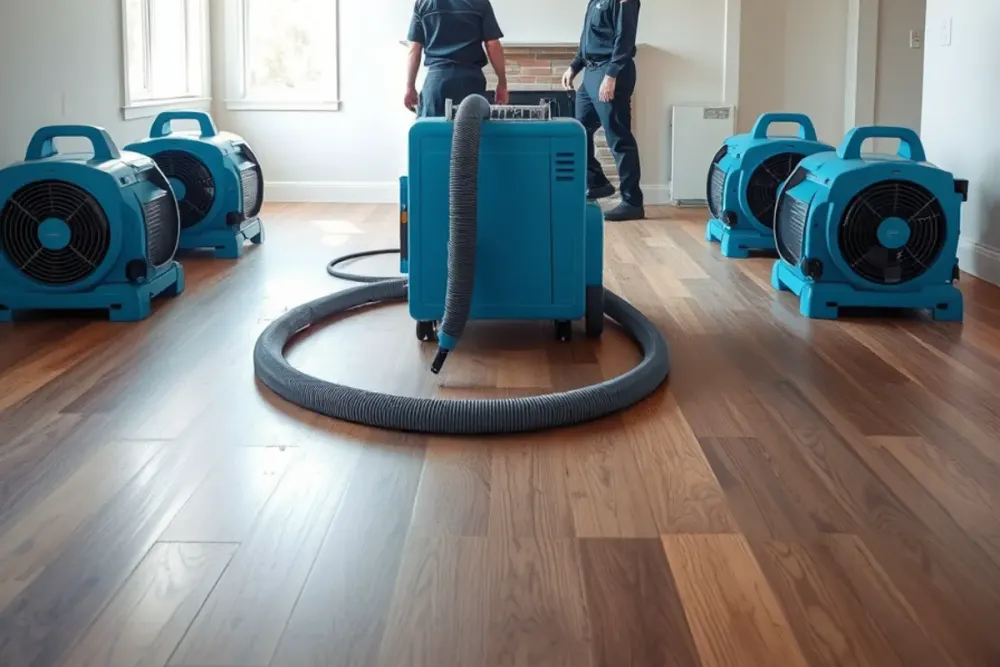
Three to five days is the honest typical range for a structural dry-out, and most Downey jobs land there. What moves you inside or outside that window is mostly the materials, not the size of the spill.
Downey's housing stock actually helps here. The 1940s–50s post-war bungalows across North Downey and the Woodruff/Florence corridor were built with lath and plaster and real wood subfloors over raised foundations, which breathe reasonably well once we get air underneath them. The 1960s–70s slab-on-grade tracts in South Downey and the Apollo neighborhood are a different animal — concrete releases moisture slowly, and a saturated slab under vinyl or engineered flooring can add two days on its own.
The local climate is a genuine advantage. Southern California's low outdoor humidity means our dehumidifiers work against a favorable gradient for most of the year. During a winter atmospheric river, when outdoor dew points climb, the same job takes longer and needs more dehumidification capacity. We size for the conditions on the day, not a rule of thumb.
What typically extends a dry-out past five days:

It feels backwards. The house is wet, so surely you open the windows and let it air out. In Downey, on most days, that actively slows the job down.
A dehumidifier works by processing a fixed volume of air. When windows are open, it is trying to dehumidify the entire San Gabriel Valley, and it loses. Keeping the affected area closed lets the equipment drop the humidity in that space fast, which steepens the gradient between the wet material and the surrounding air — and that gradient is what actually drives moisture out of your framing.
The other request we make is to leave the equipment running. Air movers are loud and dehumidifiers are warm, and we understand the temptation to shut them off overnight. Every hour they are off, materials re-equilibrate and you lose ground. If the noise is genuinely unliveable, tell us and we will reposition or swap for quieter units rather than have the drying stall.
Drying is generally billed on equipment, days, and labor. Here is what actually moves each of those.
The main driver. A single wet room might need three air movers and one dehumidifier for three days. A whole-floor loss can need twenty-plus units for a week.
Class 1 is a small area with minimal absorption. Class 4 means deep saturation of hardwood, plaster, or concrete and requires specialty drying systems and significantly more time.
Drying inside wall and floor assemblies means controlled access points, injection systems, and later patching. It costs more than open-room drying but far less than replacing the wall.
Daily metering with a full written log is standard on our jobs. It is a real labor cost, and it is also what gets claims approved without argument.
Most of what separates a good dry-out from a bad one is unglamorous: measuring properly and writing it down.
Three to five days is typical, but we pull equipment when readings hit the dry standard — not when a schedule says day three. Downey's lath-and-plaster and slab-on-grade stock frequently runs longer, and we quote that honestly up front.
The most common shortcut in this trade is closing a wall while the cavity is still wet. The room looks finished, and six weeks later there is a musty smell nobody can locate. Ask any contractor for their daily log — if it does not exist, the drying was not being measured.
We do not dry your house and hand you a list of contractors. Drywall, texture matched to the existing finish, paint and trim are the same scope and the same schedule.
We meter unaffected material of the same type in your own home to set the dry standard, then take readings at the same marked points every day until the wet materials match it. Equipment comes out when the numbers say so. You get the full log — daily moisture content, relative humidity, temperature, and grains per pound — and so does your adjuster.
Please do not. Materials re-absorb moisture from the air within hours, so shutting down overnight can cost you a full day of progress and push the job past a week. If the noise is unbearable, call us — we can often reposition units, swap in lower-decibel dehumidifiers, or isolate a room with containment so you can sleep.
Yes, noticeably, for the days the equipment runs. Dehumidifiers and air movers together draw real power. Most policies reimburse the increase as part of the mitigation claim, so keep the bill from the drying period and the equivalent month last year, and we will include the documentation in your claim file.
Because the surface always dries first. The subfloor beneath it, the bottom plate of the wall, and the back face of the drywall can still be well above the dry standard while the surface feels perfectly normal to your hand. That trapped moisture is exactly what causes mold two weeks later. We go by the meter, not by feel.
Yes, noticeably, for the days it runs — dehumidifiers and air movers together draw real power. Most policies reimburse the increase as part of the mitigation claim, so keep the bill covering the drying period and the equivalent month a year earlier. We include the equipment run-time record in your claim file so the increase is documented rather than argued about.
Three to five days is the honest average. What moves you outside it is materials, not the size of the spill.
Read article
That smell is not lingering. It is being produced, right now, by something that is still wet — and it is usually in one of five places.
Read articleWe cover 43 areas from our base at 8615 Florence Ave. These are the ones we reach fastest:
We answer 24/7 and dispatch a crew within 60 minutes across Downey and the neighboring Gateway Cities. A person answers the phone — not an answering service.