Problem Solving
Why Your House Still Smells Musty After the Water "Dried"
That smell is not lingering. It is being produced, right now, by something that is still wet — and it is usually in one of five places.
The short answer
That smell is not a leftover — it is being produced right now by microbial growth, which means something is still wet. It is usually in one of five places: inside a wall cavity, under flooring, in a cabinet toe-kick void, in the crawl space, or in the HVAC system.
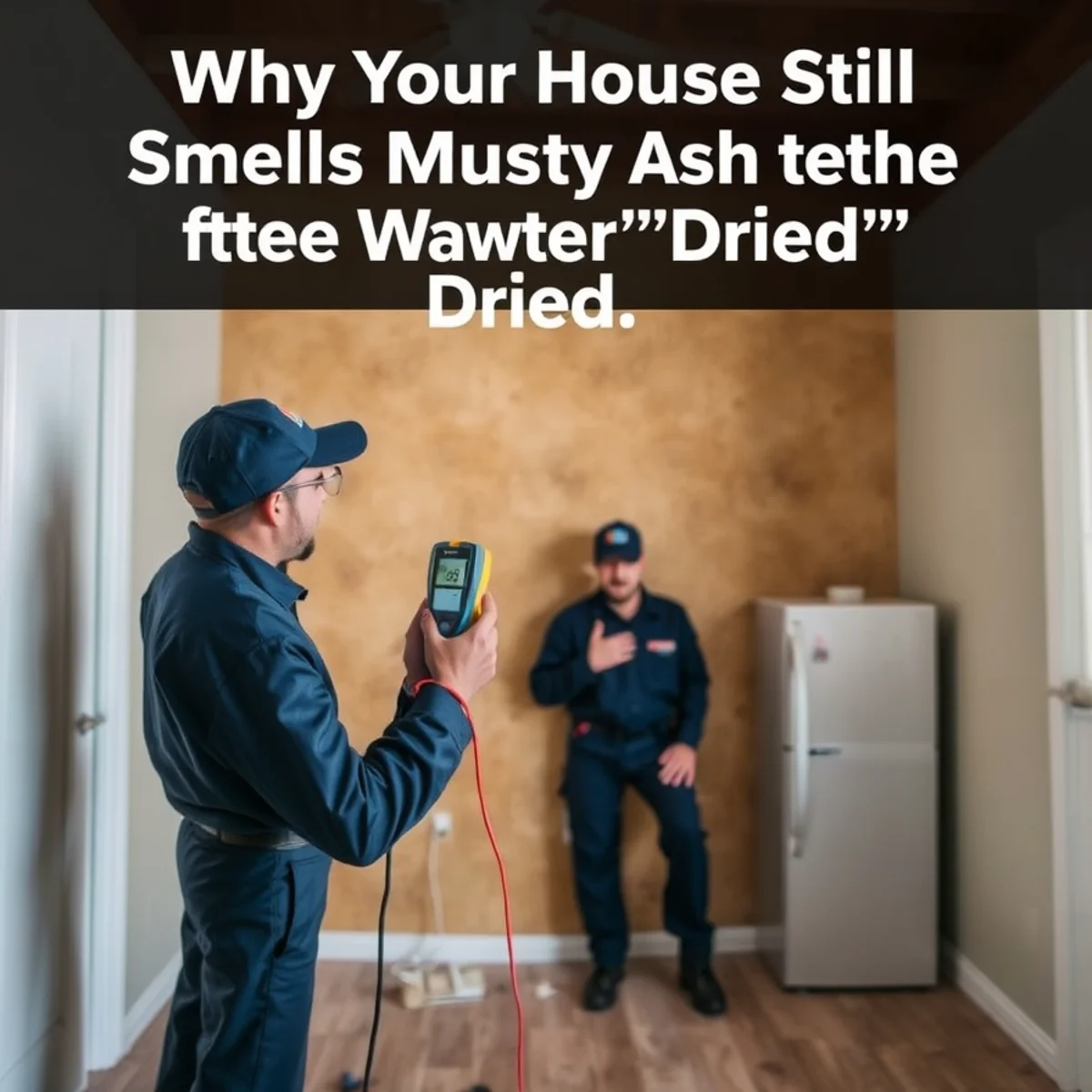
A musty smell weeks after a water loss is not a leftover. It is a live signal. Microbial growth produces volatile organic compounds as it metabolizes, and that is what you are smelling — meaning something in your house is currently wet enough to sustain it.
So the question is not how to get rid of the smell. It is where the moisture is.
The five places it usually is
1. Inside a wall cavity
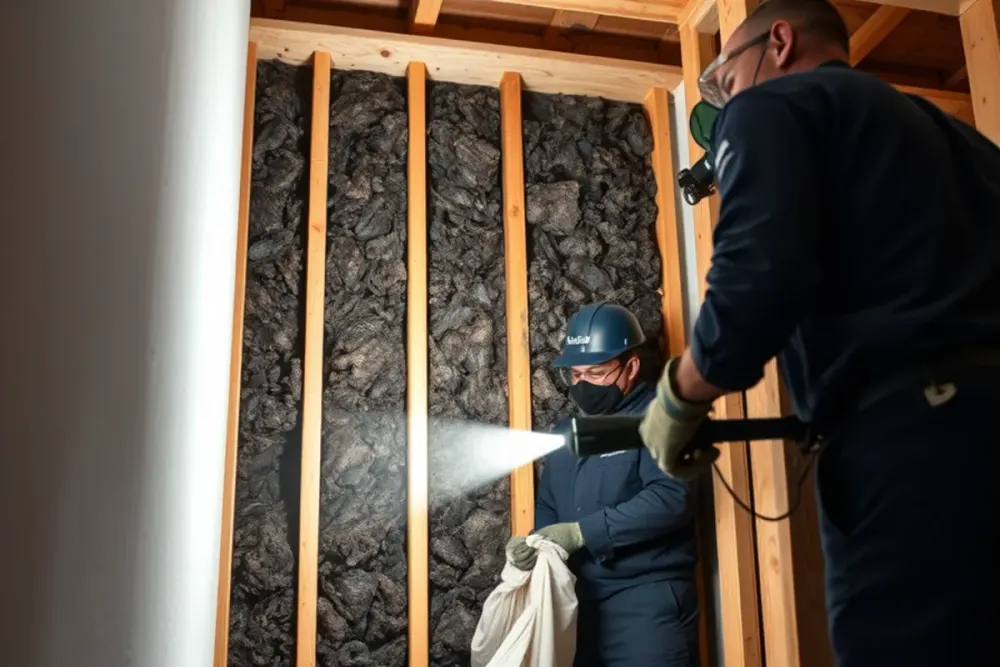
The most common by a distance. Surface drywall dries readily because that is where the air is. The cavity behind it — the bottom plate, the stud faces, and any insulation — dries far more slowly, and if the wall was closed up before the cavity reached the dry standard, it stays wet.
Wet fiberglass insulation is the worst version, because it holds water against the framing and effectively never dries in place.
2. Under the flooring
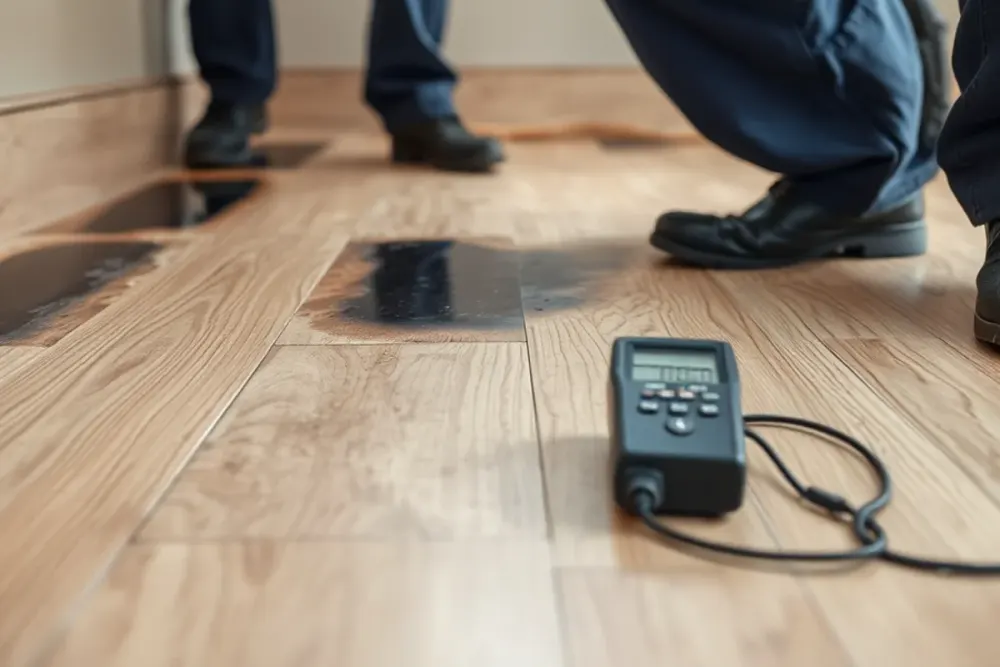
Water trapped between flooring layers, under the vapor barrier, or in a slab that was never dried to standard. Engineered and laminate floors are particularly good at this — water gets between the layers and has no route out.
3. Cabinet toe-kicks and voids
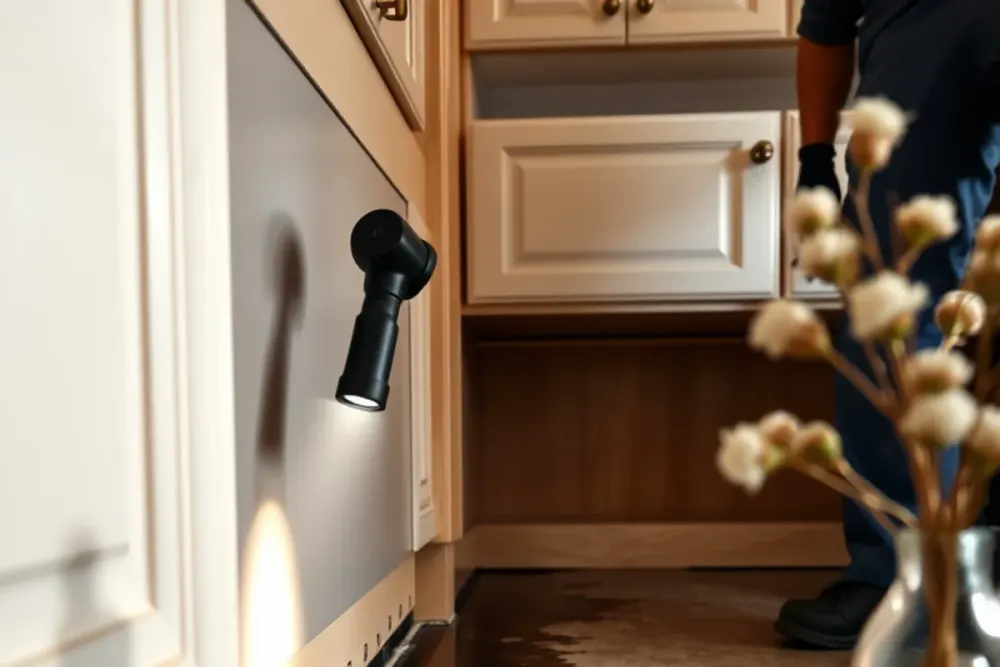
The void under a kitchen cabinet run has no airflow whatsoever. Water that got in there does not leave on its own, and the particle board carcass above it is an excellent growth medium. This is why we pull toe-kicks off rather than pointing a fan at the kitchen floor.
4. The crawl space
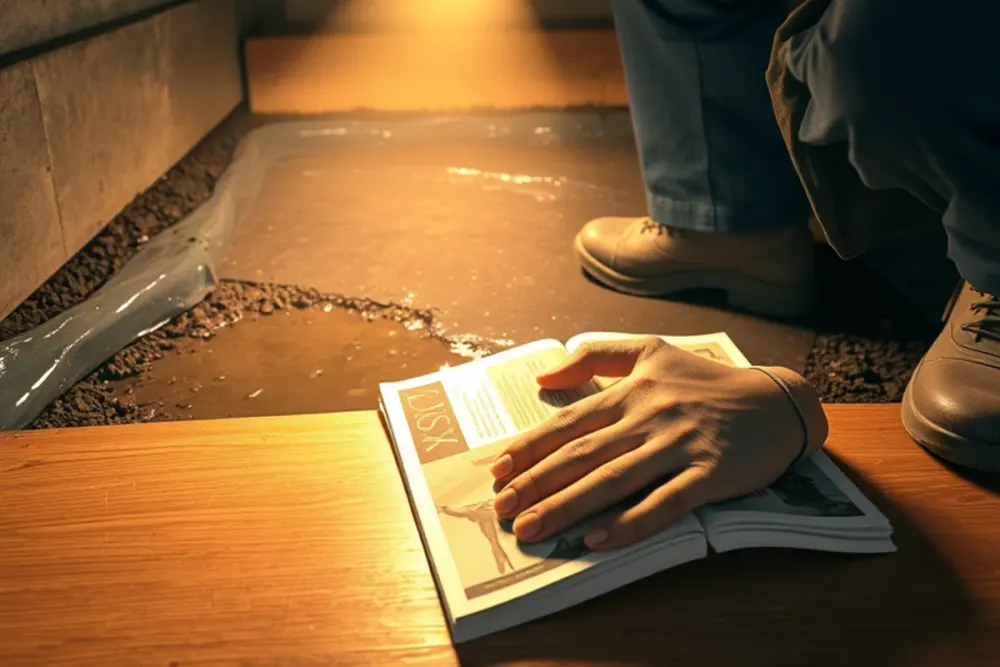
In Downey's raised-foundation housing — North Downey, Downtown Downey, the Woodruff/Florence corridor — this is where a leak's water actually goes, and nobody looks.
Air from a crawl space rises into the living space through floor penetrations and plumbing chases, which means a wet crawl space delivers its humidity, spores, and smell directly into your bedrooms. If your house smells musty at floor level and nothing indoors is wet, open the crawl space hatch.
5. The HVAC system
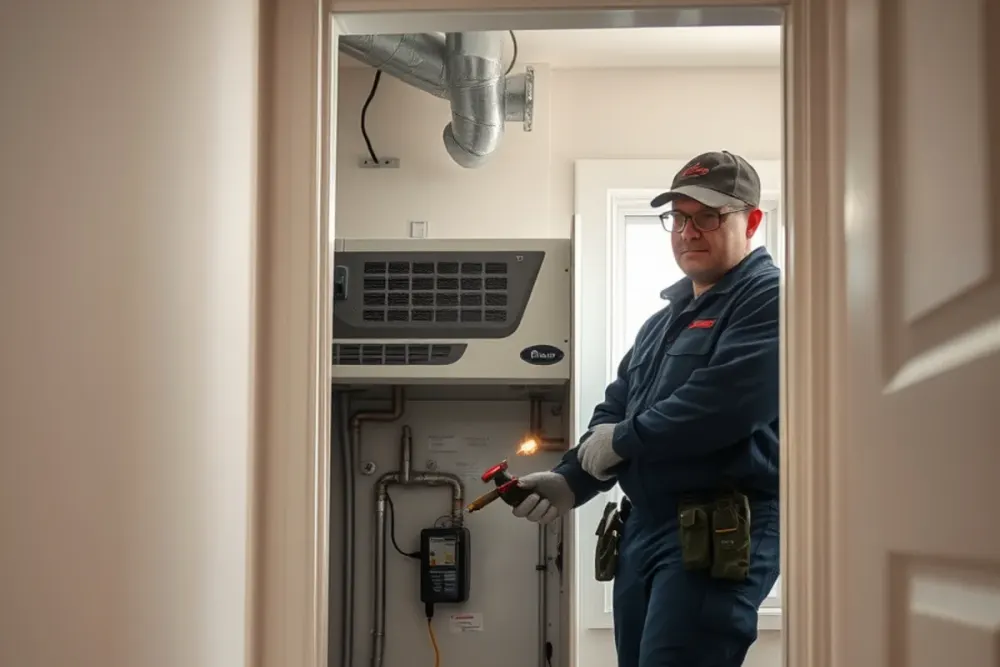
If ducting or the air handler got wet, or if the system ran while the house was damp, the system distributes the smell to every room. A blocked condensate line is its own separate cause — it backs up and overflows into a ceiling or closet, producing a musty smell that has nothing to do with your original leak.
Why deodorizing does not work
The same applies to encapsulating primer over a stain. It hides the evidence, does nothing about the water, and the problem returns larger.
How we find it
- Map moisture across the whole affected area with meters, not just where the original loss was
- Thermal imaging to find temperature anomalies indicating evaporative cooling behind surfaces
- Meter the wall bases specifically — moisture wicking up from below is the usual pattern
- Check the crawl space or under-floor area on any raised-foundation home
- Inspect HVAC returns, the air handler, and the condensate line
- Open a small controlled access point where readings indicate a wet cavity, and look
That last step matters. Readings tell you where to look; opening it tells you what is actually there. A cavity that reads wet and has visible growth is a different scope from one that is merely damp.
Where this usually goes wrong
In our experience, a house that still smells after a completed dry-out almost always traces to one of three things: the job was declared finished on a calendar rather than on meter readings, the wall was closed before the cavity dried, or the crawl space was never checked at all.
All three are avoidable, and all three are why we hand over a daily moisture log. If your previous contractor cannot produce one, that is the gap.
What to do now
Do not paint over anything, do not run an ozone machine, and do not wait to see if it clears in summer. Get the affected area properly metered — including the wall bases, the crawl space, and the HVAC — and find the moisture.
The smell is the cheapest diagnostic you will ever get. It is telling you something specific, months before the damage becomes visible.
Frequently asked
Not while the moisture producing it is still there. The smell comes from microbial growth actively metabolizing, which means something is currently wet enough to sustain it. It may fade in dry weather and return when humidity rises, which people often mistake for it resolving — it is the growth going dormant and reactivating, not the problem going away.
Those have legitimate uses after the moisture source is gone and affected material has been removed or dried. Used on a wall that is still wet, they mask the smell for a couple of weeks while growth continues behind it — and you have lost the diagnostic signal that would have told you where the problem was.
Usually one of three things: the job was called finished on a calendar rather than on meter readings, the wall was closed before the cavity reached the dry standard, or the crawl space was never checked. Ask for the daily moisture log — material moisture content, humidity, temperature. If one does not exist, the drying was not being measured.
Treat the smell as a diagnostic, not a nuisance
Ozone machines, odor bombs and stain-blocking primer all have legitimate uses after the moisture is gone. Used on something still wet, they mask the signal for a couple of weeks while the growth continues behind them.
In our experience a house that still smells after a completed dry-out almost always traces to one of three things: the job was called finished on a calendar rather than on readings, the wall was closed before the cavity dried, or nobody checked the crawl space.
If your previous contractor cannot produce a daily moisture log, that is the gap. Get the affected area re-metered — including wall bases, the crawl space and the HVAC — before you spend anything on masking it.
Services mentioned in this article
Structural Drying & Dehumidification
Metered, monitored drying that takes the structure back to its dry standard — not just the surface you can touch.
Learn moreMold Remediation
Contained removal that fixes the moisture source first — because mold that is only cleaned off comes straight back.
Learn moreFlooded Basement & Crawl Space Cleanup
Below-grade water pumped out, the space dried, and the vapor barrier corrected so it does not simply refill.
Learn moreAreas covered in this article
Named for Downey's NASA and Apollo program heritage (North American Aviation, Rockwell, Boeing) — 1960s–70s aerospa…
about 10 minutes from our Florence Ave baseNorth Downey1940s–50s post-war bungalow belt — the highest concentration of pre-1960 homes in Downey, and the oldest galvanized…
3 to 7 minutes from our Florence Ave base