Commercial & Property Managers
Property Manager's Guide to Tenant Water Damage in California
Structure and systems sit with the owner; contents and negligence sit with the tenant. Everything else is documentation and speed.
The short answer
Generally: the owner covers structure and building systems, the tenant's renters policy covers their own contents, and damage caused by tenant negligence sits with the tenant. California's implied warranty of habitability also requires effective waterproofing and working plumbing kept in repair.
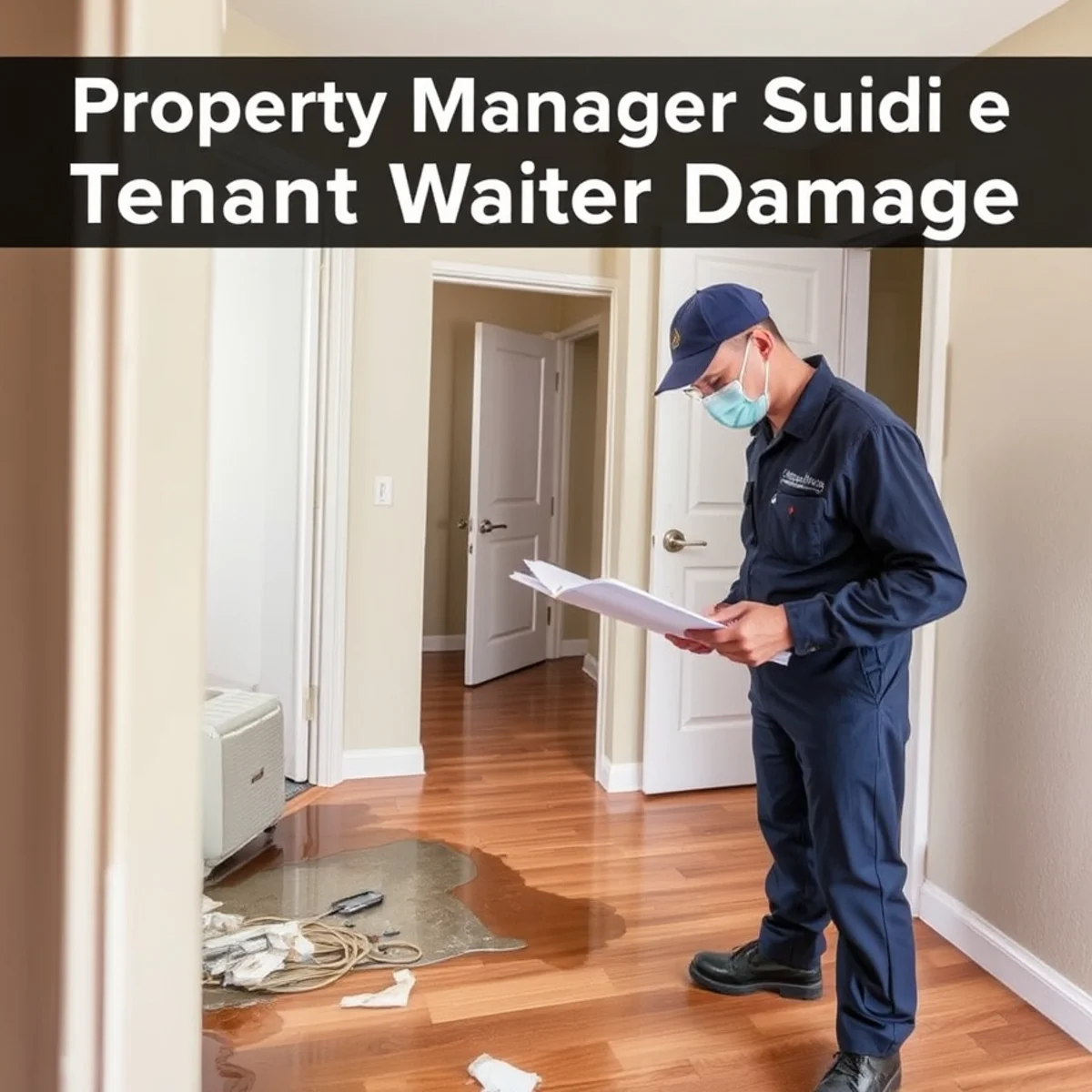
Across our rental-heavy service areas — Norwalk, Paramount, Lynwood, and much of Downey's multi-family stock — a large share of our work comes from property managers. The restoration itself is routine. The parts that go wrong are usually about responsibility, habitability, and how fast a tenant reported something.
This is a practical guide, not legal advice. For a specific dispute, talk to a California landlord-tenant attorney.
The general division
| Typically the owner | Typically the tenant | |
|---|---|---|
| Structure and building systems | Plumbing, roof, walls, foundation, water heater, shared stacks | — |
| Repairs and restoration | Structural drying, drywall, flooring, mold remediation | — |
| Contents | — | Their own furniture, clothing, electronics — via renters insurance |
| Damage from negligence | — | Overflowing a tub, ignoring a leak, unauthorized appliance installation |
| Prompt notification | Responding within a reasonable time | Reporting problems promptly |
Habitability
California's implied warranty of habitability requires rental housing to meet basic standards, including effective waterproofing and weather protection, and working plumbing kept in good repair.
Water damage becomes a habitability issue when it affects those things — a leaking roof, plumbing that does not work, or conditions that make a unit unsafe or unsanitary. Mold from an unaddressed leak can fall into this category, which is why speed matters beyond the property damage itself.
The practical consequence: responding quickly to a reported leak is both the cheap option and the one that keeps a maintenance issue from becoming a habitability dispute.
The single highest-return thing you can do
The list worth including:
- A warm patch on the floor
- The sound of running water when nothing is on
- A water bill or usage that jumped
- A musty smell with no visible source
- A slow drain, or a toilet that gurgles when the washer drains
- Any stain on a ceiling or at the base of a wall
- Damp or swelling at the base of a cabinet
We have attended units where a tenant noticed a warm floor for four months and mentioned it at lease renewal, because nobody had told them it mattered. By then moisture had wicked up wall bases in two rooms with mold behind the closet drywall.
Preventive maintenance that pays for itself
A disproportionate share of the floods we attend in rental property are inexpensive components that failed on a predictable schedule. Build these into turnover:
- Replace washing machine hoses with braided stainless, and write the date on them
- Replace supply lines under every sink and toilet if over seven years or unknown age
- Test every angle stop actually turns; replace any that seize
- Record water heater manufacture dates and plan replacement at ten to twelve years
- Confirm water heater seismic straps are present, doubled, and anchored into framing — required by California Health and Safety Code section 19211 for existing heaters, not just new ones
- Camera-scope the sewer lateral while the unit is empty, particularly in pre-1970 buildings
- Keep a written record so the next turnover knows what was done and when
When a unit floods: the sequence
- Stop the water and make the unit safe
- Get a restoration crew moving — mitigation delay is what turns a contained loss into a large one, and carriers expect prompt action
- Photograph everything before anything is moved
- Notify your carrier and open the claim
- Assess habitability honestly and put the determination in writing
- Request access to adjacent and downstairs units and have them metered, whether or not damage has been reported
- Give the tenant a realistic timeline, and update it if it changes
Always check the neighboring units
In attached construction, water travels through floor assemblies and party walls. Adjacent units are wet more often than their occupants realize, and finding it on day one means drying in place with no demolition.
Finding the same moisture in week six means opening a wall in an occupied unit and remediating mold, with an understandably unhappy tenant and a second insurance conversation. The hour spent getting keys is worth far more than it costs.
Relocation and rent
If a unit is genuinely uninhabitable, a tenant may be entitled to a rent reduction or abatement for the period, and your policy may include loss of rents coverage. Some leases address temporary relocation directly.
Put the habitability determination in writing either way. It carries weight for both parties, and a vague verbal assessment is where disputes start.
What we provide on rental work
- Per-unit scopes and per-unit documentation, so each insurer gets the right file without unpicking a combined report
- Realistic per-unit completion dates, so you can tell each tenant something accurate
- Written habitability assessments where a unit cannot be occupied
- Daily moisture logs, which support both the claim and any later dispute about whether drying was adequate
- Coordination around tenant access and notice requirements
On a four-unit building where a supply failure reached three units, that meant releasing the least affected unit at three days and the source unit at nine — with each tenant given an accurate date rather than one vague estimate for the whole building.
Frequently asked
Generally the tenant's renters insurance covers their own contents; the owner's policy covers the structure and building systems. If the loss resulted from the owner failing to maintain the property or respond to a reported issue, liability may shift. This is one of the strongest arguments for requiring renters insurance in the lease and for responding promptly to reported leaks.
Expect a substantially larger scope than the visible damage suggests, and expect mold to be part of it — colonization begins within 24 to 48 hours on wet material. Responsibility depends on the specifics, including whether the tenant knew and failed to report. Document the reporting timeline carefully, and map the actual extent before quoting rather than estimating from what is visible.
Usually yes for clean-water losses, though the affected rooms will be noisy and unusable for three to five days. Generally not if the loss involved sewage, if the kitchen or only bathroom is out of service, or if significant mold remediation is underway. Put the determination in writing — it carries weight for both you and the tenant, and a vague verbal assessment is where disputes start.
The highest-return thing you can do
Tell tenants what to report. Most who fail to report a developing leak simply did not know the signs meant anything — a warm patch on the floor, running water with nothing on, a bill that jumped, a musty smell with no source. A few lines in the welcome pack converts them into an early-warning system.
Build the cheap maintenance into turnover: braided stainless washing machine hoses, supply connectors on a seven-year cycle, angle stops tested, water heater ages recorded, seismic straps anchored into framing, and a camera scope of the lateral in pre-1970 buildings.
And always request access to adjacent and downstairs units for metering. Finding moisture on day one means drying in place; finding it in week six means opening a wall in an occupied unit. For the whole claim process end to end, see our California water damage insurance claims guide.
Services mentioned in this article
Commercial Water Damage Restoration
Phased, after-hours restoration that keeps you trading — with documentation your carrier and your landlord both accept.
Learn moreResidential Water Damage Restoration
One team from the first extraction to the last coat of paint — no handing you off to three other contractors.
Learn moreMold Remediation
Contained removal that fixes the moisture source first — because mold that is only cleaned off comes straight back.
Learn moreAreas covered in this article
A Gateway Cities hub with a pre-1960 historic core and 1960s–70s tract expansion, plus high rental density that dri…
about 12 minutes from our Downey baseParamountFormed from the old hay-shipping communities of Hynes and Clearwater — 1940s–50s war-worker housing and 1960s tract…
about 10 minutes from our Downey base