Commercial & Property Managers
HOA and Condo Water Damage: Who Is Responsible in California?
The restoration is the straightforward part. Working out whose policy pays for which half of a wall is where these get complicated.
The short answer
The boundary is set by your CC&Rs, not by intuition. Associations generally use one of three conventions — bare walls, original specification, or all-in — and which one yours uses decides how much your HO-6 actually needs to carry. Most owners have never checked.
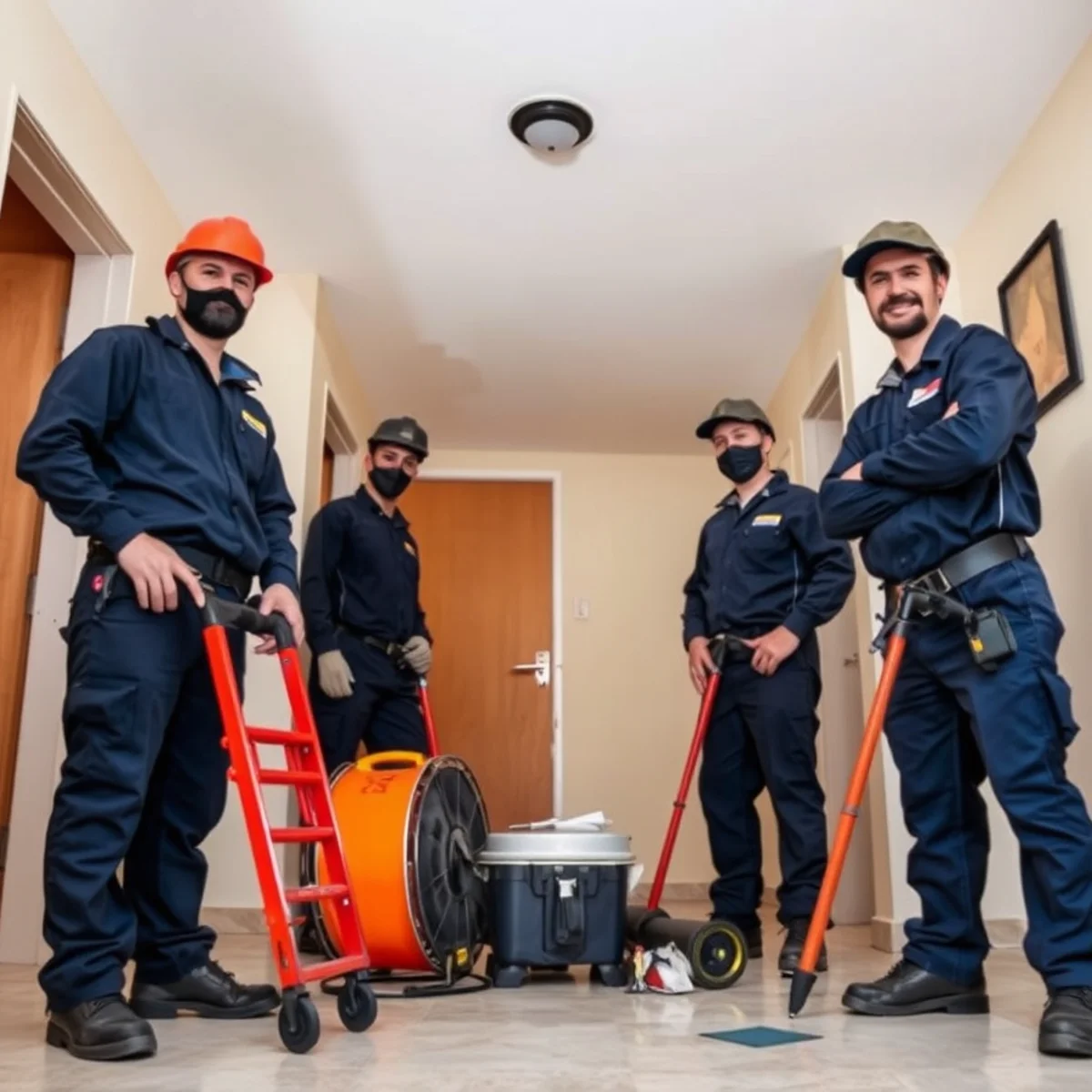
Water in an attached home does not respect the boundary between what you own and what the association owns. It goes through the party wall, along the floor assembly, and into a neighbor's unit — and then three policies are potentially involved.
This is a practical orientation, not legal advice. Your CC&Rs govern, and they vary considerably between associations.
The three policies
| Policy | Held by | Typically covers |
|---|---|---|
| Master policy | The HOA | Building structure, common areas, and — depending on type — original fixtures inside units |
| HO-6 condo policy | The unit owner | Interior improvements, personal property, loss assessment, and liability |
| Renters policy | A tenant, if the unit is rented | The tenant's own contents and liability |
The boundary between master policy and HO-6 is defined in your CC&Rs, and there are several common conventions.
Where the line usually falls
Associations generally use one of three approaches, and it is worth knowing which yours uses before you need to.
- Bare walls — the master policy covers the structure up to the unfinished interior surface. Everything inside, including drywall finishes, flooring, cabinets and fixtures, is the owner's.
- Single entity or original specification — the master covers the structure plus the fixtures as originally built, with the owner responsible for upgrades and improvements they made.
- All-in or all-inclusive — the master covers the structure plus fixtures and finishes inside the unit, leaving the owner mainly personal property and improvements.
How water actually moves in attached housing
Three routes, and each creates a different responsibility question.
Downward through the floor assembly. A supply failure in an upper unit releases into the assembly, spreads laterally, and comes through the ceiling of the unit below — often a room away from the source. That ceiling is frequently a common element while the finish is the owner's.
Horizontally through party walls. Water reaching the bottom plate of a shared wall wicks up the drywall on both sides. The neighbor who did nothing wrong gets a wet wall, and if nobody metered it, mold behind it six weeks later.
Through shared plumbing stacks. Multiple units feed a common vertical line, so a blockage low in the stack backs up into the lowest fixtures — which usually belong to someone with no connection to the cause. Stacks are almost always common elements.
Loss assessment coverage
This is the HO-6 provision most owners have never heard of and should check.
If a loss exceeds the master policy's limits, or the association has to pay a large deductible, the HOA may assess the cost across all owners. Loss assessment coverage on your HO-6 pays your share of that assessment.
Master policy deductibles on multi-unit buildings can be substantial, and where the CC&Rs allow it to be assessed to the owner whose unit caused the loss, that is a real exposure. Check whether you have loss assessment coverage and whether the limit is realistic.
What to do when it happens
- Stop the water and make the unit safe
- Notify the HOA or management company the same day — master policies typically have notification requirements, and late notice complicates coverage
- Photograph everything before anything moves
- Open a claim with your own carrier as well, even if you expect the master policy to respond
- Get mitigation started; do not wait for the responsibility question to be settled
- Ask the association to arrange access to adjacent and downstairs units for metering
- Keep your own record of the timeline and every communication
Always check the neighboring units
This is the practical point that saves the most money and grief in attached housing.
On every multi-unit call we ask for access to the units below and either side, and meter them whether or not anyone has reported damage. It regularly finds moisture in a unit whose owner has noticed nothing.
On one townhome job, the owner on the far side of a party wall was skeptical — nothing was visible. Their wall read wet eleven feet from the source. We dried three units on one job, with no demolition in two of them, and nobody got a surprise in November.
In Downey specifically
The attached housing here is concentrated in the 1990s–2000s developments around Downey Landing and in the apartment and condominium stock along the Imperial Highway corridor.
The Downey Landing buildings are newer, which misleads people into thinking plumbing failure is a decade away. Building age and component age are different things — supply connectors, angle stops, and water heater flex lines have service lives measured in years and fail regardless of how new the building is. Braided stainless supply lines are a common culprit; replacing them every five to seven years costs very little.
Find out which convention applies to you
- Read the insurance section of your CC&Rs and find out whether you are bare walls, original specification, or all-in
- Confirm your HO-6 limits actually match that boundary, and that you have loss assessment coverage
- Replace the supply connectors and angle stops in your unit if they are over seven years old or of unknown age
That last one is the cheapest insurance in this article. Most of the multi-unit losses we attend started with a part worth a few dollars.
Frequently asked
It depends on your CC&Rs and the policies involved, but the usual structure is: the master policy covers building structure and common elements, your HO-6 covers your interior improvements and contents, and your neighbor may be liable for damage their unit caused. Notify the HOA the same day, open a claim with your own carrier too, and do not let the responsibility question delay mitigation.
It is an HO-6 provision that pays your share when the HOA assesses a loss cost across owners — because the master policy limit was exceeded, or because a large master deductible has to be allocated. Master deductibles on multi-unit buildings can be substantial, so yes, check that you have it and that the limit is realistic for your building.
Building age and component age are different things. Supply connectors, angle stops, toilet supply lines, and water heater flex connectors have service lives measured in years, not decades, and fail regardless of how new the building is. Braided stainless supply lines are a common culprit — they look permanent and are not. Replacing them every five to seven years costs very little and prevents most of what we get called to.
Three things to do before you need any of this
Read the insurance section of your CC&Rs and find out which convention applies. Under bare walls your policy is carrying your entire interior; under all-in it is carrying much less.
Confirm you have loss assessment coverage and that the limit is realistic. Master policy deductibles on multi-unit buildings can be substantial, and where the CC&Rs allow it to be assessed to the unit that caused the loss, that is a real exposure.
Then replace the supply connectors and angle stops in your unit if they are over seven years old. Most of the multi-unit losses we attend started with a part worth a few dollars — and building age tells you nothing about component age. For the whole claim process end to end, see our California water damage insurance claims guide.
Services mentioned in this article
Residential Water Damage Restoration
One team from the first extraction to the last coat of paint — no handing you off to three other contractors.
Learn moreCeiling Water Damage Repair
We trace the leak to its real source, dry the cavity above, then repair and texture-match so the patch disappears.
Learn moreStructural Drying & Dehumidification
Metered, monitored drying that takes the structure back to its dry standard — not just the surface you can touch.
Learn moreAreas covered in this article
1990s–2000s mixed-use retail and residential development on the former NASA/Rockwell site — newer construction, but…
about 9 minutes from our Florence Ave baseImperial Highway CorridorA major east-west commercial artery lined with 1960s–70s strip malls and apartment blocks — aging shared plumbing s…
about 11 minutes from our Florence Ave base