Costs & Insurance
Slab Leak Repair vs. Whole-House Repipe: Which Makes Sense?
One leak is a repair. Two leaks is information. Here is how the arithmetic actually works in a sixty-year-old Downey slab home.
The short answer
One leak is a repair; two leaks is information. A spot repair or reroute makes sense for a first failure in an otherwise sound system. After a second, a full repipe usually wins on arithmetic, because two more restorations plus two plumbing repairs plus two deductibles generally exceeds the cost of replacing the system.
You have a slab leak. Somebody has told you the options are a spot repair, a reroute, or a full repipe, and the price difference between them is significant. Here is how to think about it.
We are a restoration contractor, not a plumbing company. We do not perform any of these repairs and we have no financial interest in which one you choose — which is exactly why we are comfortable being direct about it.
The three options
Spot repair
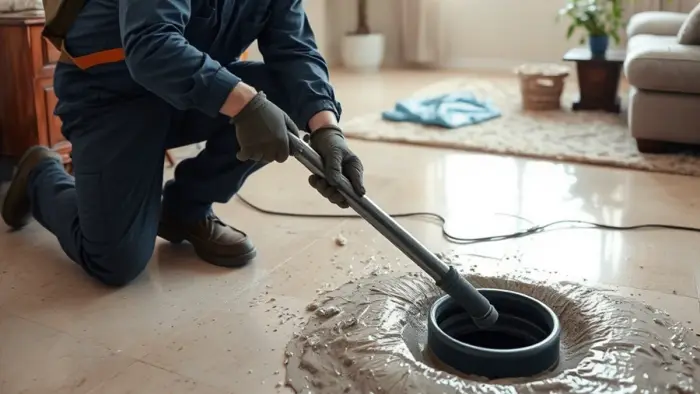
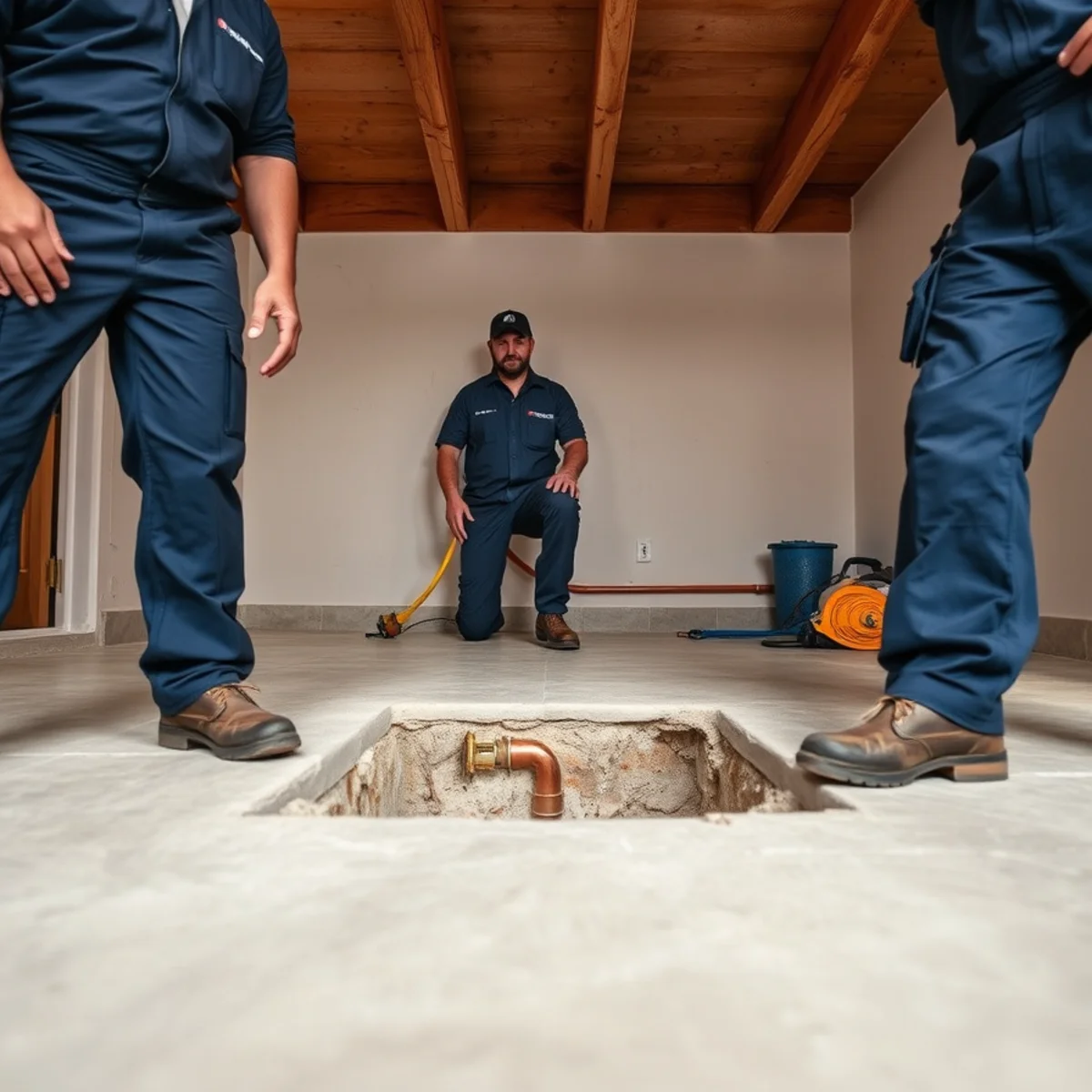
Open the slab at the leak, fix that section, patch the concrete, restore the flooring. Cheapest option, most disruptive per square foot, and it addresses exactly one point of failure.
Right when: the plumbing is otherwise young, or the leak was caused by specific mechanical damage rather than general deterioration.
Reroute
Abandon the failed run under the slab and rerun that line overhead through the attic and down inside the walls. No jackhammering, and that particular line never fails under concrete again.
Right when: a single line has failed in an otherwise sound system. Frequently the best value option, and often quicker than a slab repair because there is no concrete work.
Full repipe
Replace all supply lines, typically with PEX, usually routed overhead rather than back under the slab. Most expensive, most disruptive, and it ends the problem permanently.
Right when: the system has already failed more than once, or you are seeing symptoms across the house.
The decision rule we would actually use
We have returned to Downey and Lakewood houses for exactly this. One homeowner had us out for a hallway slab leak, then again fourteen months later for a different line under a bathroom. Two restorations, two plumbing repairs, two deductibles — more in total than a repipe would have cost after the first one.
So at the second leak, in a home you intend to stay in for another decade, the arithmetic favors the repipe fairly clearly.
What insurance actually pays
This is where slab leaks differ from most water losses, and where most homeowners are surprised in both directions.
| Cost component | Typically covered? |
|---|---|
| Repairing the failed pipe | No — treated as wear and tear in most California policies |
| Tearing out slab and flooring to reach the pipe | Often yes, under the access or tear-out provision |
| Putting back the slab, flooring and finishes | Often yes, under the same provision |
| Drying the structure and affected materials | Generally yes, as resulting water damage |
| Mold remediation caused by the leak | Sometimes, often capped at a sublimit |
| A full repipe you elect to do | No — that is an upgrade, not a repair of the covered loss |
The access provision is the part worth finding in your policy. On a slab leak, opening the concrete and restoring the flooring routinely costs several times the plumbing fix — so if that is covered, the big number is covered even though the pipe itself is not.
The timing trap
Coverage applies to sudden and accidental damage. A leak you noticed months ago and left is gradual damage, and gradual is excluded.
Carriers can and do assess duration. Staining patterns, the extent of mold growth, and material deterioration all indicate how long a leak ran. So the practical guidance is unambiguous: the moment you see a warm floor spot, an unexplained bill increase, or new cracking in tile, document it and act. Waiting to see if it worsens is the most reliable way to lose the claim.
Why this keeps happening in Downey
Three conditions attack under-slab copper here simultaneously, and most of the city's slab housing sits on all three.
- Age — the 1960s–70s tracts across South Downey, Apollo, and the Warren High subdivisions have plumbing at fifty-five to sixty-five years
- Soil — the basin's clay-rich alluvium swells with winter rain and shrinks through summer, flexing anything rigid buried in it
- Chemistry and abrasion — pinhole corrosion from the inside, plus thermal cycling rubbing hot lines against the concrete they pass through
Given all three, a leak in a home of that era is not misfortune. It is the expected end of the material's service life — which is also why the first leak is the right moment to think about the whole system rather than just that one spot.
Why PEX, and why overhead
Most repipes here use PEX rather than copper, for reasons specific to this ground. PEX is flexible, so it tolerates the soil movement that cracks rigid pipe. It is not subject to the pinhole corrosion that affects copper in this region. And it costs less to install.
Routing overhead through the attic rather than back under the slab matters just as much. It means that whenever the next failure comes — and everything fails eventually — it is a drywall repair rather than a concrete one.
Frequently asked
No. A full repipe is an upgrade to your plumbing system, not a repair of the covered loss, so it comes out of pocket. What insurance typically does cover is the resulting water damage and the access cost — cutting the slab and restoring flooring and finishes to reach the pipe — which is often the larger number. Read the tear-out or access provision in your policy.
The strongest single sign is a warm spot on the floor, which indicates a hot-water line. Add the sound of running water with everything off, an unexplained bill increase, declining pressure, or new cracks in tile and grout. Confirm it in ten minutes: shut off every fixture and watch the leak indicator on your water meter. If it is still turning, water is escaping in the pressurized system.
For that one line, yes — it is permanently out from under the slab. What it does not address is the rest of the system, which is the same age and in the same conditions. A reroute is often the best value for a first failure. If you have had two, the reroute solves one line while the others keep counting down.
How to decide, without a plumber's incentive in the room
The pipe that failed is not special. It is the same age and material as every other line in your slab and has been sitting in the same clay soil, carrying the same water.
On coverage, expect your policy to pay for the resulting damage and the access cost to reach the pipe, but not the pipe repair and not a repipe you elect to do. That access provision is often the most valuable part of the policy.
Most repipes in this region use PEX routed overhead through the attic rather than back under the slab. It tolerates ground movement, avoids the pinhole corrosion that killed the copper, and means the next failure is a drywall repair rather than a concrete one.
Services mentioned in this article
Slab Leak Water Damage Restoration
Detection, controlled slab access, and drying of the flooring and wall bases the leak has been quietly soaking.
Learn moreLeak Detection & Repair Coordination
Acoustic, thermal, and pressure testing that pinpoints the leak — so the repair opens one small area, not the whole floor.
Learn moreMold Remediation
Contained removal that fixes the moisture source first — because mold that is only cleaned off comes straight back.
Learn moreAreas covered in this article
1940s–50s post-war bungalow belt — the highest concentration of pre-1960 homes in Downey, and the oldest galvanized…
3 to 7 minutes from our Florence Ave baseLakewoodOne of the country's great post-war planned communities — roughly 17,500 homes built in a few years, which means an…
about 15 minutes from our Downey base