Problem Solving
Tree Roots in Your Sewer Line: Warning Signs to Catch Early
The best sewage cleanup is the one that never happens — and root blockages give you months of warning, if you know what you are listening to.
The short answer
Four signs, in escalating order: fixtures affecting each other, several drains slowing over months, a backup that clears itself, and a greener or soggier patch of lawn over the line. A backup that resolves on its own is the most dangerous — it means the blockage is nearly complete.
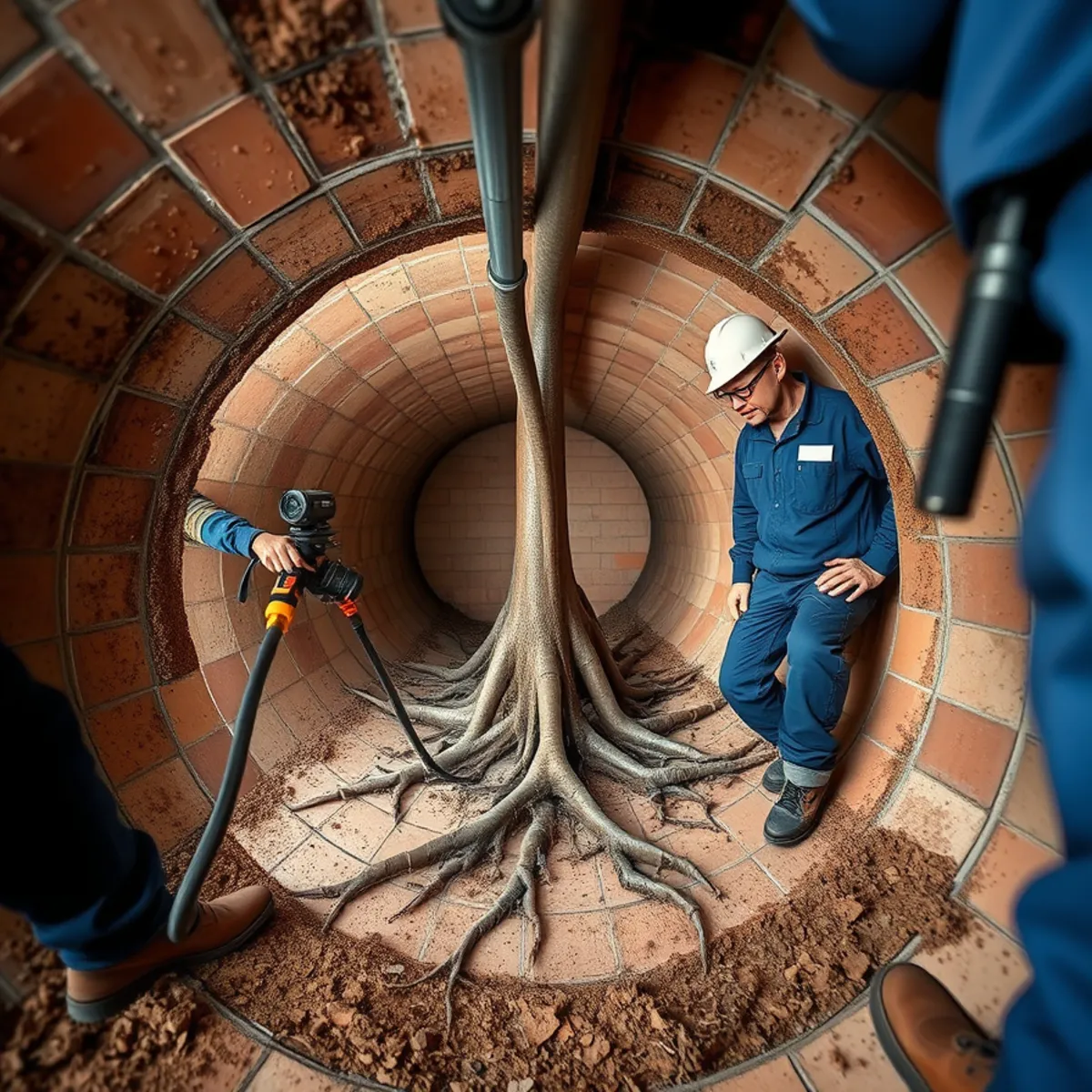
Roots are the leading cause of the sewer backups we attend in Downey's established neighborhoods, and they are also the most preventable — because they announce themselves for months before anything overflows.
How roots get in
Clay-tile sewer pipe is laid in sections with joints between them. Those joints were never watertight in the way modern pipe is, and after six or seven decades of expansive clay soil swelling in winter and shrinking in summer, they have worked further open.
A root does not break the pipe. It grows toward the moisture and nutrients seeping out of the joint, enters through the gap that already exists, and then expands inside where conditions are ideal — constant moisture, constant nutrients, no competition. Over a few seasons it forms a fibrous mat across the pipe's cross-section that catches paper, grease and solids until flow stops.
The four warning signs
1. Fixtures talking to each other
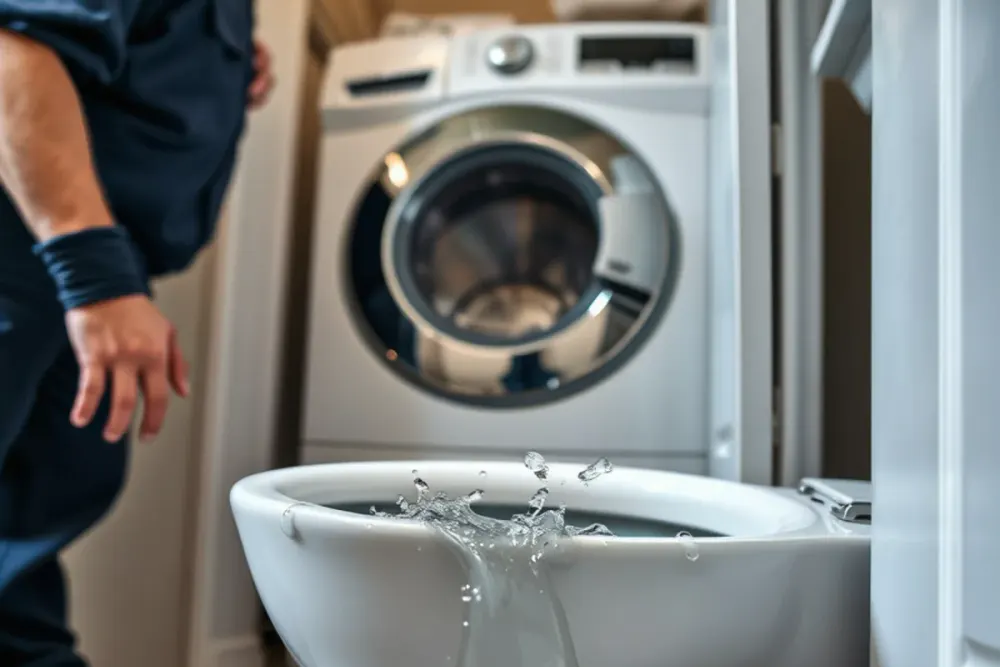
The most diagnostic sign there is. A toilet that gurgles when the washing machine drains. A shower that bubbles when a toilet is flushed. That is air being displaced in a shared line, which means the problem is the lateral rather than a local clog.
2. Slow drains, plural
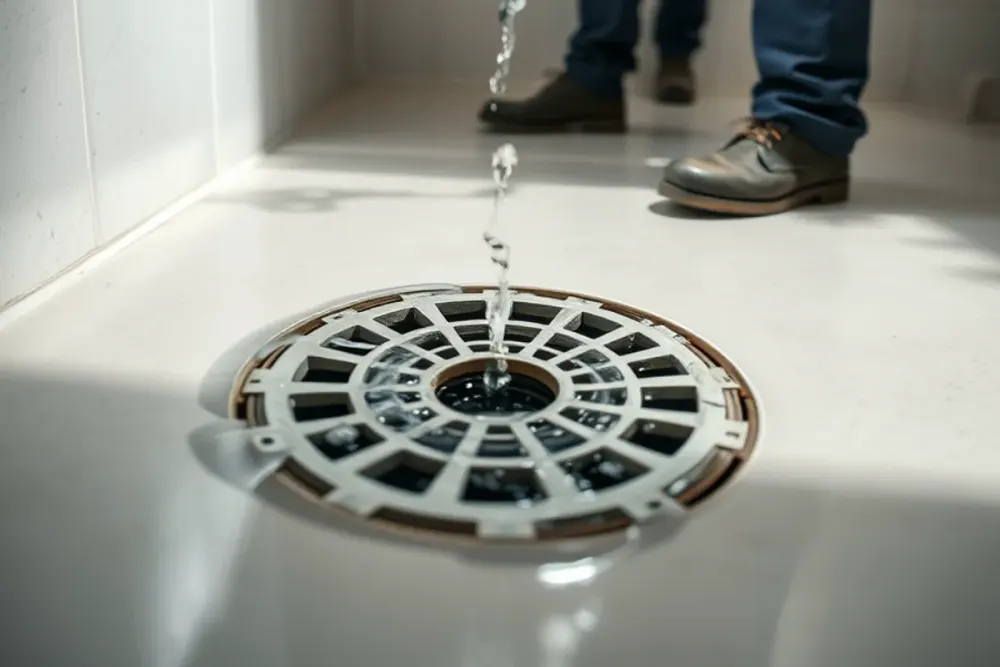
One slow sink is a clog. Several fixtures slowing over months, especially the lowest ones in the house, is a line that is progressively narrowing.
3. A backup that clears itself
4. Outdoor signs
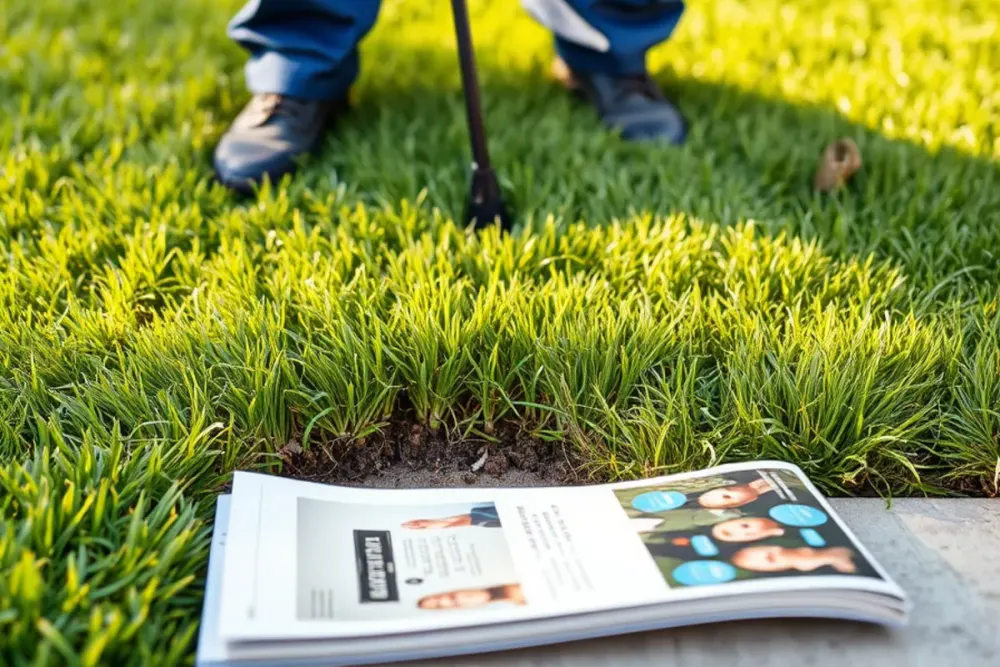
- A patch of lawn over the sewer line that is greener, faster-growing, or soggier than the rest
- A sinkhole or depression forming along the line's route
- A sewage smell in the yard, particularly after rain
- Unusually vigorous growth on one side of a tree
Which Downey homes are most exposed
Three conditions have to line up, and across large parts of this city they all do.
Clay-tile laterals, which means homes built before roughly 1970 — Downtown Downey, North Downey, Studebaker/Firestone, and the Woodruff/Florence corridor. Mature trees, which means the 1950s and 60s planting in neighborhoods like Independence Park, Furman Park, and the streets around Columbia Way. And expansive clay soil, which is essentially the whole basin.
If your home ticks all three and the lateral has never been scoped, assume roots are in it. That is not pessimism — it is what we find.
The camera scope
A camera inspection sends a video head down the lateral from a cleanout and shows you exactly what is there — root mats, cracks, offsets, bellies, and the pipe material and condition. It typically takes under an hour.
It costs a small fraction of a sewage cleanup, and unlike a cleanup it happens on a Tuesday morning rather than at midnight with a family in the house. If you have any of the four warning signs, this is the thing to do.
Fixing it without losing the tree
| Option | What it does | How long it lasts |
|---|---|---|
| Mechanical cutting or hydro-jetting | Cuts the root mat out and restores flow | 1-3 years — the joints are still open |
| Root-inhibiting foam treatment | Slows regrowth after clearing | Maintenance, applied periodically |
| Cured-in-place liner | Resin liner cured inside the existing pipe, sealing the joints | Decades — the durable fix, no trench |
| Pipe bursting or excavation | Replaces the lateral entirely | Decades — needed where pipe has collapsed or badly offset |
Lining is the option most people should be looking at. It seals the joints from the inside, so roots have nowhere to enter, and it does not require digging up your yard or removing the tree that is causing the problem.
Do you have to remove the tree?
Almost never, and we would push back on anyone who suggests it as a first step. Mature shade trees are a large part of what makes these neighborhoods pleasant, they take decades to replace, and they are not actually the problem — the open joints in a seventy-year-old clay pipe are.
Seal the pipe and the tree can keep growing wherever it likes.
Two things to do now
First, check your insurance. Sewer and water backup is commonly excluded by default on California policies and is usually inexpensive to add as an endorsement. Given the age of laterals across this city, it is one of the more sensible ones to carry.
Second, if you are a landlord, build a camera scope into your turnover process. Scoping a lateral while a unit is empty is straightforward and cheap. Discovering the same problem at midnight with a family in the property is neither.
Frequently asked
Almost never, and we would be skeptical of anyone suggesting it as a first step. The problem is not the tree — it is the open joints in a seventy-year-old clay-tile pipe. Clear the roots, then line the lateral with a cured-in-place resin liner that seals the joints from the inside. The roots have nowhere to enter, and the tree stays.
A small fraction of a sewage cleanup, and it takes under an hour. It shows you exactly what is in the line — root mats, cracks, offsets, bellies, and the pipe's material and condition. If you have slow drains, gurgling fixtures, or a backup that cleared itself, this is the single most useful thing you can do.
Typically within one to three years if only the mat was cut out, because the joints they entered through are still open. Root-inhibiting treatments extend that. The permanent answer is lining the pipe, which seals the joints and takes the entry route away entirely.
The cheapest hour you will ever spend
A camera scope down the lateral takes under an hour and costs a fraction of a Category 3 cleanup. It shows you root mats, cracks, offsets, bellies and the pipe's actual condition.
You almost never need to remove the tree. The problem is the open joints in seventy-year-old clay tile, not the roots seeking them out. Clear the mat, line the pipe from the inside, and the tree keeps growing wherever it likes.
If you own rental property, build the scope into turnover. Doing it while a unit is empty is straightforward; discovering the same problem at midnight with a family in the building is not.
Services mentioned in this article
Sewage Cleanup & Backup Removal
Category 3 backups handled under containment — full protective equipment, regulated disposal, and verified disinfection.
Learn moreLeak Detection & Repair Coordination
Acoustic, thermal, and pressure testing that pinpoints the leak — so the repair opens one small area, not the whole floor.
Learn more24/7 Emergency Water Removal
A person answers, 24/7. Crews dispatched within 60 minutes — nights, weekends, and holidays included.
Learn moreAreas covered in this article
Family tracts around Independence Park on Bellflower Blvd — 1950s–60s homes whose mature shade trees now send roots…
about 10 minutes from our Florence Ave baseStudebaker / FirestoneNamed for the historic Studebaker plant and the Firestone Boulevard corridor — 1940s–50s worker housing with origin…
5 to 8 minutes from our Florence Ave base