Emergency Guides
Washing Machine Supply Line Burst: 5 Steps to Limit the Damage
One of the most common residential floods we attend, caused by a part that costs less than lunch and fails behind a machine nobody moves.
The short answer
Close both valves on the wall behind the machine, then cut power to the laundry circuit before stepping into standing water. Photograph the failed hose before anyone replaces it, check the rooms on the other side of every laundry wall, and call before deciding it is minor — the pad, subfloor and cabinet voids need a meter, not a judgment call.
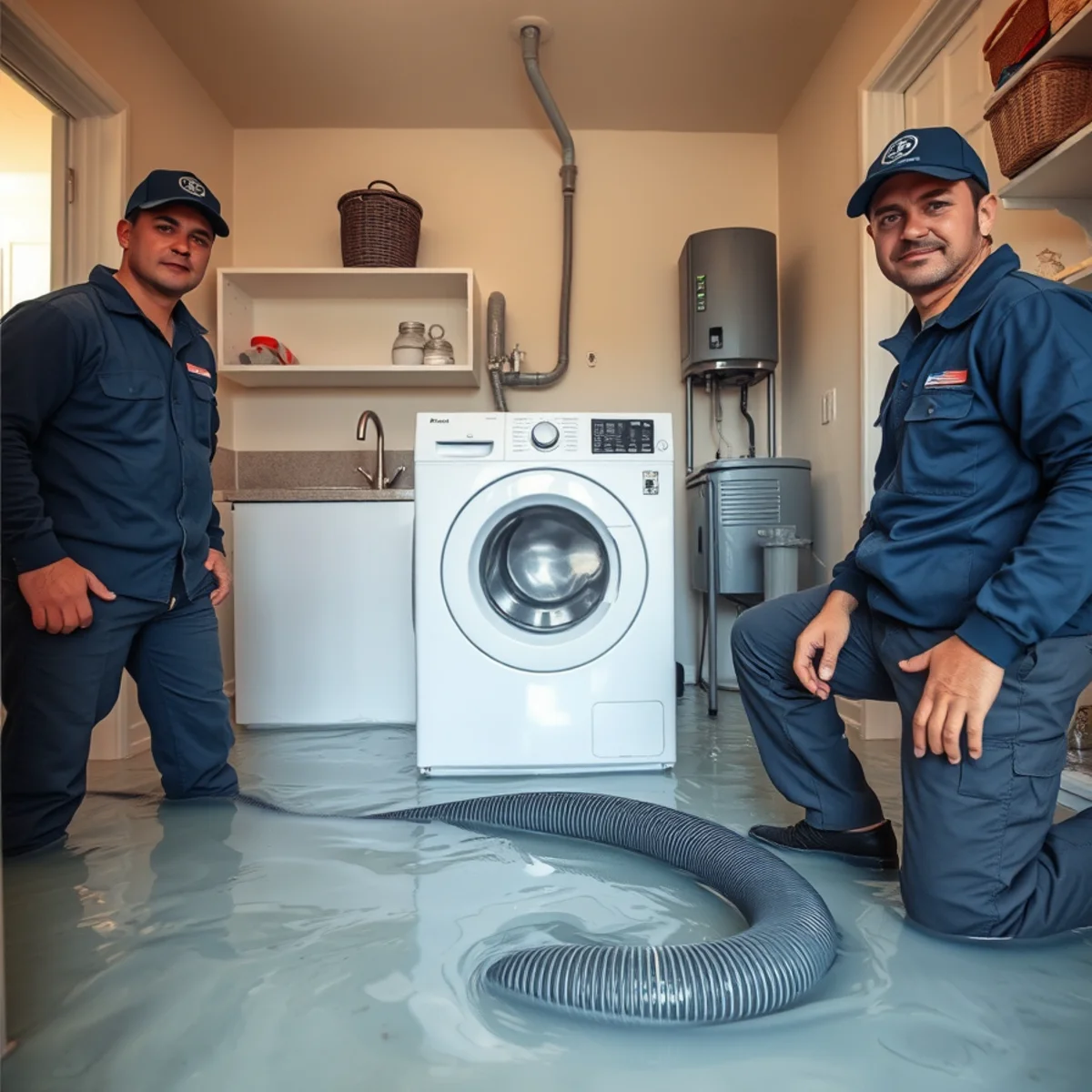
Washing machine supply hoses are among the most reliable causes of residential flooding we attend, and they share a frustrating profile: the part costs a few dollars, it gives visible warning before it fails, and the warning is behind a machine nobody ever moves.
They also fail at the worst time. Supply hoses are pressurized whenever the water is on, not just during a cycle — so a hose can let go while the house is empty and run for hours.
Step 1: Close the laundry valves
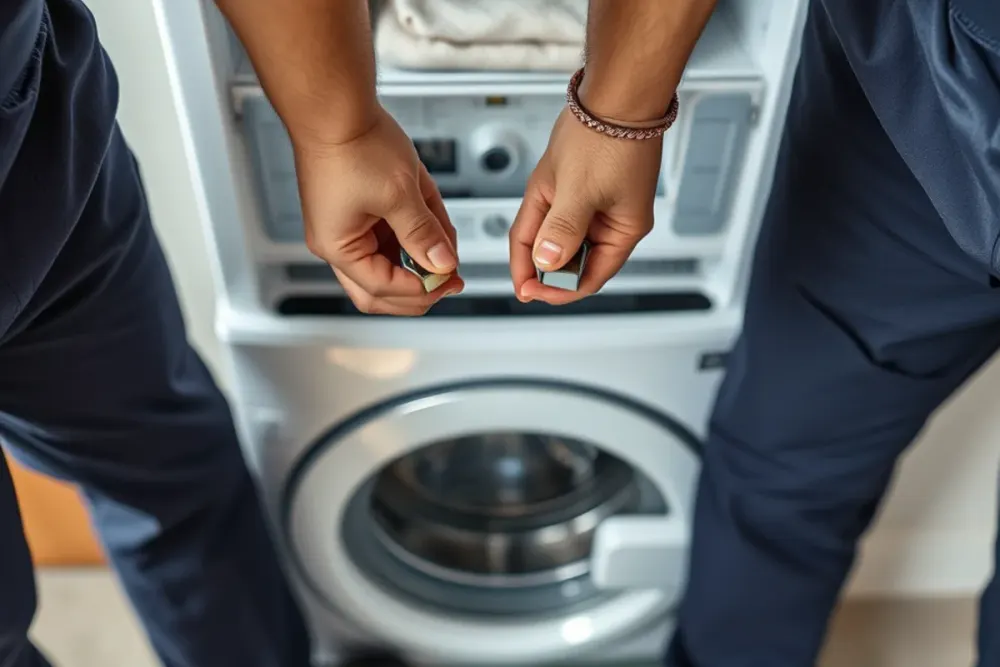
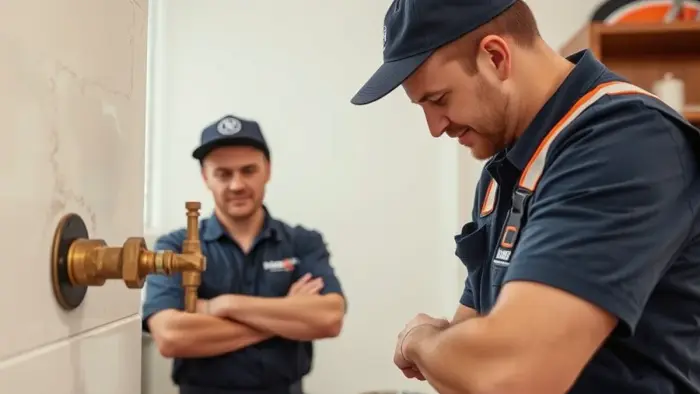
There are two valves on the wall behind the machine, hot and cold. Close both — clockwise for round handles, a quarter turn for levers. If you cannot reach behind the machine safely, or the valves are seized, close the main instead. In most Downey homes that is on the street-facing side near the hose bib, or in the meter box at the sidewalk.
Step 2: Power down before you step in
Laundry rooms have outlets at floor level and an appliance plugged in and standing in water. Switch off the breaker for that circuit before walking into standing water. If the panel is not safely reachable, stay out of the room.
Step 3: Photograph before you move anything
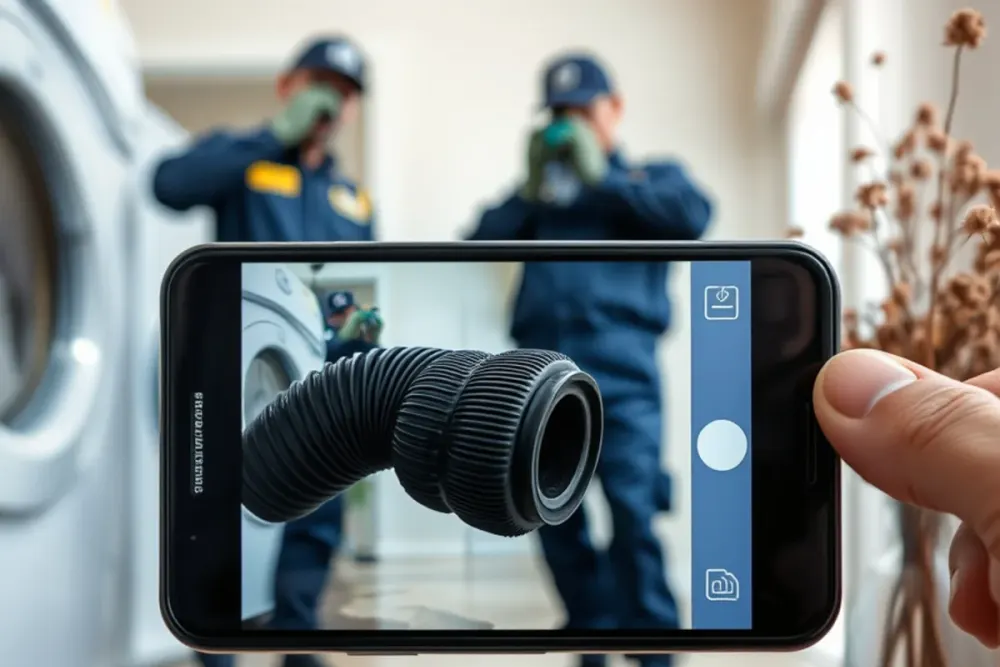
- The failed hose itself, still connected, before anyone replaces it
- Wide shots of the laundry room and every room the water reached
- The water line on walls, cabinets, and baseboards
- The machine's model and serial plate
- Any affected contents, especially anything stored on the floor
Step 4: Follow the water, do not just look at it
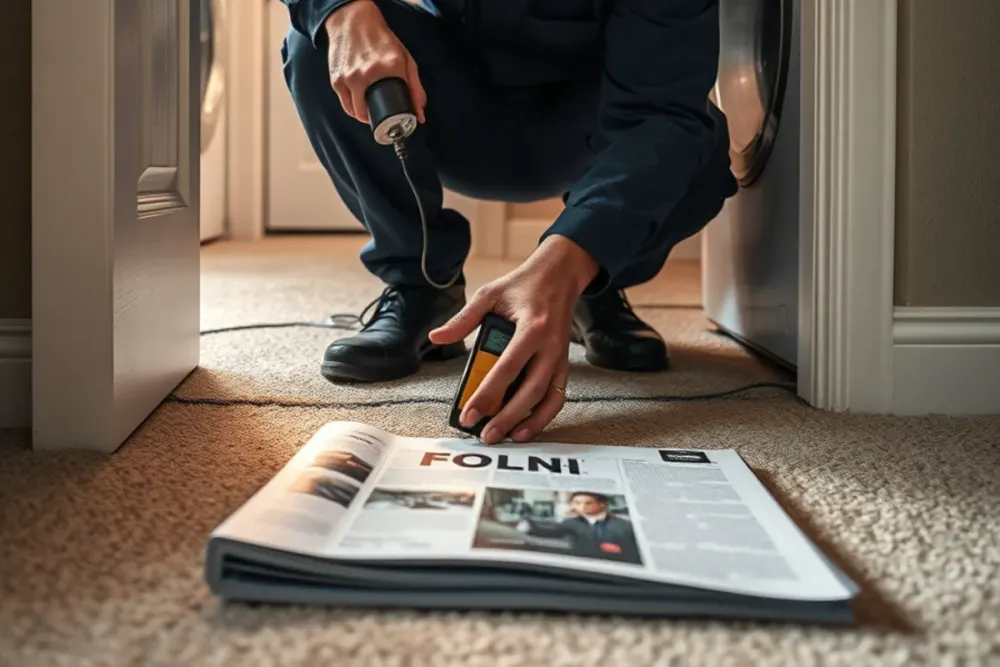
Laundry rooms are almost always adjacent to something that matters — a hallway, a kitchen, a garage, or a bedroom. Water crosses the threshold, runs under the door, and travels along the path of the subfloor or slab, which is rarely where you would expect.
Check the rooms on the other side of every wall of the laundry, and look at the base of cabinetry in an adjoining kitchen. Water under a cabinet toe-kick is invisible and it does not dry on its own — that void has no airflow at all.
Step 5: Call before you decide it is minor

The honest reason: what you can see is surface water, and what matters is the pad, the subfloor, the bottom plate of the walls, and the cabinet voids. Those need a moisture meter, not a judgment call. There is no charge for us telling you it is minor.
We dispatch within 60 minutes across Downey and the neighboring Gateway Cities, 24/7.
Pressurized every second, not just during a cycle
Pull your washing machine out and look at the hoses. If they are black rubber, replace them with braided stainless steel. Rubber hoses bulge, crack, and blister visibly before they fail — and because they sit behind a machine that never moves, nobody sees it.
| Hose type | Replace at | What failure looks like |
|---|---|---|
| Black rubber | 5 years | Bulging, cracking, blistering — usually visible for months first |
| Braided stainless | 10 years | Fraying at the crimp, rust spots on the braid |
| Auto-shutoff hoses | 10 years | Same as braided, plus test the shutoff mechanism |
Two more upgrades worth considering
If your laundry is on an upper floor or backs onto finished living space, a drain pan under the machine with a routed drain line contains a slow leak — though not a full hose burst, which overwhelms any pan.
For a hose burst specifically, the effective device is a leak sensor with an automatic shut-off valve on the laundry supply. Water hits the sensor, the valve closes, and the flood stops at a few gallons instead of a few hundred. For a house that sits empty during the working day, that is the single most useful thing you can install.
A note for landlords in Downey
Across our rental-heavy service areas — Norwalk, Paramount, Lynwood — a disproportionate share of the floods we attend are washing machine hoses in tenanted property. The tenant does not own the machine's plumbing, does not move it, and would not recognize a bulging hose if they saw one.
Adding hose replacement to your turnover checklist is one of the highest-return maintenance items there is. An afternoon per unit, a few dollars in parts, and it removes one of the top causes of the claims you would otherwise be filing.
Frequently asked
Rubber hoses every five years, braided stainless every ten. Better still, replace rubber with braided stainless now and write the fitting date on the hose with a marker. Nobody remembers when they last did this, which is exactly why hoses routinely stay in service for twenty years and then flood a house.
They help, though they address a different failure than most people assume — they respond to a catastrophic flow surge, not a slow leak. The more effective device for a home that sits empty during the day is a leak sensor with an automatic shut-off valve on the laundry supply, which stops the flood at a few gallons rather than a few hundred.
Probably, and it is worth ten minutes to find out. What you can see is surface water; what matters is the pad, the subfloor, the bottom plate of the walls, and any cabinet toe-kick voids in an adjoining kitchen. Those voids have no airflow and do not dry on their own. Establishing whether they are wet takes a meter, not a judgment call, and there is no charge for us telling you it is minor.
The ten-dollar fix that prevents all of this
Washing machine hoses are pressurized every second of every day, not just during a cycle. That is why they fail while the house is empty and run for hours.
Pull the machine out and look. If the hoses are black rubber, replace them with braided stainless and write the date on them with a marker. Nobody remembers when they last did this, and that uncertainty is exactly why hoses stay in service for twenty years and then flood a house.
For a home that sits empty during the working day, a leak sensor with an automatic shut-off valve on the laundry supply stops the flood at a few gallons instead of a few hundred. It is the single most effective device you can fit for this specific failure.
Services mentioned in this article
Water Extraction & Removal
Truck-mounted extractors pull standing water out in a single pass — the fastest way to stop damage from spreading downward.
Learn more24/7 Emergency Water Removal
A person answers, 24/7. Crews dispatched within 60 minutes — nights, weekends, and holidays included.
Learn moreStructural Drying & Dehumidification
Metered, monitored drying that takes the structure back to its dry standard — not just the surface you can touch.
Learn moreAreas covered in this article
Named for the aerospace legacy the Columbia Memorial Space Center commemorates — 1950s–60s family tracts with origi…
about 9 minutes from our Florence Ave baseWarren High Area1970s–80s subdivisions around Warren High School on De Palma St — larger-lot homes whose original plumbing is now a…
about 11 minutes from our Florence Ave base