Downey & LA County
California's Water Heater Strapping Law: The Risk in Your Garage
The law covers existing heaters, not just new ones — and in Downey, where nearly every tank sits in a garage, we find it ignored constantly.
The short answer
California Health and Safety Code section 19211 requires all residential water heaters — including existing ones, not just new installations — to be braced, anchored or strapped against earthquake displacement. Sellers must also certify compliance in writing to a buyer.
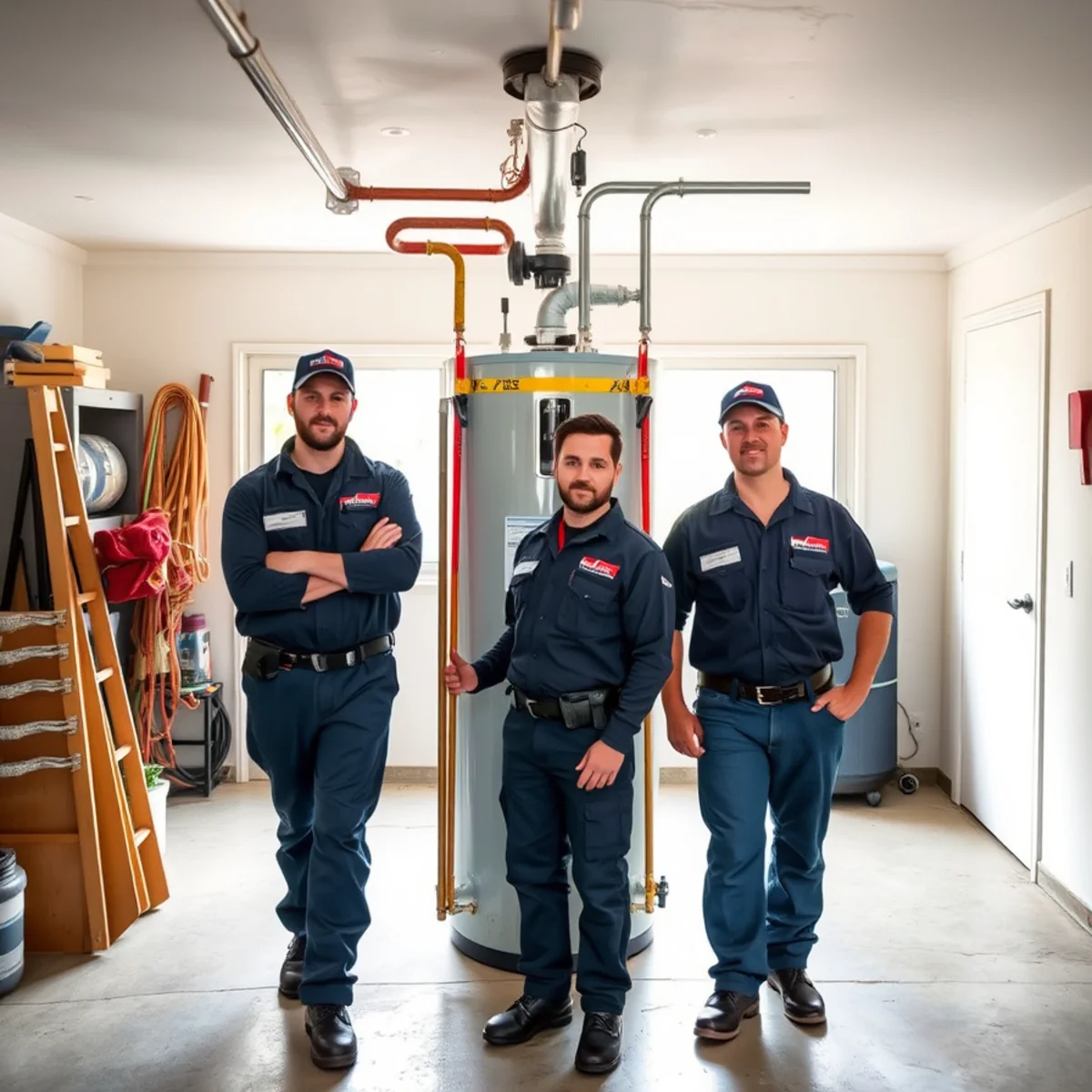
Almost every Downey home puts its water heater in the garage. It is a sensible arrangement in a mild climate with no basements — and it means the tank sits against the wall shared with your living space, on a slab that drains toward the door.
It also means the tank is subject to a California law that a surprising number of homeowners have never heard of.
What the law actually says
California Health and Safety Code section 19211, in Article 8 of the Earthquake Protection chapter, requires that all new and replacement water heaters — and all existing residential water heaters — be braced, anchored, or strapped to resist falling or horizontal displacement due to earthquake motion.
At minimum, the heater must be secured in accordance with the California Plumbing Code, or with modifications adopted by a local jurisdiction. The law defines a water heater as any standard unit with a capacity of not more than 120 gallons for which a preengineered strapping kit is readily available.
The property transfer requirement
There is a second part that matters if you are buying or selling.
The seller of any real property containing a water heater must certify to the prospective purchaser that section 19211 has been complied with. That certification must be in writing, and it can be included in existing transactional documents — the Homeowner's Guide to Earthquake Safety, the real estate sales contract or receipt for deposit, or a transfer disclosure statement.
In practice this means most California home sales include a water heater statement of compliance. It is one of the more commonly signed and least commonly verified documents in a transaction.
Why it exists
The point is not simply that the tank stays upright. It is what happens when it does not.
An unstrapped water heater that topples in an earthquake tears its water connections and, on a gas unit, its gas connection. That produces a flood and a gas leak simultaneously, in a household that is already dealing with an earthquake and possibly without power. It is a compound emergency created by a component that could have been secured for a modest cost.
What compliant strapping looks like
- Two straps, not one — positioned in the upper third and the lower third of the tank
- The lower strap at least four inches above the controls on a gas unit
- Straps anchored into structural framing, not into drywall
- Heavy-gauge metal strapping, properly tensioned — not plumber's tape or a loose band
- Flexible water connectors, which tolerate movement that rigid pipe does not
- Adequate clearance maintained around the unit
What we actually find
We look at the installation on every water heater call, because we are standing there anyway and it costs nothing to check. The failures are consistent.
| What we find | Why it fails |
|---|---|
| No straps at all | Most common in homes that predate the requirement |
| One strap instead of two | A single band lets the tank pivot and topple |
| Straps anchored into drywall | Drywall has no meaningful pull-out strength — the anchor comes out with the tank |
| Straps loose enough to move | A tank that can rock has not been restrained |
| Plumber's tape used as strapping | Not rated for the load; it deforms and releases |
| Rigid copper connections | Any movement fractures rigid pipe at the connection |
Two more things worth doing at the same time
Neither is required in every situation, and both would have contained a large share of the garage floods we clean up.
A drain pan under the tank, with a drain line routed somewhere other than your garage floor. A pan with no drain line just holds a few gallons before overflowing, so the line is the part that matters.
And an automatic gas shut-off valve, which closes the gas supply when it senses seismic motion. That addresses the other half of the toppled-heater scenario.
Why the shared wall makes this worse in Downey
When a tank fails in a Downey garage — whether from an earthquake or simply from age — the water crosses the slab and reaches the bottom plate of the wall shared with the living space. It then wicks upward into the drywall on both sides.
The garage side you might notice. The house side, behind drywall in a bedroom or a hallway, you will not — until a baseboard swells or a smell develops weeks later. Fire-rated drywall on the garage side, which code requires, makes it worse: it is thicker, holds more water, and dries more slowly.
We meter the interior face of that shared wall on every water heater call. It is wet more often than not.
Ten minutes this weekend
Go and look at your water heater. Count the straps. Push gently on the tank and see if it moves. Check whether the anchors go into framing or drywall. Look for moisture or rust at the base, which usually means the inner tank has already corroded through.
If the tank is past ten years old, start planning a replacement rather than waiting for the failure — and have the strapping, the pan, and the drain line addressed when the new one goes in.
Frequently asked
Yes. California Health and Safety Code section 19211 covers all new and replacement water heaters and all existing residential water heaters — they must be braced, anchored, or strapped to resist falling or horizontal displacement due to earthquake motion. It is not limited to new installations, which is the part most homeowners do not realize.
Two, positioned in the upper third and the lower third of the tank, with the lower strap at least four inches above the controls on a gas unit. Both must be anchored into structural framing rather than drywall, and tensioned so the tank cannot rock. A single strap lets the tank pivot and topple, which defeats the purpose.
Yes. The seller of any real property containing a water heater must certify in writing to the prospective purchaser that section 19211 has been complied with. That certification can be included in existing transactional documents — the Homeowner's Guide to Earthquake Safety, the sales contract or receipt for deposit, or a transfer disclosure statement.
Ten minutes in your garage this weekend
The point is not simply that the tank stays upright. An unstrapped heater that topples tears its water and gas connections at once, producing a flood and a gas leak in a household already dealing with an earthquake.
Compliant means two straps, upper and lower third, anchored into framing rather than drywall, with the lower strap clear of the controls. What we routinely find in Downey garages is one strap, or anchors in drywall, or straps loose enough to let the tank rock.
While you are there: check for moisture at the base, note the manufacture date, and consider a drain pan with a line routed somewhere other than your garage floor. Past ten years, treat replacement as a planned expense.
Services mentioned in this article
Water Heater Leak Cleanup
Garage floods dried properly — including the shared wall that quietly wicks water into the living space next door.
Learn more24/7 Emergency Water Removal
A person answers, 24/7. Crews dispatched within 60 minutes — nights, weekends, and holidays included.
Learn moreMold Remediation
Contained removal that fixes the moisture source first — because mold that is only cleaned off comes straight back.
Learn moreAreas covered in this article
Named for Downey's NASA and Apollo program heritage (North American Aviation, Rockwell, Boeing) — 1960s–70s aerospa…
about 10 minutes from our Florence Ave baseWoodruff / FlorenceDense 1940s–50s post-war housing along the Florence Ave corridor — the highest concentration of original galvanized…
3 to 5 minutes from our Florence Ave base — our home block