Problem Solving
Why Shop-Vaccing a Flooded Carpet Isn't Enough
The carpet feels dry to your hand and the pad underneath is still holding gallons. That gap is where mold jobs come from.
The short answer
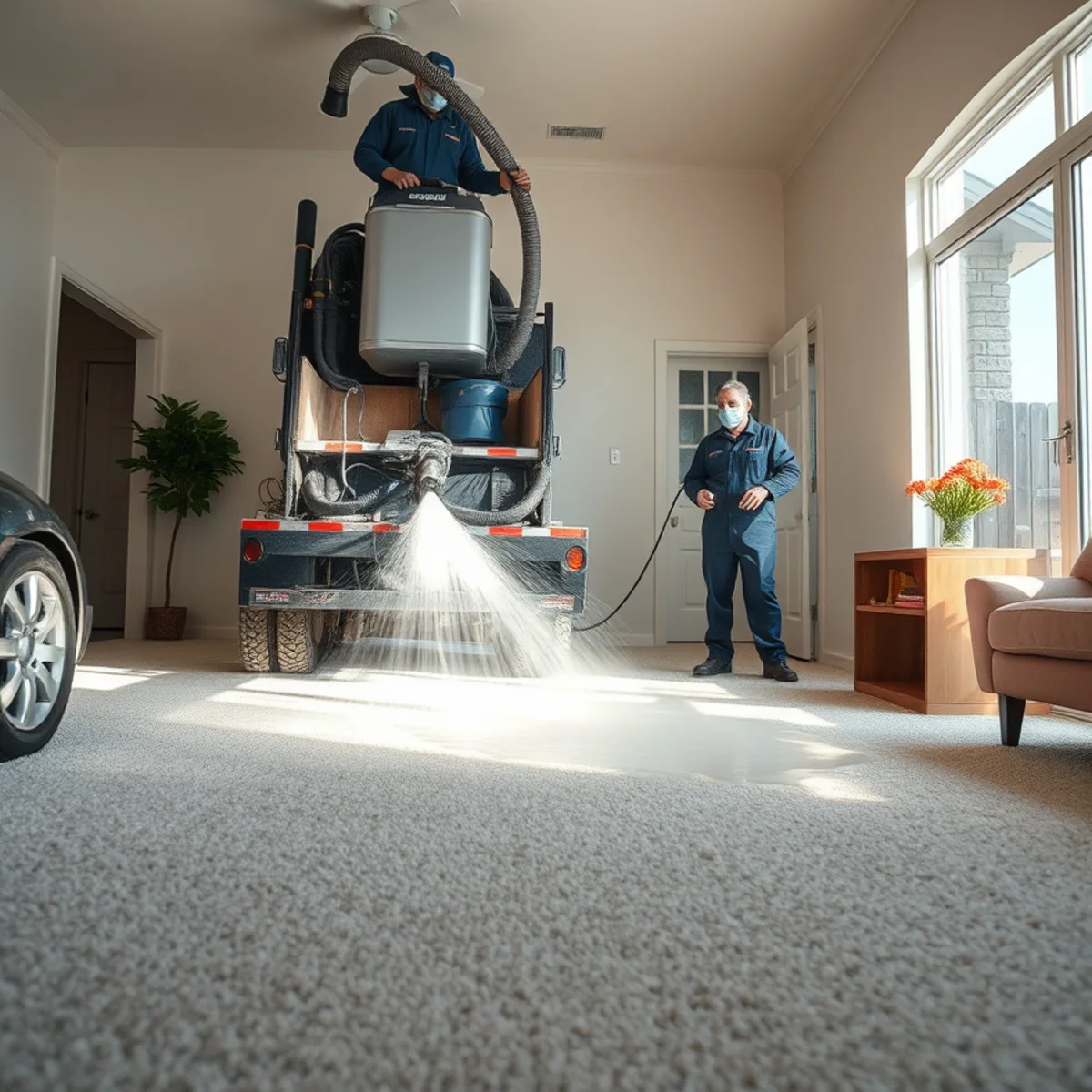
A shop vac pulls surface water but leaves the pad, subfloor and wall cavities wet — and a saturated 12x15 room can hold over 40 gallons, most of it in the pad. Professional extraction uses weighted heads and truck-mounted vacuum to force trapped water out, then meters what remains.
A shop vac is a genuinely useful tool and we are not going to pretend otherwise. If you spill a bucket on a tile floor, it handles it. The problem is what happens when water is in carpet.
The pad is the problem
Carpet is a wear surface. The pad underneath is a sponge, and it is designed to be — that is what makes carpet comfortable to walk on. Open-cell foam and rebond padding hold a remarkable amount of water relative to their volume, and they hold it under the carpet where you cannot reach it.
A saturated 12x15 room with carpet and pad can hold well over 40 gallons. A shop vac working the carpet surface might recover a fraction of that. The carpet then feels reasonably dry to your hand while the pad below is still fully loaded.
What professional extraction does differently
- Weight — extraction heads press the carpet and pad down under significant load, squeezing trapped water up and out rather than sipping at the surface
- Vacuum power — truck-mounted units generate far greater lift than a portable shop vac, at a sustained rate
- Capacity — water goes into a tank on the truck, so extraction runs continuously instead of stopping every few gallons to empty a bucket
- Coverage — multiple slow, overlapping passes in a deliberate pattern, because the last passes are where the deep water comes out
- Reach into assemblies — under cabinet toe-kicks, into wall cavities, and under flooring where surface tools simply cannot go
What we do with the pad
Straight answer: on most losses the pad comes out. It is inexpensive, it is a sponge, and replacing it is faster, cheaper and safer than trying to dry it in place under carpet.
The carpet itself is a different question and is frequently salvageable — floated, dried from both sides, cleaned, and re-laid over new pad. That is the outcome we aim for on clean water losses caught quickly.
On Category 3 water — sewage, or anything that came in from outside — both carpet and pad go. Porous material that absorbed contaminated water does not get decontaminated back into service, and no amount of cleaning changes that.
The subfloor question
Underneath the pad is the subfloor, and this is what actually decides whether you have a mold problem in three weeks.
In Downey's 1960s–70s slab tracts, that means concrete — which absorbs water and gives it up slowly, needing sustained dehumidification well beyond the point where the room feels dry. In the older raised-foundation homes across North Downey and the Woodruff/Florence corridor, it means wood subfloor over a crawl space, where water passes through gaps and collects underneath.
Neither is assessable by touch. Both need a moisture meter, and both are exactly where a DIY dry-out goes wrong — the visible surfaces dry, everyone declares victory, and the assembly stays wet.
What actually happens if you skip it
Predictable sequence. Week one, everything seems fine. Week two, a faint musty smell that comes and goes with the weather. Week three or four, the smell is persistent, there may be dark spotting at the base of a wall, and the carpet has a stiff, papery feel where it dried unevenly.
By then you are looking at carpet and pad removal anyway, plus drywall at the wall bases, plus remediation — a job several times the size of the extraction that would have prevented it.
When a shop vac genuinely is enough
- Clean water on hard flooring, caught within minutes, that has not reached carpet, cabinetry, or a wall base
- A contained spill on tile over slab with no grout-line seepage and no crossing into another room
- Any spill small enough that you can confidently see its entire extent
The moment water is in carpet, has crossed a threshold, or has reached the base of a wall, the honest position is that you cannot tell what is wet without a meter. There is no charge for us coming out and telling you it is minor.
Frequently asked
Often yes on clean water losses caught quickly — floated, dried from both sides, cleaned, and re-laid over new pad. The pad itself is nearly always replaced, because it is inexpensive and drying it in place under carpet does not work reliably. On Category 3 water from sewage or outside flooding, both carpet and pad go regardless of how quickly we arrive.
Far more than people expect. A saturated 12x15 room with carpet and pad can hold well over 40 gallons, and most of that is in the pad rather than the carpet. That is why carpet can feel nearly dry to your hand while the material underneath is still fully loaded — and why surface extraction with a shop vac leaves most of the problem behind.
You cannot tell by touch or by looking — it takes a moisture meter, and on a slab it takes one calibrated for concrete. That is precisely the gap that turns a DIY dry-out into a mold job: the visible surfaces dry, everyone assumes it is finished, and the assembly underneath stays wet for days.
The difference is liquid versus vapor
An extractor removes water as a liquid at gallons per minute. A dehumidifier removes it as vapor at gallons per day. That is the entire argument for proper extraction before drying starts.
Skip it and you are asking machines to evaporate forty gallons through your indoor air, which takes days, drives humidity up, and pushes moisture into materials that were dry when you started. That is the most common reason a house smells musty three weeks later.
A shop vac is genuinely enough for clean water on a hard floor that you caught within minutes and can see the full extent of. The moment water is in carpet or has crossed a threshold, you cannot tell what is wet without a meter.
Services mentioned in this article
Water Extraction & Removal
Truck-mounted extractors pull standing water out in a single pass — the fastest way to stop damage from spreading downward.
Learn moreStructural Drying & Dehumidification
Metered, monitored drying that takes the structure back to its dry standard — not just the surface you can touch.
Learn moreMold Remediation
Contained removal that fixes the moisture source first — because mold that is only cleaned off comes straight back.
Learn moreAreas covered in this article
Established 1950s–60s streets around Furman Park on Rives Ave — original slab-on-grade construction with cast-iron…
about 5 minutes from our Florence Ave baseNorth Downey1940s–50s post-war bungalow belt — the highest concentration of pre-1960 homes in Downey, and the oldest galvanized…
3 to 7 minutes from our Florence Ave base