
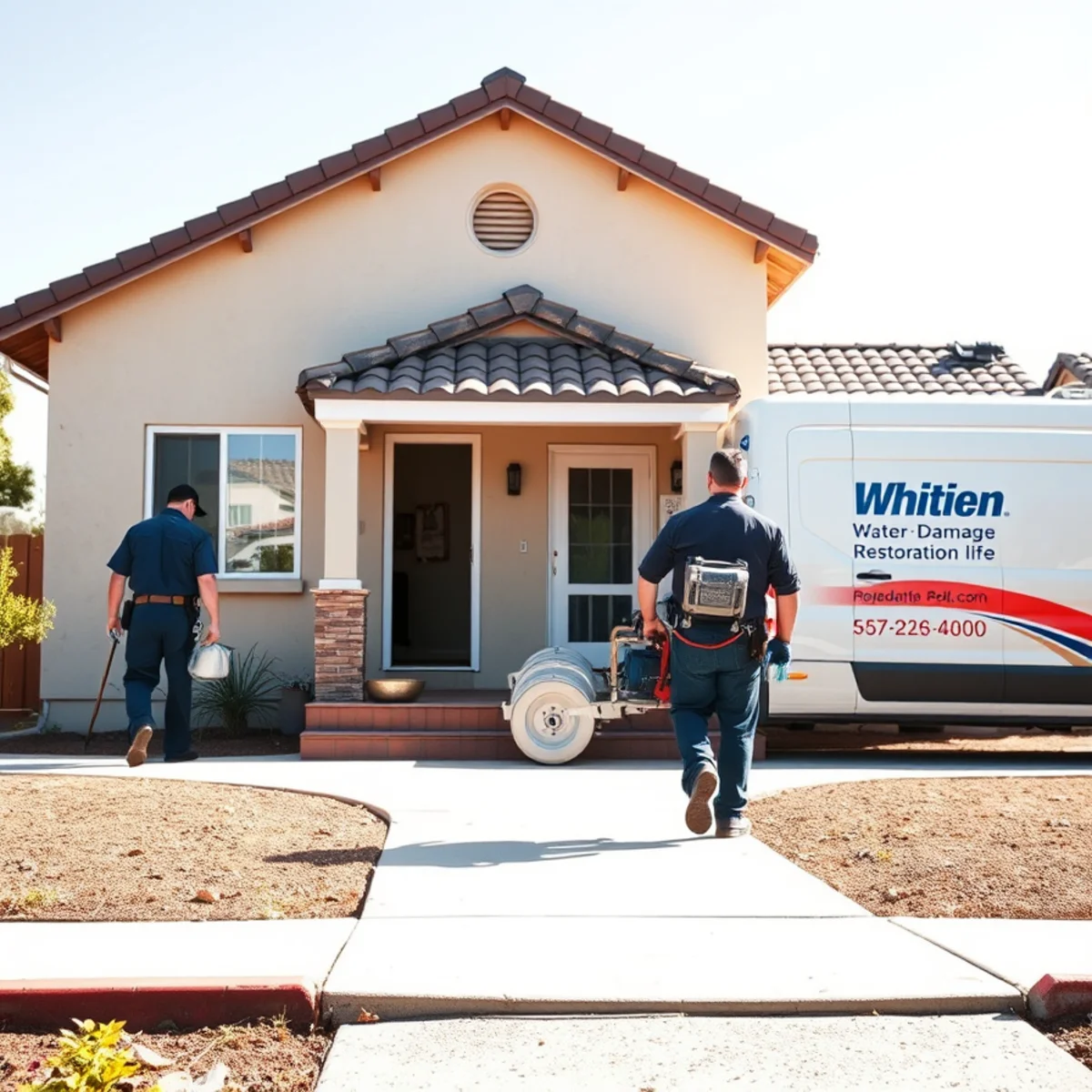
Core service area
Water Damage Restoration in Whittier, CA
Whittier has more building variety than anywhere else we serve. The Quaker founders laid out the town in 1887, Uptown Whittier still carries genuinely historic commercial architecture, and around that core the city spans 1920s craftsman homes, extensive 1950s–70s slab tracts, and hillside development on the slopes above.
- Open 24/7
- 60-minute emergency dispatch
- about 18 minutes from our Downey base
- IICRC S500 standard
Each of those needs a different approach. A 1905 house with original plaster and a 1968 slab tract home have almost nothing in common as drying problems.
The city also sits downstream of the Whittier Narrows Dam and within the flood control system that protects this whole basin. We are about eighteen minutes away.
Three Housing Eras and a Hillside
The historic core has pre-1930 construction with lath-and-plaster walls and often original galvanized supply. Plaster is a Class 4 drying material — it holds water and gives it up slowly, so drying takes noticeably longer than in a drywall home. It is also frequently worth saving where drywall would simply be cut out, which means patience and metering rather than a saw.
The mid-century tracts are the volume work: slab-on-grade with copper underneath, on the same expansive clay as the rest of the basin, now at fifty to seventy years old. Slab leaks are the routine call.
The hillside properties bring a risk that does not exist on the flat. Slope drainage concentrates runoff, and a winter storm sequence saturates ground above homes that were built into it. Water arrives from uphill rather than from the sky — through retaining walls, under foundations, and into garages cut into the slope. After a genuinely wet sequence, hillside drainage failures are a distinct category of call.
What we handle across Whittier:
- Slab leaks in 1950s–70s tract housing
- Slow drying of lath-and-plaster assemblies in the historic core
- Hillside drainage failures and slope runoff entering homes from uphill
- Storm water intrusion during atmospheric river sequences
- Sewer lateral backups in the older neighborhoods
- Commercial losses in Uptown Whittier's historic buildings
Drying Historic Buildings Without Wrecking Them
Uptown Whittier and the surrounding older residential streets contain building fabric that cannot simply be replaced — original plaster, period trim, hardwood that has been down for a century. The default restoration approach of cutting out anything wet is the wrong tool here.
Plaster behaves quite differently from drywall. It is denser, it holds more water, and it releases it far more slowly, which means a job that would take three days in a modern house takes five or six. The temptation is to declare it done on the normal schedule. The result of that is a wall that looks fine and is still wet inside.
So on historic buildings we meter more points, more often, and we plan for longer equipment runs from the outset rather than discovering it midway. We would rather quote six days honestly than three days optimistically.
The trade-off is worth it. Plaster that is properly dried is usually saved, and matching original plaster and trim is expensive and rarely convincing. Patience genuinely costs less than replacement here.
Landmarks and streets we work around
- Uptown Whittier
- Whittier College
- Whittier Boulevard
- Whittier Narrows Dam
- Penn Park
- Puente Hills
Response and coverage
- Drive time
- about 18 minutes from our Downey base
- Dispatch
- 60-minute emergency dispatch, 24/7
- ZIP codes
- 90601, 90602, 90603, 90604, 90605, 90606
What we handle most in Whittier
These are the services this area calls us for. We offer all 16 everywhere we work.
Why Whittier Residents Choose Us
About eighteen minutes away, working three quite different housing eras in one city.
We dry historic buildings instead of demolishing them
Uptown Whittier and the surrounding older streets contain fabric that cannot simply be replaced. Properly dried plaster is usually saved, and matching original plaster and trim is expensive and rarely convincing.
We quote plaster honestly at five or six days
Rather than declaring it dry on a standard three-day schedule. We would rather set the expectation than discover it midway.
We understand hillside water
On sloped lots water arrives from uphill through retaining walls, under foundations and into cut-in garages — routes that do not exist on flat ground.
Whittier questions we get asked
Yes, considerably. Plaster is denser than drywall, holds more water, and releases it slowly — so a job that takes three days in a modern house takes five or six here. The upside is that properly dried plaster is usually saved, and matching original plaster and trim is expensive and rarely convincing. We meter more points and plan longer equipment runs from the start rather than declaring it done on a standard schedule.
For insurance purposes, usually yes — surface water arriving from uphill is typically treated as flooding and excluded from a standard homeowners policy. The exception is water that got in because storm damage created an opening. The distinction matters, and we document the point of entry carefully because it frequently decides the claim. Either way, treat it as contaminated: it has crossed soil and slope.
It is a major part of why this basin no longer sees the riverine flooding that shaped it historically — the dam controls flows that would otherwise reach downstream communities. What it does not control is local surface flooding when rainfall intensity exceeds storm drain capacity, or hillside runoff on the slopes. Those are the mechanisms behind most of the flood damage we actually attend here.
Yes, considerably. Plaster is denser than drywall, holds more water and releases it slowly — so a job that takes three days in a modern house takes five or six here. The upside is that properly dried plaster is usually saved. We meter more points and plan longer equipment runs from the start rather than declaring it done on a standard schedule.
For insurance purposes, usually yes — surface water arriving from uphill is typically treated as flooding and excluded from a standard homeowners policy. The exception is water that got in because storm damage created an opening. We document the point of entry carefully because it frequently decides the claim. Either way, treat it as contaminated: it has crossed soil and slope.
Dispatching to Whittier, CA from our Downey base
8615 Florence Ave, Downey, CA 90240 — about 18 minutes from our Downey base.
Visit or call us
Downey, CA 90240
Nearby areas we also serve
Water damage in Whittier? Call now.
about 18 minutes from our Downey base. We answer 24/7 and dispatch within 60 minutes across Downey, CA and the surrounding Gateway Cities.
- Open 24/7
- 60-minute emergency dispatch
- IICRC S500 standard
- Bonded & insured
8615 Florence Ave, Downey, CA 90240
+1 (201) 277-9344 · Get Directions