
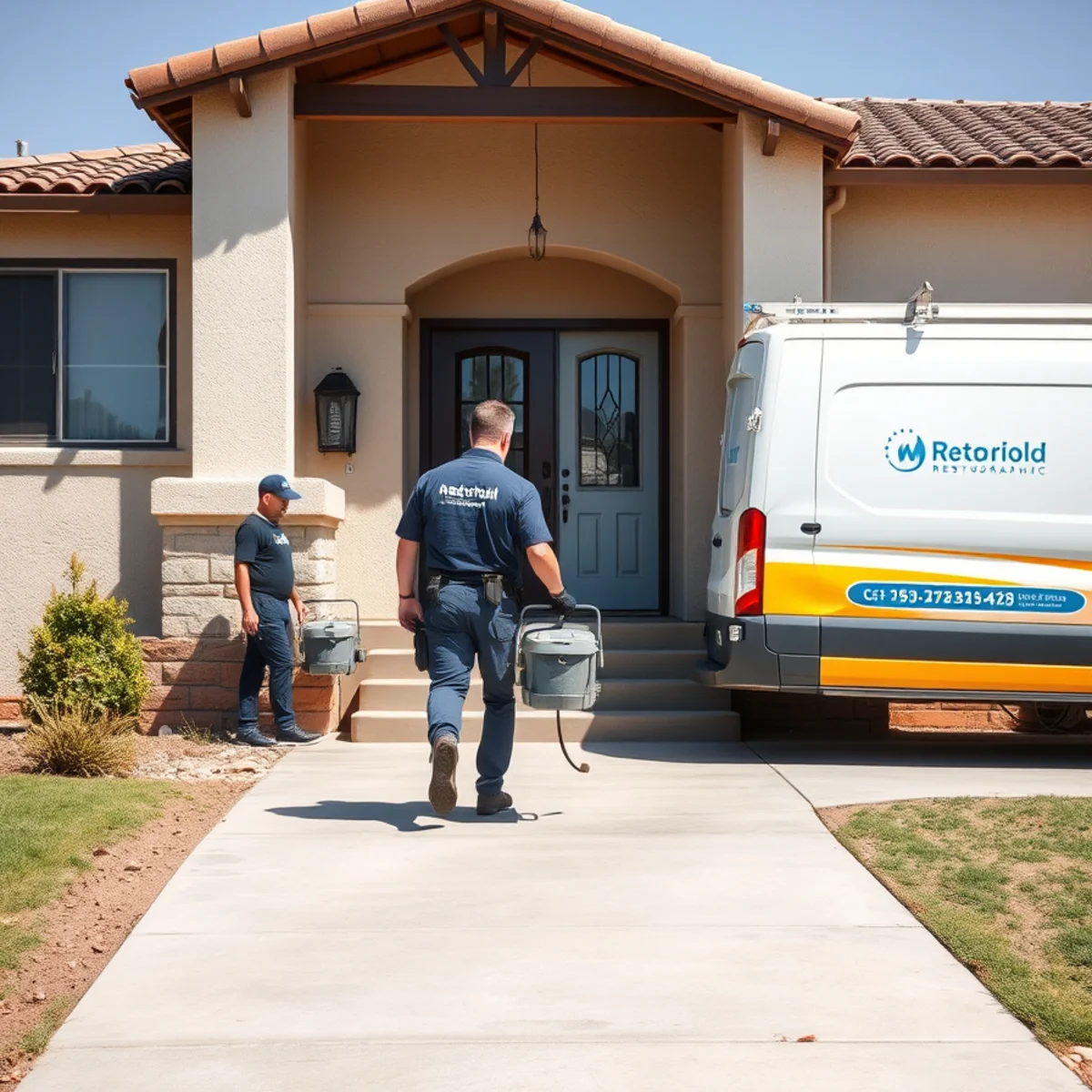
Extended service area
Water Damage Restoration in Signal Hill, CA
Signal Hill is an independent city occupying an actual hill, entirely surrounded by Long Beach, and it remains one of the most productive urban oil fields in the country. Working pumpjacks sit among the housing.
- Open 24/7
- 60-minute emergency dispatch
- about 28 minutes from our Downey base
- IICRC S500 standard
Two features shape water damage here, and neither exists anywhere else in our service area. Real elevation — this is a hill, not a gentle rise, so slope drainage governs how storm water behaves. And oil-field ground, with the settlement history that goes with a century of extraction.
At about twenty-eight minutes, Signal Hill is at the outer edge of our range.
A Hill, an Oil Field, and 1940s Housing
Slope drainage is the dominant storm-season factor. On a genuine hill, water does not sit and soak — it runs, gathers into natural drainage lines, and arrives concentrated at whatever is below. Homes on the lower slopes take water from everything above them, and homes cut into the slope take it against the uphill side of the foundation.
The routes it uses are specific to hillside construction. Behind retaining walls when the weep holes block and hydrostatic pressure builds. Under a foundation on the uphill face. Into garages and rooms that sit below grade at the back of the lot. And it arrives carrying soil, which contaminates it and blocks the drains that were meant to handle it.
The oil-field ground brings the second factor. A century of extraction, and the ground movement associated with it, means buried utilities in parts of this city have experienced differential settlement beyond the ordinary seasonal cycle — a mechanism for cracked laterals and fractured drain lines independent of pipe age.
Then the housing itself: much of it 1940s and 50s, with the galvanized supply lines and clay-tile laterals that era implies.
Signal Hill work:
- Slope runoff entering homes from uphill during winter storms
- Retaining wall drainage failures and hydrostatic pressure
- Below-grade room and garage flooding on cut-in lots
- Cracked sewer laterals from oil-field ground settlement
- Galvanized supply failures in the 1940s–50s housing
- Category 3 cleanups where runoff carried soil and debris
Hillside Drainage Is Maintenance, Not Luck
Almost every hillside water intrusion we attend traces back to a drainage component that stopped working months earlier and nobody checked.
Weep holes in retaining walls are the classic. They are small, they sit at the base of the wall, and they block with soil and debris over a season. When they do, the wall stops draining and starts holding water — which builds hydrostatic pressure behind it until the water finds another route, frequently through the wall or under the footing into whatever is on the other side.
Area drains and swales on a slope silt up faster than on flat ground, because runoff arrives carrying soil. A drain that worked last winter may do nothing this one.
The best diagnostic anyone on a hillside lot can run costs nothing: go outside during a real downpour and watch. Where does water actually run? What pools? Which drain is taking nothing? Five minutes of observation during live conditions beats any dry-weather inspection, and it tells you exactly what to clear before the next band arrives.

Landmarks and streets we work around
- Signal Hill Park
- Hilltop Park
- Cherry Avenue
- Willow Street
- Signal Hill oil field
- Long Beach city surrounds
Response and coverage
- Drive time
- about 28 minutes from our Downey base
- Dispatch
- 60-minute emergency dispatch, 24/7
- ZIP codes
- 90755
What we handle most in Signal Hill
These are the services this area calls us for. We offer all 16 everywhere we work.
Why Signal Hill Residents Choose Us
About twenty-eight minutes away, on a genuine hill with an oil-field history underneath it.
We know weep holes cause most hillside intrusions
Small, at the base of the wall, and blocked with soil over a season. The wall then holds water and builds hydrostatic pressure until it finds another route.
We account for oil-field ground movement
A century of extraction means buried utilities in parts of this city have seen differential settlement beyond the ordinary cycle.
We recommend watching during a real downpour
On a hillside lot five minutes of live observation tells you exactly what to clear before the next band.
Signal Hill questions we get asked
Usually not under a standard homeowners policy — surface water arriving from uphill is generally treated as flooding and excluded, needing separate flood coverage. The exception is water that entered because storm damage created an opening. We document the point of entry precisely, because that distinction frequently decides the claim. Treat the water as contaminated regardless: it has crossed soil and slope.
They are the small drainage openings at the base of a retaining wall that let water pass through rather than build up behind it. When they block with soil and debris — which happens over a season — the wall stops draining and hydrostatic pressure builds until water finds another route, often through the wall or under the footing. Clearing them is one of the highest-value five-minute jobs on a hillside lot.
About twenty-eight minutes, at the outer edge of our service area, with 60-minute dispatch. For an actively running emergency, call whoever is closest — minutes matter and we will not beat a Long Beach company there. For storm and drainage work, which is most of what we do here, diagnosis and documentation matter more than the last ten minutes of drive time.
Usually not under a standard homeowners policy — surface water arriving from uphill is generally treated as flooding and excluded, needing separate flood coverage. The exception is water that entered because storm damage created an opening. We document the point of entry precisely because that distinction frequently decides the claim. Treat the water as contaminated regardless: it has crossed soil and slope.
They are the small drainage openings at the base of a retaining wall that let water pass through rather than build up behind it. When they block with soil and debris — which happens over a season — the wall stops draining and hydrostatic pressure builds until water finds another route, often through the wall or under the footing. Clearing them is one of the highest-value five-minute jobs on a hillside lot.
Dispatching to Signal Hill, CA from our Downey base
8615 Florence Ave, Downey, CA 90240 — about 28 minutes from our Downey base.
Visit or call us
Downey, CA 90240
Nearby areas we also serve
Water damage in Signal Hill? Call now.
about 28 minutes from our Downey base. We answer 24/7 and dispatch within 60 minutes across Downey, CA and the surrounding Gateway Cities.
- Open 24/7
- 60-minute emergency dispatch
- IICRC S500 standard
- Bonded & insured
8615 Florence Ave, Downey, CA 90240
+1 (201) 277-9344 · Get Directions